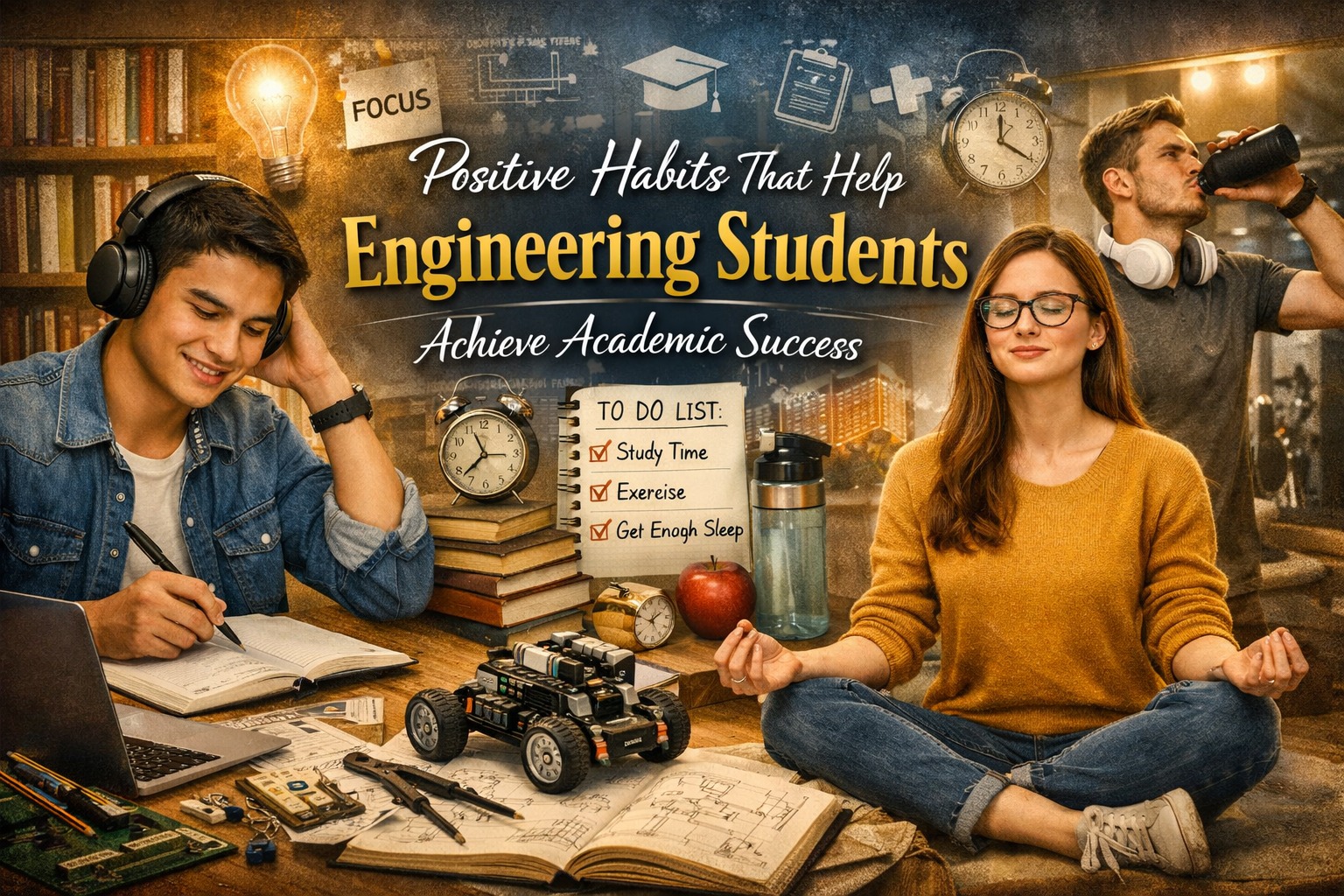
Positive Habits That Help Engineering Students Achieve Academic Success
Gusti Ayu Tita P
11 Oktober 2026
INTRODUCTION
Achieving academic success in engineering requires more than intelligence and technical knowledge. Engineering students often face challenging coursework, practical projects, laboratory sessions, and complex problem-solving tasks. To perform well consistently, they need to develop positive habits that improve both their learning efficiency and personal discipline.
In today's fast-changing technological world, engineering students must continuously expand their knowledge while maintaining a balanced academic routine. Good study habits help students understand difficult concepts, manage their time effectively, and prepare for future professional careers. By practicing positive habits every day, engineering students can improve their academic performance and build a strong foundation for long-term success.
CREATING A CONSISTENT STUDY SCHEDULE
One of the most important habits for academic achievement is maintaining a consistent study schedule. Planning study sessions in advance allows engineering students to balance lectures, assignments, laboratory work, and personal activities. A structured routine reduces stress and prevents last-minute preparation before examinations.
Studying regularly also improves knowledge retention and understanding of technical concepts. Instead of relying on intensive study sessions before exams, students who review lessons consistently are more likely to achieve better academic results throughout the semester.
PARTICIPATING ACTIVELY IN PRACTICAL LEARNING
Engineering education combines theoretical knowledge with practical application. Students should actively participate in laboratory activities, engineering projects, workshops, and technical competitions. These experiences help reinforce classroom learning while improving practical engineering skills.
Hands-on learning also develops confidence when solving real engineering problems. Students who frequently apply theoretical concepts become more prepared for internships and future professional responsibilities.
DEVELOPING CRITICAL THINKING SKILLS
Engineering students should develop critical thinking to understand complex concepts and solve technical problems effectively. Rather than memorizing formulas, successful students focus on understanding the reasoning behind engineering principles. This approach helps them apply knowledge in different situations.
Critical thinking also encourages creativity and innovation. Students who analyze problems from multiple perspectives are better equipped to design effective solutions and adapt to new engineering challenges.
USING TECHNOLOGY AS A LEARNING TOOL
Modern technology provides engineering students with access to countless educational resources. Online courses, engineering simulations, digital libraries, and educational videos help students strengthen their understanding of technical subjects. Proper use of technology makes learning more efficient and interactive.
However, students should use digital devices wisely by prioritizing educational content over unnecessary distractions. Responsible technology use improves productivity and supports continuous academic development.
PRACTICING GOOD TIME MANAGEMENT
Strong time management skills are essential for engineering students because they often handle multiple assignments and projects simultaneously. Organizing daily activities helps students complete tasks on time without sacrificing learning quality. Effective planning also reduces academic pressure.
Students who manage their time efficiently can maintain a healthy balance between studying, extracurricular activities, and personal well-being. This balance contributes to better concentration and long-term academic success.
BUILDING TEAMWORK AND COMMUNICATION SKILLS
Many engineering projects require collaboration with classmates and instructors. Developing teamwork and communication skills helps students exchange ideas, solve problems together, and complete projects successfully. Effective collaboration often leads to better learning outcomes.
Good communication also prepares engineering students for professional careers where teamwork is essential. Employers highly value graduates who can explain technical concepts clearly while working efficiently with multidisciplinary teams.
MAINTAINING A LIFELONG LEARNING MINDSET
Technology continues to evolve rapidly, making continuous learning an important habit for every engineering student. Reading technical articles, attending seminars, participating in workshops, and earning certifications help students stay updated with industry developments. Learning beyond the classroom broadens both knowledge and professional opportunities.
Students who develop curiosity and a passion for learning become more adaptable to technological changes. This lifelong learning mindset prepares them for both academic excellence and successful engineering careers
CONCLUSION
Positive habits play a significant role in helping engineering students achieve academic success. Consistent study routines, practical learning experiences, critical thinking, effective time management, teamwork, and continuous learning all contribute to stronger academic performance and professional readiness.
By practicing these habits consistently, engineering students can improve their technical knowledge, strengthen essential skills, and prepare themselves for future career opportunities. Academic success is not achieved overnight but through dedication, discipline, and a commitment to lifelong improvement.
Tentang Penulis
Gusti Ayu Tita P
Penulis — Universitas STEKOM
Penulis aktif yang berfokus pada isu-isu akademik, teknologi pendidikan, dan pengembangan sumber daya manusia di lingkungan kampus.