Student Council in the Digital Era Utilizing Technology for More Creative School Activities
Gusti Ayu Tita P
11 Oktober 2026
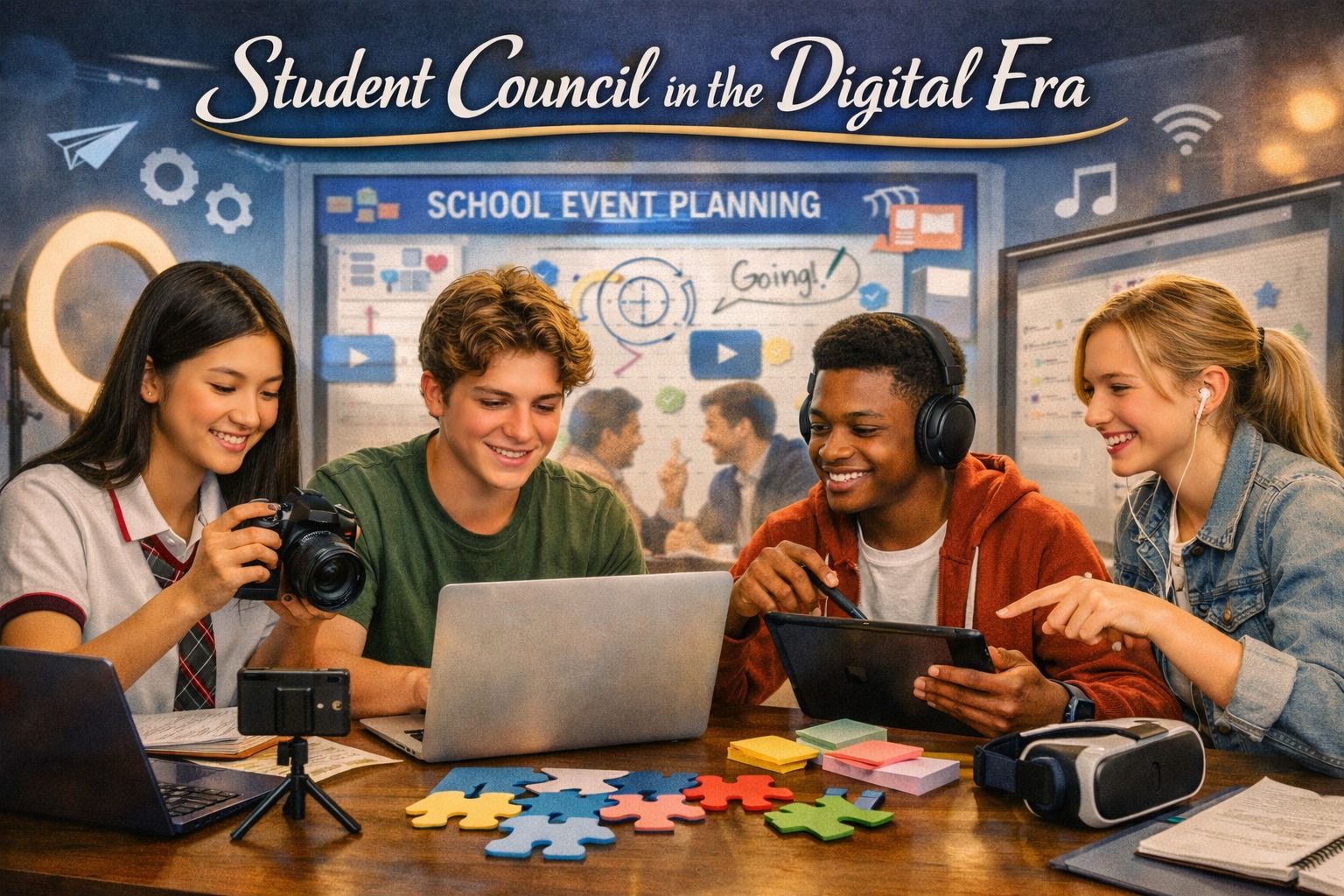
The student council has evolved significantly in the digital era, where technology has become an essential part of education and student engagement. Instead of relying only on traditional methods, student council members now use digital tools to organize events, communicate with students, promote school programs, and manage activities more efficiently. Technology enables organizations to become more creative, innovative, and inclusive while reaching a wider audience within the school community. As digital transformation continues to shape education, student councils must adapt by embracing modern solutions that improve collaboration and productivity. By utilizing technology wisely, student councils can create more meaningful and engaging experiences for all students.
THE EVOLUTION OF STUDENT COUNCIL IN THE DIGITAL ERA
The student council has changed alongside the rapid growth of digital technology. Traditional activities such as printed announcements and face-to-face meetings are now supported by online communication platforms, digital collaboration tools, and social media channels. These technologies allow student council members to share information quickly and coordinate projects more effectively. Digital solutions also increase accessibility for students who may not always be able to attend meetings in person.
The digital era encourages student leaders to become more adaptable and innovative. Members must learn how to use technology responsibly while maintaining professionalism and effective communication. They also gain valuable digital literacy skills that are increasingly important in higher education and future careers. As a result, technology strengthens both organizational performance and student development.
USING TECHNOLOGY TO CREATE MORE CREATIVE SCHOOL ACTIVITIES
Technology opens countless opportunities for organizing creative school activities. Student councils can host online competitions, virtual seminars, digital art exhibitions, interactive quizzes, live-streamed events, and hybrid school celebrations that combine in-person and online participation. These innovative programs increase student engagement while making activities more accessible and enjoyable. Digital creativity also encourages students to explore new talents and ideas.
Modern design applications, video editing software, and online collaboration platforms help student council members produce high-quality promotional materials and event content. Creative digital campaigns attract greater participation because they are visually appealing and easy to share. Technology allows students to express their creativity in ways that were previously impossible. This strengthens the overall impact of student council programs.
IMPROVING COMMUNICATION THROUGH DIGITAL PLATFORMS
Effective communication is one of the greatest advantages technology offers to the student council. Messaging applications, email, school websites, and social media platforms enable members to distribute announcements, gather feedback, and respond to student questions quickly. Faster communication reduces misunderstandings and improves coordination among committees. This creates a more organized and efficient workflow.
Digital communication also encourages greater student participation. Online surveys and discussion platforms allow students to share opinions and suggest ideas for future activities. Student council members can better understand student needs by collecting feedback in real time. These interactions strengthen relationships between students and school administrators while promoting transparency.
BENEFITS OF DIGITAL TOOLS FOR STUDENT COUNCIL MANAGEMENT
Digital tools significantly improve the efficiency of student council management. Cloud-based document sharing, online scheduling systems, project management applications, and virtual meeting platforms simplify planning and collaboration. Members can work together regardless of location while maintaining organized records of every activity. These technologies reduce administrative workload and improve productivity.
Technology also helps student councils monitor program progress more effectively. Shared calendars, task trackers, and collaborative documents ensure that responsibilities are completed on time. Members become more accountable because project updates are visible to the entire team. Efficient management contributes to more successful school programs and stronger organizational performance.
CHALLENGES OF TECHNOLOGY USE AND HOW TO OVERCOME THEM
Although technology provides many advantages, student councils must also address several challenges. Excessive dependence on digital communication may reduce direct social interaction and teamwork if not managed carefully. In addition, issues such as misinformation, cybersecurity risks, and unequal access to technology can affect organizational activities. Responsible digital practices are therefore essential.
Student councils should encourage balanced technology use by combining online collaboration with face-to-face interactions whenever possible. Members should also receive basic training in digital literacy, online safety, and responsible communication. Schools can support these efforts by providing secure digital platforms and promoting ethical technology use. These strategies maximize the benefits of technology while minimizing potential risks.
PREPARING FUTURE STUDENT LEADERS THROUGH TECHNOLOGY
Technology not only improves current student council programs but also prepares students for future leadership opportunities. Members develop valuable skills in digital communication, project management, online collaboration, creative content creation, and problem-solving. These competencies are highly valued in universities and modern workplaces. Practical experience with digital tools gives students greater confidence in adapting to technological changes.
Student council members also learn how to lead responsibly in an increasingly connected world. They understand the importance of ethical communication, digital responsibility, and continuous learning. These qualities help shape future leaders who are innovative, adaptable, and socially responsible. The combination of leadership and technology creates a strong foundation for lifelong success.
CONCLUSION
The student council plays an increasingly important role in the digital era by utilizing technology to organize more creative, efficient, and engaging school activities. Digital tools improve communication, collaboration, event management, and student participation while encouraging innovation throughout the school community. At the same time, responsible technology use helps students develop digital literacy, leadership, and problem-solving skills that remain valuable throughout their lives. Schools that support technological innovation within student councils prepare students to become capable leaders in a rapidly changing world. Embracing technology today ensures stronger educational experiences and more successful school organizations tomorrow.
Tentang Penulis
Gusti Ayu Tita P
Penulis — Universitas STEKOM
Penulis aktif yang berfokus pada isu-isu akademik, teknologi pendidikan, dan pengembangan sumber daya manusia di lingkungan kampus.