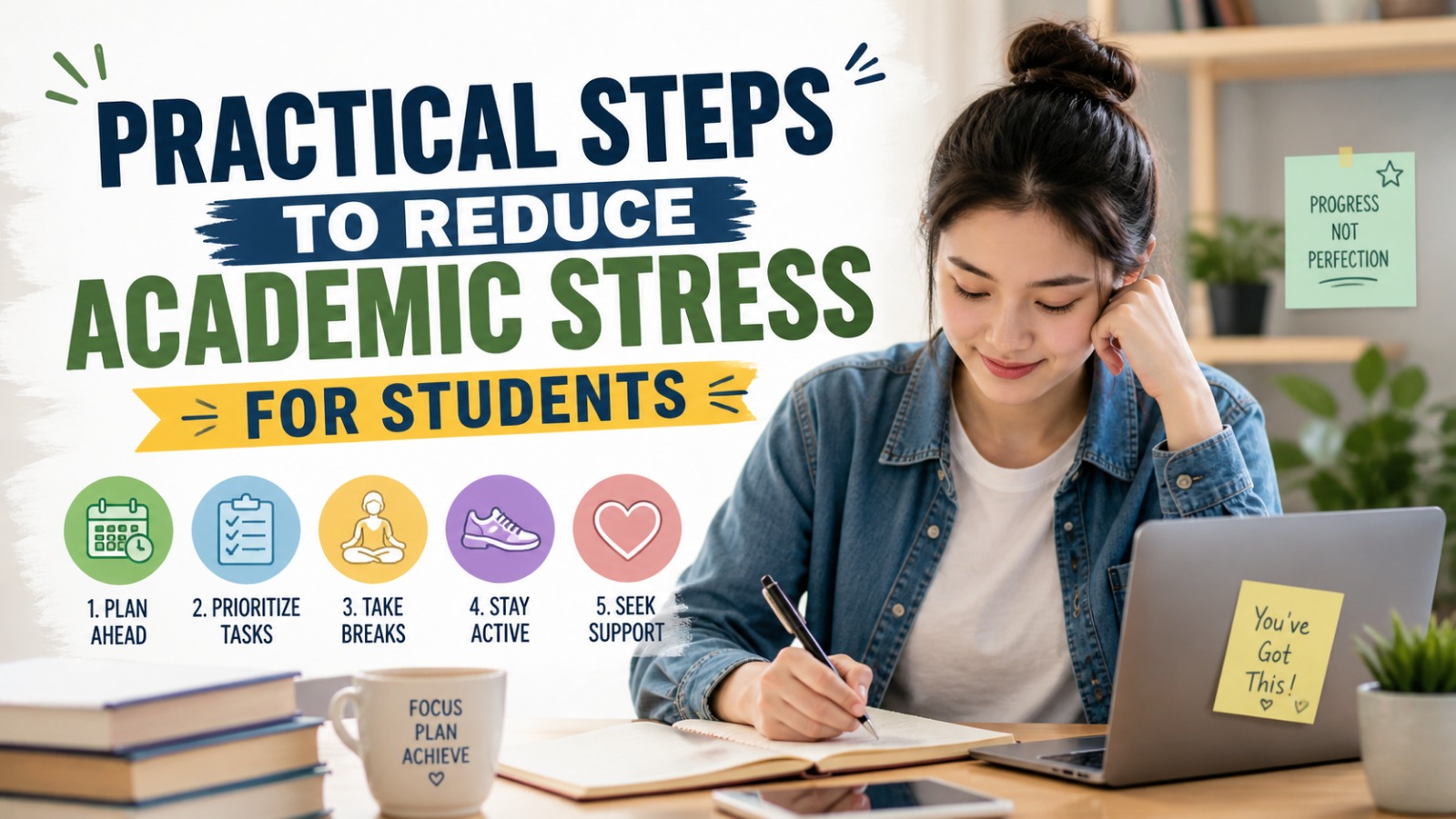
Academic life can be both exciting and demanding. Students often juggle multiple responsibilities, including assignments, exams, extracurricular activities, and personal commitments. When these pressures build up, academic stress can quickly become overwhelming. If not managed properly, it may affect both performance and overall well-being. Understanding how to handle stress effectively is essential for maintaining a balanced and productive student life.
UNDERSTANDING ACADEMIC STRESS
Academic stress refers to the mental and emotional strain caused by educational demands. It can manifest in different ways, such as anxiety, lack of motivation, difficulty concentrating, and even physical fatigue. While a certain level of stress can motivate students to perform better, excessive stress can have the opposite effect, leading to burnout and decreased productivity.
IDENTIFYING THE MAIN CAUSES
Several factors contribute to academic stress. Tight deadlines, heavy workloads, and high expectations are among the most common triggers. In addition, poor time management and lack of proper rest can intensify the problem. Some students also experience stress due to competition or fear of failure, which can create unnecessary pressure.
DEVELOPING EFFECTIVE TIME MANAGEMENT
One of the most practical ways to reduce academic stress is by managing time efficiently. Creating a daily or weekly schedule helps students organize tasks and set priorities. Breaking larger assignments into smaller, manageable parts can make them less intimidating. By staying consistent and avoiding procrastination, students can reduce last-minute pressure.
PRIORITIZING REST AND SELF CARE
Rest is not a luxury but a necessity. Getting enough sleep allows the brain to function properly and improves concentration. In addition to sleep, engaging in activities such as light exercise, hobbies, or relaxation techniques can help recharge energy levels. Taking short breaks during study sessions can also improve focus and prevent exhaustion.
BUILDING A POSITIVE MINDSET
A positive mindset plays a crucial role in managing stress. Students should focus on their progress rather than comparing themselves to others. Accepting mistakes as part of the learning process can reduce fear and anxiety. Developing self-confidence and practicing gratitude can also help create a healthier perspective on academic challenges.
SEEKING SUPPORT WHEN NEEDED
Students should not hesitate to seek help when feeling overwhelmed. Talking to friends, family, or lecturers can provide emotional support and practical advice. Joining study groups can also make learning more enjoyable and less stressful. A supportive environment can significantly reduce feelings of isolation.
SETTING REALISTIC GOALS
Setting achievable goals helps students stay motivated without feeling pressured. Unrealistic expectations often lead to disappointment and stress. By setting clear and attainable targets, students can track their progress and celebrate small achievements along the way.
CONCLUSION
Reducing academic stress requires a combination of good habits, positive thinking, and proper support. By managing time effectively, taking care of mental health, and setting realistic goals, students can create a more balanced academic experience. These practical steps not only improve performance but also contribute to long-term well-being.
Tentang Penulis
Gusti Ayu Tita P
Penulis — Universitas STEKOM
Penulis aktif yang berfokus pada isu-isu akademik, teknologi pendidikan, dan pengembangan sumber daya manusia di lingkungan kampus.