Practical Strategies for Developing Self Control at Work
Gusti Ayu Tita P
31 Agustus 2026
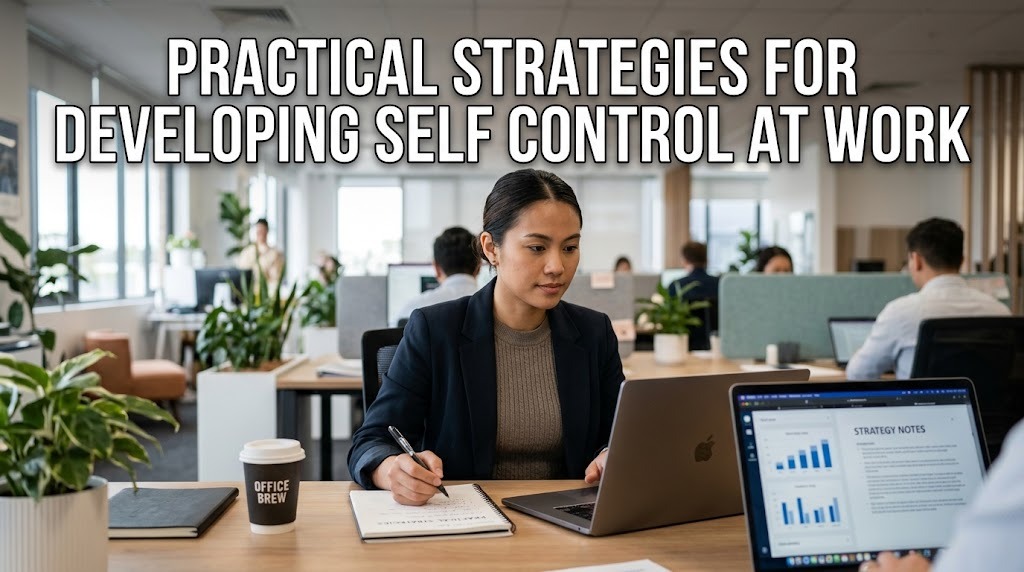
Self control is an important skill in the workplace because employees often need to manage emotions, attention, time, and behavior while completing their responsibilities. A professional environment can bring deadlines, disagreements, distractions, and unexpected problems that require a calm and thoughtful response. Without good self control, a person may react emotionally, lose focus, or make decisions without considering the consequences. Developing self control at work can help employees remain productive, professional, and consistent. It is not about suppressing emotions or becoming overly rigid, but about learning how to respond to situations in a more balanced way.
UNDERSTANDING SELF CONTROL IN THE WORKPLACE
Self control at work means the ability to manage thoughts, emotions, impulses, and actions while staying focused on professional responsibilities. It helps employees avoid unnecessary reactions when they face criticism, pressure, disagreements, or stressful situations. A person with good self control can pause before responding and consider what action would be most appropriate. This ability is especially valuable when workplace situations become unpredictable or demanding.
Self control also supports professional relationships because people are more likely to communicate respectfully when they can regulate their emotions. It allows employees to separate personal feelings from professional responsibilities and maintain appropriate behavior. Strong self control does not mean ignoring emotions, but recognizing them and choosing a constructive response. Over time, this skill can contribute to better workplace performance and stronger professional relationships.
SET CLEAR PRIORITIES AND DAILY GOALS
One practical way to develop self control is by creating clear priorities and realistic daily goals. Employees often lose control of their time when they try to handle too many tasks simultaneously or constantly respond to distractions. Writing down the most important tasks can provide a clear direction and reduce unnecessary decision making. It also makes it easier to recognize which activities deserve immediate attention and which can be handled later.
Daily goals should be specific enough to guide action but realistic enough to complete. Breaking large responsibilities into smaller steps can make difficult work feel more manageable. A structured workday reduces the temptation to procrastinate because employees know what they need to accomplish. By consistently following a simple plan, people can gradually strengthen their discipline and control over their working habits.
MANAGE EMOTIONS BEFORE RESPONDING
Workplace disagreements and stressful conversations can trigger strong emotional reactions. Instead of responding immediately, employees can take a short pause to understand what they are feeling and why they are reacting. Pausing before responding is a simple but powerful self control strategy because it creates time to think about the possible consequences of a reaction. Even a few moments of reflection can prevent unnecessary arguments or inappropriate communication.
Employees can also use simple techniques such as slow breathing, taking a short break, or changing their focus temporarily when emotions become intense. These actions can help create enough mental space to respond more calmly. It is also useful to distinguish between facts and assumptions before reacting to a workplace situation. Emotional awareness combined with thoughtful communication can make difficult situations easier to manage.
REDUCE DISTRACTIONS AND MAINTAIN FOCUS
Digital notifications, social media, unnecessary meetings, and frequent interruptions can make it difficult to maintain concentration. Employees can strengthen self control by identifying their most common distractions and reducing them during important work periods. Turning off nonessential notifications and setting specific times to check messages can help protect attention. Creating a focused work environment makes it easier to resist short term distractions.
Another useful strategy is working in dedicated periods of concentration followed by short breaks. During these periods, employees should focus on one important task instead of constantly switching between activities. Multitasking may feel productive, but frequent task switching can make concentration more difficult. By practicing focused work consistently, employees can gradually improve their ability to control attention and complete tasks efficiently.
BUILD HEALTHY WORKPLACE HABITS
Self control becomes stronger when it is supported by consistent workplace habits. Getting enough rest, organizing tasks, arriving prepared, and maintaining a reasonable work routine can make it easier to regulate behavior and attention. Employees should avoid depending entirely on motivation because motivation can change from one day to another. Instead, reliable routines can make positive behaviors easier to repeat.
It is also helpful to review personal performance regularly. At the end of the day or week, employees can consider what distracted them, which situations triggered emotional reactions, and what strategies worked well. Self reflection allows people to identify patterns and make gradual improvements. Small changes repeated consistently can eventually become habits that support stronger self control and professional discipline.
PRACTICE SELF CONTROL FOR LONG TERM PROFESSIONAL GROWTH
Developing self control at work requires regular practice rather than instant perfection. Employees will still experience stressful days, mistakes, frustration, and moments of poor concentration. What matters is learning from these experiences and returning to healthier behaviors. Setting realistic expectations can make the process more sustainable and prevent unnecessary disappointment.
Strong self control can support long term professional growth by helping employees make thoughtful decisions, manage pressure, maintain focus, and communicate professionally. It can also improve reliability because people are better able to complete responsibilities even when they do not feel motivated. Self control is therefore not only a personal skill but also an important part of professional development. With consistent practice, employees can become more disciplined and better prepared to handle the demands of the workplace.
CONCLUSION
Self control at work can be developed through practical and consistent strategies. Setting clear priorities, managing emotions, reducing distractions, creating healthy routines, and practicing self reflection can help employees strengthen their ability to regulate their behavior. These habits can improve concentration, communication, productivity, and decision making. Self control does not require a person to eliminate emotions or avoid every difficult situation. Instead, it involves learning to pause, think, and choose an appropriate response. By practicing these skills regularly, employees can build stronger professional discipline and create a more productive and balanced working life.
Tentang Penulis
Gusti Ayu Tita P
Penulis — Universitas STEKOM
Penulis aktif yang berfokus pada isu-isu akademik, teknologi pendidikan, dan pengembangan sumber daya manusia di lingkungan kampus.