Public Aspirations Amid Waves of Mass Protests
Gusti Ayu Tita P
1 September 2026
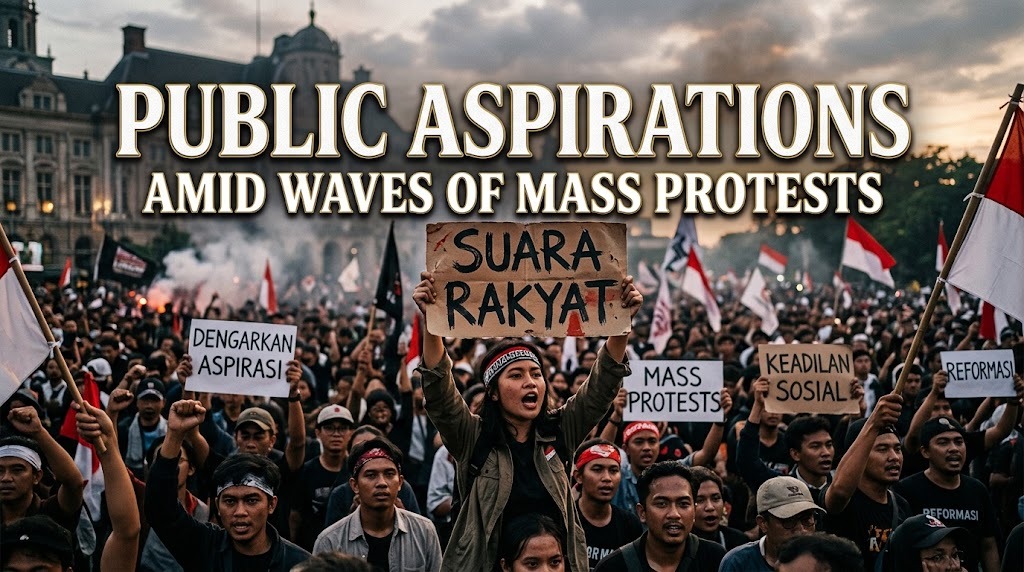
Mass protests often emerge when people feel that their public aspirations need greater attention from governments, institutions, or society. Citizens may gather because they want changes in policies, better public services, economic improvements, or greater accountability. When similar concerns are shared by many people, individual expectations can develop into collective demands. This makes mass protests an important phenomenon in modern democratic life. Understanding the aspirations behind these actions helps society see the issues beyond the crowds and headlines.
PUBLIC ASPIRATIONS AS COLLECTIVE DEMANDS
Public aspirations reflect what people hope to improve in their communities and society. These expectations can involve economic welfare, education, employment, social justice, public services, or government policies. When people believe their concerns are not receiving enough attention, they may communicate them through collective action. Collective demands can make individual concerns more visible to the wider public. This visibility can encourage institutions to examine the problems being raised.
However, not every person in society has the same aspirations. Different groups may have different priorities depending on their experiences and circumstances. Some people may support a protest's main demand while disagreeing with certain methods used during the action. Diverse perspectives are therefore a normal part of public discussion. Understanding these differences can help prevent a protest from being viewed too simply.
WHY ASPIRATIONS BECOME PROTEST DEMANDS
Public aspirations can develop into protest demands when people believe existing channels have not provided satisfactory responses. Citizens may have previously expressed concerns through discussions, petitions, public consultations, or other formal mechanisms. If problems continue without meaningful progress, frustration can increase. Unresolved concerns may encourage people to seek greater public attention through demonstrations.
The transition from concern to collective action usually involves several stages. People first recognize a problem, discuss it with others, and determine whether they share similar experiences. Organizations and communities can then help coordinate a broader response. Social solidarity can strengthen participation when individuals believe their collective voice will be more visible than separate complaints. This process can gradually turn personal expectations into organized public demands.
ECONOMIC ISSUES AND PUBLIC ASPIRATIONS
Economic conditions can strongly influence what people expect from their government and society. Rising living costs, limited employment opportunities, income inequality, and financial uncertainty can affect people's daily lives. When economic pressure becomes widespread, communities may demand policies that provide greater security or opportunity. Economic concerns can therefore become an important part of mass protest movements.
Economic aspirations are not always limited to income. People may also want fair access to education, healthcare, housing, employment, and other essential services. These expectations can shape how citizens evaluate public policies and institutional performance. Economic fairness can become a central topic when people believe existing conditions disadvantage certain groups. Public demonstrations can then provide a visible platform for communicating these concerns.
GOVERNMENT POLICIES AND PUBLIC EXPECTATIONS
Government policies often influence whether public aspirations are satisfied or challenged. A new regulation or decision can receive strong criticism when citizens believe it will negatively affect their lives. People may demand changes, greater transparency, or explanations about how a policy was developed. Policy concerns can become stronger when affected communities feel that their perspectives were not adequately considered.
Effective communication can help institutions understand public expectations before disagreements become more serious. Public consultations and accessible explanations allow citizens to ask questions and express concerns. While consultation cannot guarantee that everyone will agree with a decision, it can improve understanding. Transparent communication can reduce uncertainty and create opportunities for constructive dialogue.
SOCIAL MEDIA AMPLIFIES PUBLIC ASPIRATIONS
Social media has changed how public aspirations are communicated. Individuals can share personal experiences, opinions, photographs, videos, and campaign messages with large audiences. People who have similar concerns can connect without needing to be in the same location. Digital participation can therefore help turn separate concerns into broader public conversations.
At the same time, social media can make public debates more emotional and polarized. Unverified information may spread rapidly, especially when an issue already creates strong feelings. Users should check sources and context before sharing protest-related content. Digital literacy helps people distinguish verified information from speculation and misleading claims. Responsible online communication can make public discussions more productive.
MEDIA AND THE VISIBILITY OF DEMANDS
Mass media can help explain the demands behind a large demonstration. News reports can provide information about the background of an issue, the groups involved, and the responses from public institutions. When coverage reaches national audiences, a local concern can become part of a much broader discussion. Media visibility can therefore increase pressure for institutions to address public questions.
However, media coverage can focus on different aspects of a protest. Some reports may emphasize the demands, while others may focus on crowd size, disruption, or conflict. Audiences should compare information from reliable sources to develop a more complete understanding. Critical media consumption is especially important when an event becomes controversial. Better information allows people to evaluate both the aspirations and the methods behind a protest.
THE ROLE OF YOUNGER GENERATIONS
Young people can play an important role in expressing public aspirations. Students and young workers may become involved when an issue affects their education, employment prospects, economic future, or social environment. Social media also gives younger generations accessible tools for discussing and sharing public concerns. Youth participation can bring new perspectives into wider social debates.
Participation can also encourage young people to develop a stronger understanding of civic responsibility. They can learn how public policies affect communities and how collective action can influence public discussion. However, young participants also need reliable information when engaging with controversial issues. Informed civic participation can help ensure that enthusiasm is supported by knowledge and responsible communication.
FROM PROTESTS TO PUBLIC DIALOGUE
A mass protest can attract attention, but meaningful change often requires dialogue afterward. Government institutions, community organizations, protesters, and other citizens can discuss the issues raised and explore possible solutions. Public dialogue provides an opportunity to move beyond demands toward practical discussions. It can also help clarify differences between groups with opposing views.
Dialogue does not require every side to immediately agree. It means creating space for different perspectives to be heard and evaluated. Institutions can explain their decisions, while citizens can provide evidence about how policies affect them. Constructive negotiation can help identify areas of agreement and possible compromises. This process can make public participation more productive over time.
CHALLENGES DURING WAVES OF PROTESTS
Large waves of demonstrations can create challenges for communities and public institutions. Traffic disruption, pressure on public facilities, misinformation, and social polarization can affect people who are not participating. These problems can become more serious when protests occur repeatedly over a short period. Public order must therefore be considered alongside the right to peaceful expression.
Responsible management can reduce unnecessary tension. Organizers can communicate clear information to participants, while authorities can focus on safety and facilitate lawful public expression. Citizens can also contribute by avoiding misinformation and respecting different viewpoints. Cooperation and communication can help prevent public disagreements from becoming deeper social divisions.
PUBLIC ASPIRATIONS AND SOCIAL CHANGE
Mass protests can contribute to social change when public demands receive sustained attention. A demonstration may encourage institutions to review policies or open discussions about issues that were previously overlooked. However, social change rarely happens immediately after one protest. Long-term results often require continued advocacy, institutional action, public participation, and policy evaluation.
The impact of a protest can therefore extend beyond the event itself. Citizens may continue monitoring government responses, participating in community discussions, or supporting related initiatives. These activities can keep public aspirations visible even after media attention decreases. Sustained civic engagement can help transform temporary public pressure into longer-term social discussion and potential reform.
CONCLUSION
Public aspirations can become increasingly visible during waves of mass protests. Citizens may gather to express concerns about economic conditions, government policies, social justice, public services, and their future. Social media and traditional media can amplify these demands and bring them to wider audiences. At the same time, different groups may interpret the same aspirations in different ways.
Ultimately, mass protests are not only about the crowds gathered in public spaces but also about the expectations and concerns behind their demands. Peaceful participation, accurate information, responsible communication, and meaningful dialogue can help transform public aspirations into constructive discussions. When institutions and citizens are willing to listen to one another, collective demands can contribute to positive and sustainable social change.
Tentang Penulis
Gusti Ayu Tita P
Penulis — Universitas STEKOM
Penulis aktif yang berfokus pada isu-isu akademik, teknologi pendidikan, dan pengembangan sumber daya manusia di lingkungan kampus.