Public Demonstrations influence government decisions by shaping public opinion encouraging policy change and strengthening par democraticticipation.
Gusti Ayu Tita P
30 Juli 2026
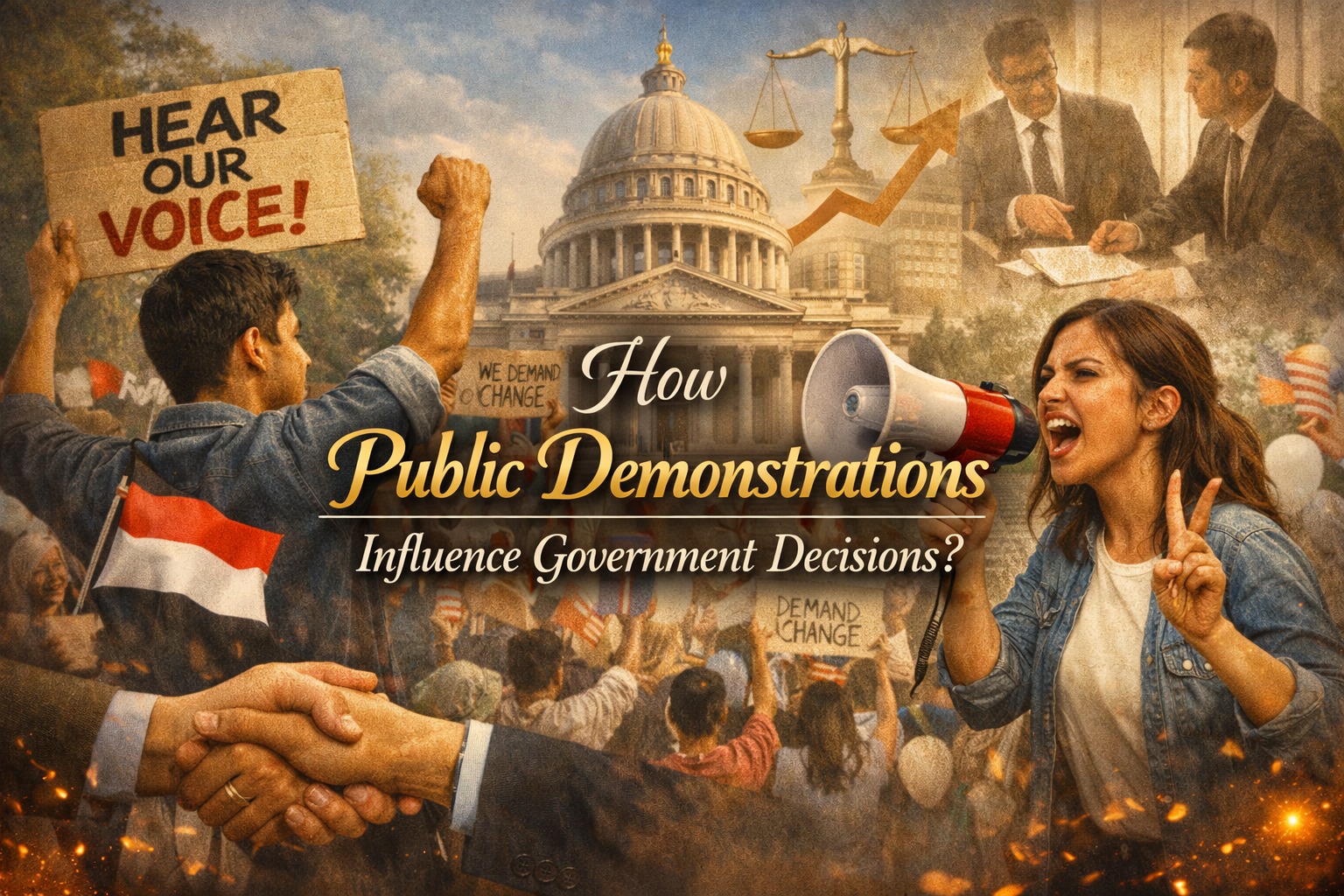
Public demonstrations have long been an important way for citizens to express their opinions and encourage political change. In democratic societies, peaceful protests allow people to communicate their concerns directly to governments and the wider public. Throughout history, many significant policy reforms have been influenced by organized public demonstrations. While not every protest leads to immediate action, sustained public participation often increases pressure on decision-makers. Understanding how demonstrations influence government decisions helps people appreciate the value of civic engagement and responsible public participation.
WHY PUBLIC DEMONSTRATIONS ARE IMPORTANT IN A DEMOCRACY
Public demonstrations provide citizens with an opportunity to express their opinions when they believe important issues require greater attention. They strengthen freedom of expression by allowing people to peacefully communicate their concerns to elected leaders and society. Demonstrations also encourage public discussions about topics that may otherwise receive limited attention. Through peaceful gatherings, citizens remind governments that public opinion remains an essential part of democratic decision-making.
In addition, demonstrations often bring together individuals from different backgrounds who share similar goals. This unity can create a stronger public voice that governments cannot easily ignore. When demonstrations remain peaceful and well-organized, they help build trust between citizens, the media, and public institutions. As a result, democratic systems become more responsive to public needs.
HOW GOVERNMENTS RESPOND TO PUBLIC DEMONSTRATIONS
Governments evaluate demonstrations by considering factors such as public support, media coverage, economic impact, and legal responsibilities. Large peaceful demonstrations often attract significant attention from policymakers because they reflect widespread public concern. Officials may organize meetings, conduct public consultations, or review existing policies after receiving strong public feedback. These responses help governments better understand the expectations of their citizens.
However, governments also balance public demands with legal, financial, and administrative considerations. Not every request can be implemented immediately because policy changes often require careful planning and legislative approval. Even so, consistent public engagement can encourage gradual reforms over time. Open communication between governments and citizens often produces more balanced and sustainable decisions.
THE ROLE OF MEDIA IN SHAPING PUBLIC OPINION
The media plays an important role in increasing the visibility of public demonstrations. Television, newspapers, online news platforms, and social media allow information to spread quickly to millions of people. Accurate reporting helps citizens understand the reasons behind a demonstration and encourages informed public discussions. Greater public awareness often increases pressure on governments to address important issues.
At the same time, responsible journalism is essential for presenting balanced information. Misleading reports or incomplete coverage may create misunderstandings about the goals of a demonstration. Reliable information allows both citizens and policymakers to make better decisions. Therefore, transparent communication between organizers, journalists, and public officials contributes to a healthier democratic process.
FACTORS THAT MAKE DEMONSTRATIONS MORE INFLUENTIAL
Several factors determine whether a demonstration successfully influences government decisions. Peaceful behavior, clear objectives, strong organization, and broad public participation usually increase credibility. Demonstrations supported by factual evidence and constructive proposals are more likely to receive positive attention from policymakers. Respecting laws and maintaining public safety also improve public confidence in the movement.
Long-term consistency is another important factor. Governments are generally more responsive when citizens continue participating through public discussions, petitions, consultations, and lawful demonstrations. Building partnerships with community organizations, experts, and advocacy groups can further strengthen the message. A combination of peaceful action and constructive dialogue often produces the most effective results.
CHALLENGES AND LIMITATIONS OF PUBLIC DEMONSTRATIONS
Although demonstrations can influence government decisions, they do not always produce immediate policy changes. Political priorities, budget limitations, legal requirements, and differing public opinions may slow the decision-making process. Governments must often balance multiple interests before introducing new regulations. This makes policy reform a gradual rather than an instant process.
Another challenge is maintaining public support throughout a campaign. Demonstrations that become disorganized or lose focus may receive less attention from both the public and policymakers. Organizers therefore need effective communication and responsible leadership to maintain credibility. Patience and continued civic participation remain essential for achieving meaningful and lasting change.
CONCLUSION
Public demonstrations remain one of the most important ways for citizens to participate in democratic governance. Peaceful protests encourage governments to listen, evaluate public concerns, and consider policy improvements based on community needs. While demonstrations alone may not immediately change laws, they often contribute to long-term political discussions and gradual reforms. Responsible participation, constructive dialogue, and accurate public information strengthen the relationship between governments and citizens. Ultimately, peaceful demonstrations help create more transparent, accountable, and responsive democratic societies.
Tentang Penulis
Gusti Ayu Tita P
Penulis — Universitas STEKOM
Penulis aktif yang berfokus pada isu-isu akademik, teknologi pendidikan, dan pengembangan sumber daya manusia di lingkungan kampus.