Recommended Educational Holiday Destinations for Families
Gusti Ayu Tita P
1 September 2026
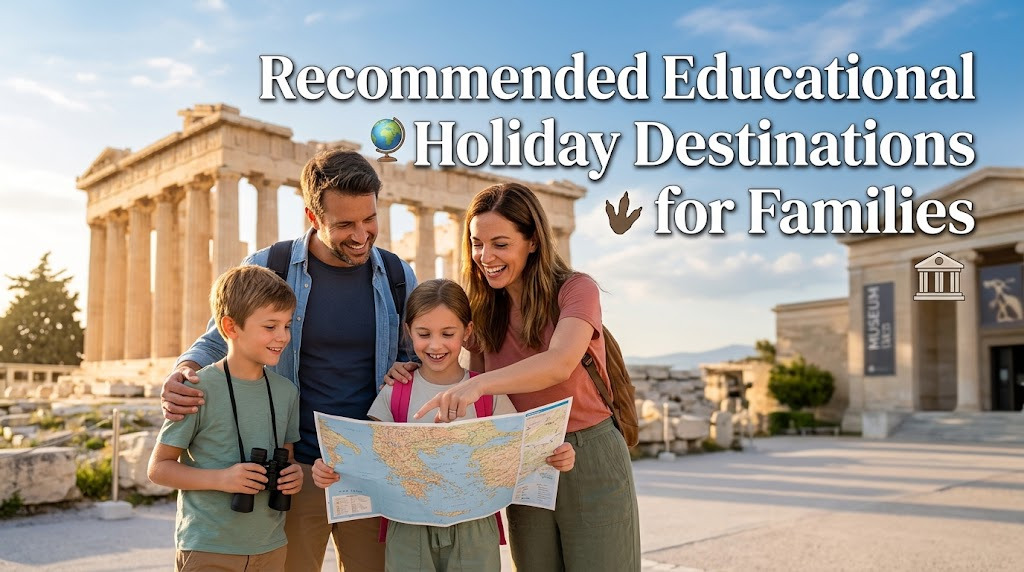
Family holidays can be more meaningful when parents choose destinations that combine recreation with learning. Educational destinations allow children to discover history, science, nature, culture, and new skills through direct experiences. These places can make learning more enjoyable because children can see and explore things outside the classroom. Families can choose destinations based on children's ages, interests, and learning needs.
MUSEUMS AND HISTORICAL SITES
Museums are excellent destinations for families who want to introduce children to history and culture. Children can see historical objects, artworks, documents, traditional clothing, and other collections that provide information about the past. Seeing these objects directly can make historical topics easier to understand. Parents can explain the information using simple language based on the child's age.
Historical sites can provide an even more direct learning experience because families can visit places connected to important events or periods. These may include ancient buildings, monuments, temples, forts, or heritage areas. Before visiting, parents should learn about the site's history and follow the rules provided by the local management. Respecting historical places helps children understand the importance of preserving cultural heritage.
SCIENCE AND TECHNOLOGY CENTERS
Science centers are suitable for children who are interested in discovering how things work. These destinations often provide interactive exhibits, demonstrations, experiments, and educational simulations. Children can learn about subjects such as physics, biology, technology, or space through hands-on experiences. Interactive activities can make scientific concepts easier to understand.
Parents can encourage children to ask questions while exploring the exhibits. If an activity is available, allow children to participate according to the safety rules and age requirements. After the visit, families can discuss the most interesting things they discovered. Hands-on learning can encourage curiosity and make science more enjoyable.
NATURE AND CONSERVATION AREAS
Nature destinations provide opportunities for children to learn about the environment through direct observation. Families can visit botanical gardens, forests, conservation areas, farms, beaches, or nature parks. Children can observe plants, animals, habitats, and environmental conditions. These experiences can help them understand the connection between living things and their surroundings.
Parents can turn simple observations into educational activities. Children can identify different plants, observe animals from a safe distance, or discuss why protecting natural habitats is important. Families should follow environmental rules and avoid disturbing wildlife. Nature-based learning can build knowledge while encouraging children to care about the environment.
CULTURAL AND ART DESTINATIONS
Cultural destinations can introduce children to the traditions and creative expressions of different communities. Families can visit cultural villages, art galleries, traditional craft centers, or local cultural performances. Children can learn about traditional music, dance, crafts, food, clothing, and customs. These experiences can help them understand the diversity of cultures.
Parents should encourage children to respect traditions that may be different from their own. If workshops are available, children can participate in age-appropriate activities such as simple crafts or traditional art. Families should follow local customs and ask permission before photographing certain activities. Cultural experiences can help children develop appreciation for diversity and heritage.
LIBRARIES AND EDUCATIONAL SPACES
Libraries and educational spaces can also be valuable family destinations. Modern libraries may provide children's reading areas, storytelling programs, exhibitions, workshops, and educational activities. These facilities can encourage children to discover books and information based on their interests. A quiet and comfortable environment can also support positive reading habits.
Parents can connect the visit with other activities during the holiday. For example, children can read a book about animals before visiting a nature destination or learn about history before visiting a museum. After reading, parents can discuss what the child has discovered. Combining reading with real-world experiences can make learning more connected and meaningful.
CONCLUSION
Recommended educational holiday destinations for families include museums and historical sites, science and technology centers, nature and conservation areas, cultural destinations, and libraries or educational spaces. Each destination offers different learning opportunities that can be adapted to children's ages and interests. Parents should consider safety, accessibility, costs, and available activities before making a choice. With the right destination, a family holiday can provide both enjoyable recreation and valuable learning experiences.
Tentang Penulis
Gusti Ayu Tita P
Penulis — Universitas STEKOM
Penulis aktif yang berfokus pada isu-isu akademik, teknologi pendidikan, dan pengembangan sumber daya manusia di lingkungan kampus.