Safe Driving Tips for Long Distance Holiday Return Trips
Gusti Ayu Tita P
10 Agustus 2026
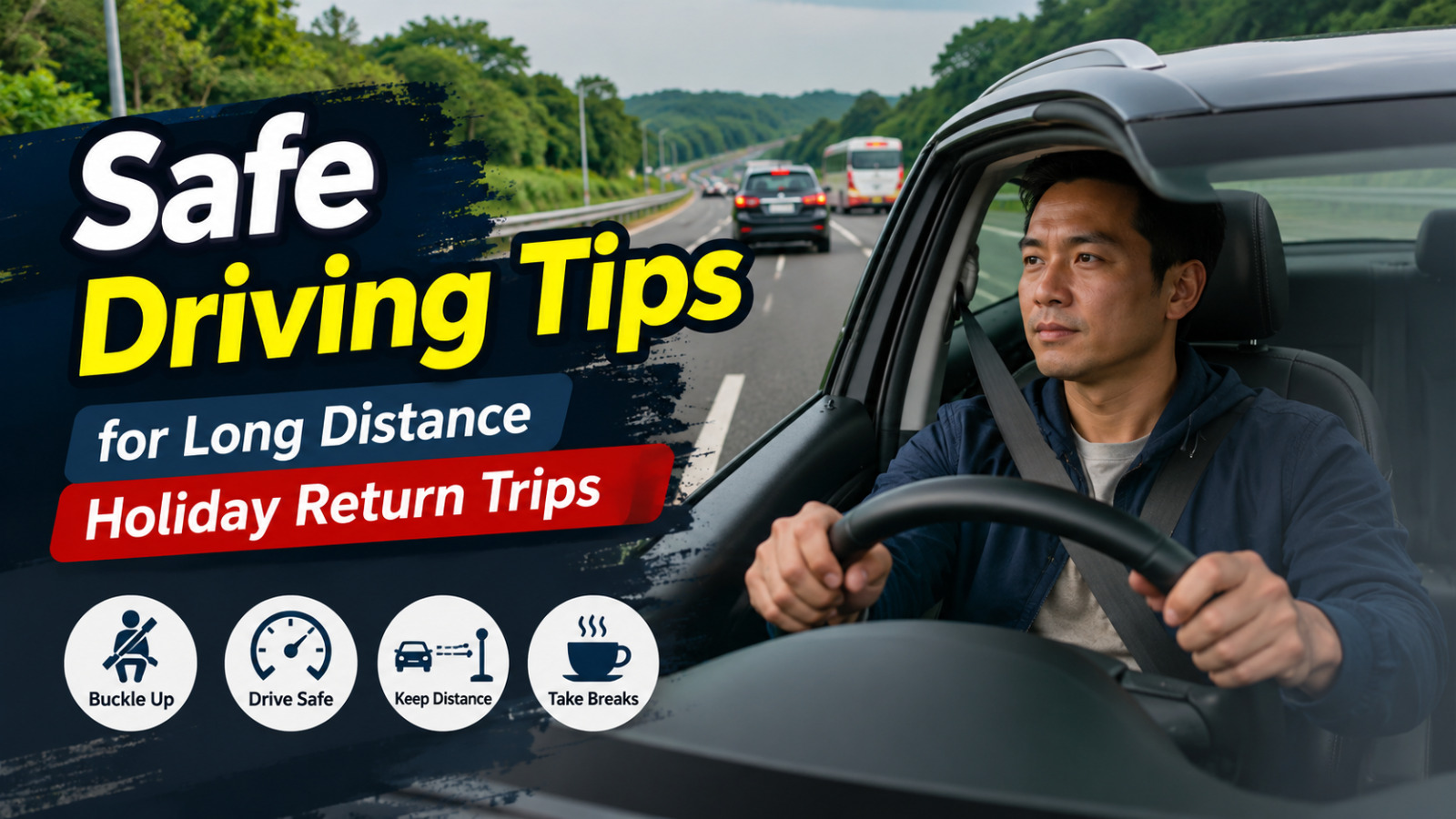
Returning home after a holiday can be tiring, especially when the journey involves long distances, heavy traffic, and unpredictable road conditions. Drivers need to prepare carefully to keep themselves, their passengers, and other road users safe.
A long-distance return trip requires more than simply having enough fuel. Proper vehicle preparation, adequate rest, safe driving habits, and careful route planning can make the journey much more comfortable. By following practical safety measures, travelers can reduce risks and arrive home safely.
PREPARE YOUR VEHICLE BEFORE DEPARTURE
Before starting a long-distance holiday return trip, make sure the vehicle is in good condition. Check the tires, brakes, engine oil, coolant, lights, battery, and windshield wipers before leaving. Tire pressure should follow the manufacturer's recommended level because incorrect pressure can affect handling and fuel efficiency. Drivers should also make sure the spare tire and basic emergency equipment are available.
It is also important to check the vehicle's fuel level before entering a long or congested route. Do not wait until the fuel is nearly empty before looking for a gas station, particularly when traveling through unfamiliar areas. A quick inspection before departure can help prevent mechanical problems that could interrupt the journey.
GET ENOUGH REST BEFORE DRIVING
Driver fatigue is one of the major risks during long-distance travel. After spending several days on holiday, travelers may feel tired even before beginning their return journey. Getting enough sleep before driving is essential because fatigue can reduce concentration, slow reaction time, and make it harder to make safe decisions.
Drivers should avoid forcing themselves to continue when they feel sleepy. Take regular breaks at safe locations such as rest areas or other suitable stopping points. If possible, passengers who are qualified to drive can take turns with the main driver, allowing everyone to rest during the journey.
PLAN THE ROUTE AND TRAVEL TIME
Good planning can make a long-distance return trip more efficient and less stressful. Before departure, check the expected traffic conditions, road closures, weather, and possible alternative routes. Leaving at an appropriate time can help travelers avoid the most congested periods on busy holiday routes.
However, drivers should not choose a departure time solely based on traffic predictions. Personal fitness and road safety should remain the main priorities. A slightly longer journey on a safer and less stressful route is often better than rushing through heavy traffic.
DRIVE AT A SAFE AND CONSISTENT SPEED
Maintaining a safe speed is especially important when traveling long distances. Drivers should follow posted speed limits and adjust their speed according to traffic, weather, visibility, and road conditions. Speeding can reduce the amount of time available to react to sudden situations, particularly when traffic becomes unpredictable.
Drivers should also avoid unnecessary acceleration and sudden braking. Keeping a reasonable distance from the vehicle ahead provides more time to respond if traffic suddenly slows down. Defensive driving is essential during holiday return periods, when roads can become crowded with cars, motorcycles, buses, and trucks.
KEEP A SAFE DISTANCE FROM OTHER VEHICLES
Heavy traffic often causes vehicles to travel close together, but drivers should still maintain enough space to react safely. A safe following distance gives the driver additional time to brake or change direction when necessary. This becomes particularly important when driving behind large vehicles that can limit visibility.
Drivers should also avoid following another vehicle too closely simply because traffic is moving slowly. Tailgating increases the risk of rear-end collisions, especially when the vehicle ahead brakes suddenly. Keeping a safe distance also makes driving less stressful because the driver has more room to respond to changing conditions.
TAKE REGULAR BREAKS DURING THE JOURNEY
Long-distance driving requires continuous concentration, which can become physically and mentally exhausting. Drivers should plan regular stops rather than waiting until they become extremely tired. Short breaks can help restore concentration and reduce driving fatigue.
During a break, drivers can stretch, drink water, eat a light meal, or simply rest. If a driver feels extremely sleepy, a longer rest or a change of driver may be necessary. Never continue driving simply to reach the destination faster when fatigue has become a safety concern.
STAY ALERT IN HEAVY TRAFFIC
Holiday return traffic can change quickly, particularly near major cities, toll roads, intersections, rest areas, and popular destinations. Drivers should remain attentive and avoid distractions while moving through congested areas. Put mobile phones away while driving and use hands-free features only when necessary and permitted.
Motorcycles and smaller vehicles may move between lanes, while buses and trucks may require more space to maneuver. Drivers should therefore check mirrors regularly and use turn signals before changing lanes. Patience and awareness are especially important when traffic becomes crowded.
PREPARE FOR WEATHER AND ROAD CONDITIONS
Weather can affect driving conditions significantly during a long journey. Rain can reduce visibility and make roads slippery, while strong winds or poor visibility can create additional hazards. Drivers should reduce speed and increase their following distance when road conditions become difficult.
It is also useful to check weather forecasts before departure and during planned stops. If conditions become dangerous, finding a safe place to stop may be the better decision. Arriving home later is preferable to taking unnecessary risks because of poor weather.
KEEP PASSENGERS COMFORTABLE AND SAFE
Passengers also play an important role in maintaining a safe journey. Everyone should use a seat belt, and children should be properly secured using suitable child restraints when required. Loose luggage should be stored safely so that it does not become dangerous during sudden braking.
Families traveling long distances should also prepare drinking water, snacks, medicines that are normally needed, and other essential supplies. Keeping passengers comfortable can reduce unnecessary distractions for the driver. Travelers should also communicate clearly when someone needs a rest stop or when the driver appears tired.
CONCLUSION
A safe long-distance holiday return trip depends on preparation, patience, and responsible driving. Checking the vehicle, getting enough rest, planning the route, maintaining a safe speed, and taking regular breaks can significantly improve travel safety.
Drivers should remember that reaching home safely is more important than arriving as quickly as possible. By staying alert, respecting traffic rules, and adjusting driving behavior to road and weather conditions, travelers can make their return journey safer, calmer, and more comfortable.
Tentang Penulis
Gusti Ayu Tita P
Penulis — Universitas STEKOM
Penulis aktif yang berfokus pada isu-isu akademik, teknologi pendidikan, dan pengembangan sumber daya manusia di lingkungan kampus.