Shaping Mining’s Future Through Sustainable Management
Gusti Ayu Tita P
20 Agustus 2026
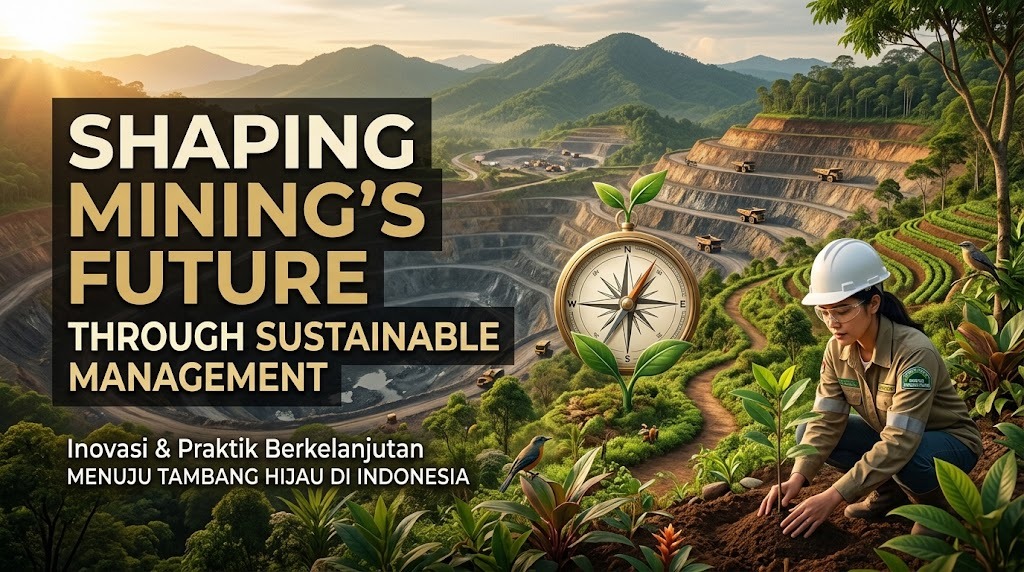
The mining industry plays an important role in supplying minerals needed for construction, manufacturing, energy, transportation, and modern technology. As global demand for mineral resources continues to evolve, the industry faces increasing expectations to operate more efficiently and responsibly. Sustainable management has therefore become an important foundation for shaping the future of mining.
Sustainable mining management means balancing economic performance with environmental protection, worker safety, and community interests. It requires companies to consider the entire mining lifecycle, from exploration and production to closure and land rehabilitation. With appropriate technology, skilled workers, strong governance, and long-term planning, mining can continue generating value while reducing unnecessary impacts.
PLANNING MINING ACTIVITIES FOR THE LONG TERM
Long-term planning is essential for responsible resource management. Mining companies need to evaluate geological conditions, mineral reserves, infrastructure, environmental risks, production requirements, and community considerations before developing an operation. Long term planning helps companies use resources efficiently and prepare for potential operational challenges.
Planning should also include the future closure and rehabilitation of mining areas. Considering post-mining conditions from the beginning can help companies establish realistic rehabilitation strategies. This approach ensures that mining management does not focus only on the production phase but also considers what happens after extraction ends.
USING TECHNOLOGY FOR BETTER RESOURCE MANAGEMENT
Modern technology provides opportunities to make mining operations more efficient and measurable. Mining technology such as automation, artificial intelligence, remote sensing, connected sensors, and data analytics can improve exploration, production, maintenance, and environmental monitoring.
Digital systems can also help companies understand how resources are being used. Data about fuel consumption, equipment performance, water use, and production can identify areas where efficiency can be improved. Technology therefore becomes more valuable when it is integrated with clear operational goals and responsible management practices.
PROTECTING THE ENVIRONMENT THROUGHOUT THE MINING LIFECYCLE
Environmental protection should be considered throughout every stage of mining. Companies need to monitor water, air, soil, biodiversity, waste, and land conditions during operations. Environmental management helps identify potential risks and provides a basis for implementing appropriate mitigation measures.
Responsible environmental practices can include efficient water use, proper waste management, emission controls, erosion prevention, and progressive rehabilitation where appropriate. Continuous monitoring is important because environmental conditions can change during mining activities. Effective management requires both technology and qualified environmental professionals.
STRENGTHENING WORKER SAFETY
Mining operations involve heavy equipment and complex working environments, making safety a fundamental part of sustainable management. Companies need comprehensive procedures for hazard identification, risk assessment, equipment operation, emergency response, and worker training. Mining safety should remain a priority regardless of production targets.
Technology can provide additional safety support through automated equipment, remote operation, wearable devices, proximity detection, and digital monitoring. However, these systems need properly trained workers and regular maintenance. A strong safety culture ensures that employees understand their responsibilities and consistently follow established procedures.
DEVELOPING A SKILLED WORKFORCE
Technological and operational changes are increasing demand for workers with both traditional mining knowledge and modern digital capabilities. Engineers, geologists, technicians, environmental specialists, equipment operators, and data professionals all contribute to modern mining operations. Workforce development is therefore essential for maintaining competitiveness.
Companies can provide training, reskilling, certification, and career development programs to help employees adapt. Partnerships with vocational schools and universities can also prepare future workers for emerging roles. Investing in people ensures that new technologies can be used effectively and responsibly.
INVOLVING LOCAL COMMUNITIES
Sustainable mining also depends on constructive relationships with communities surrounding mining areas. Mining projects can create employment, business opportunities, infrastructure, and other economic benefits, but communities may also have concerns about land, water, environmental conditions, and livelihoods. Community engagement provides an opportunity to understand these concerns and develop appropriate responses.
Meaningful engagement should involve clear communication and opportunities for local participation. Community development programs can support education, skills training, local businesses, and other priorities identified through appropriate consultation. Strong relationships can help build trust and support more stable mining operations.
SUPPORTING LOCAL ECONOMIC DEVELOPMENT
Mining can contribute to regional economic development beyond direct employment. Local companies can provide catering, transportation, construction, maintenance, accommodation, and other services. Local economic development can become stronger when communities have the skills and resources needed to participate in mining-related supply chains.
However, mining regions also need economic diversification to prepare for changes in commodity markets and eventual mine closure. Supporting agriculture, manufacturing, tourism, creative industries, and small businesses can create alternative sources of income. A diverse local economy is more resilient when mining activity changes.
PREPARING FOR RESPONSIBLE MINE CLOSURE
Mine closure is an important part of sustainable mining management. Companies need to consider how infrastructure, land, water systems, and surrounding communities will be affected when production ends. Mine closure planning can help reduce environmental and social risks while supporting future land uses.
Rehabilitation may involve reshaping land, managing soil, restoring vegetation, and monitoring environmental conditions. In some cases, former mining areas may be suitable for other productive uses after appropriate rehabilitation. Preparing early allows companies and communities to develop realistic plans for the post-mining period.
BUILDING A MORE RESILIENT MINING FUTURE
The future of mining will depend on how effectively companies combine economic performance with environmental and social responsibility. Sustainable management requires continuous improvement rather than a one-time solution. Technology, skilled workers, strong regulations, environmental monitoring, and community participation all have important roles.
A responsible approach can help the mining industry remain productive while addressing changing expectations and challenges. By planning for the entire mining lifecycle and investing in people, technology, communities, and environmental protection, mining can create value that extends beyond mineral extraction. This provides a stronger foundation for a safer, more efficient, and more sustainable mining future.
Tentang Penulis
Gusti Ayu Tita P
Penulis — Universitas STEKOM
Penulis aktif yang berfokus pada isu-isu akademik, teknologi pendidikan, dan pengembangan sumber daya manusia di lingkungan kampus.