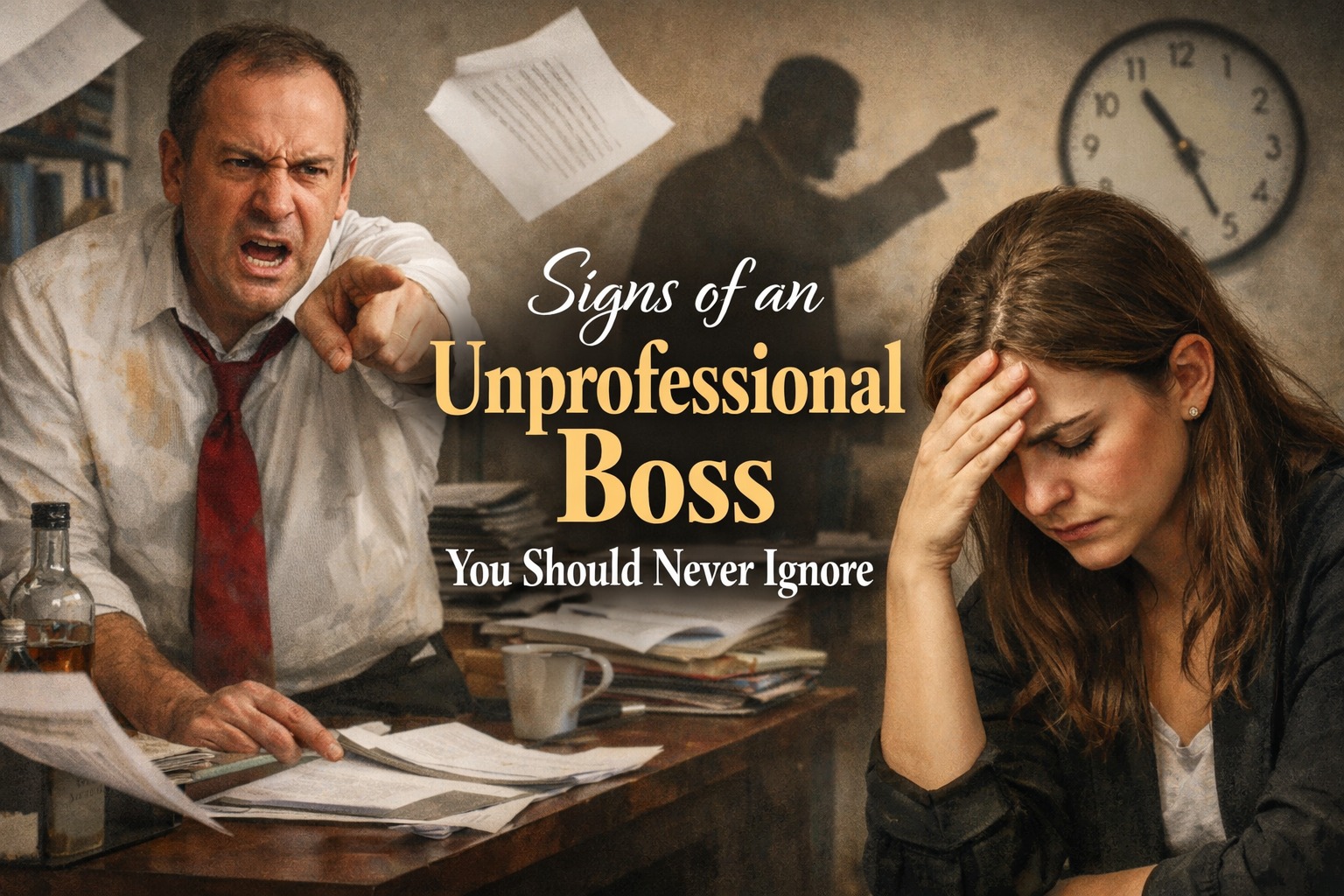
A professional boss plays an important role in creating a healthy, productive, and respectful workplace. However, not every manager has the leadership skills needed to support their team effectively. An unprofessional boss can negatively affect employee motivation, workplace relationships, and overall career development.
Recognizing the signs of an unprofessional boss early can help employees protect their well-being and make better decisions about their careers. These behaviors may appear in small actions at first, but they can create serious problems if they continue over time.
LACK OF RESPECT TOWARD EMPLOYEES
One of the clearest signs of an unprofessional boss is a lack of respect toward employees. A good leader understands that every team member deserves to be treated with dignity regardless of their position. An unprofessional boss may ignore employee opinions, interrupt conversations, or make people feel unimportant.
Respect is the foundation of a positive workplace culture. When a manager frequently uses rude language, humiliates employees in front of others, or dismisses their concerns, it can damage confidence and motivation. Employees who experience this behavior may feel undervalued and less engaged with their work.
A professional boss should encourage open communication and appreciate different perspectives. If a leader consistently fails to show basic respect, it is a warning sign that should not be ignored.
POOR COMMUNICATION AND UNCLEAR EXPECTATIONS
Effective communication is one of the most important qualities of good leadership. An unprofessional boss often provides unclear instructions, changes decisions without explanation, or fails to share important information with the team. This can create confusion and make employees struggle to complete their responsibilities.
A manager who communicates poorly may blame employees for mistakes caused by unclear directions. Instead of providing guidance and support, they may expect workers to understand everything without proper explanation. This approach can reduce productivity and create unnecessary workplace stress.
Professional leaders communicate goals clearly and make sure employees understand their roles. They also provide constructive feedback to help their teams improve rather than creating fear or uncertainty.
TAKING CREDIT FOR EMPLOYEES WORK
Another common sign of an unprofessional boss is taking credit for the achievements of their employees. A strong leader recognizes the contributions of their team and gives proper appreciation when success is achieved. In contrast, an insecure manager may present team accomplishments as their own.
This behavior can make employees feel disappointed and unmotivated because their hard work is not recognized. Over time, it can damage trust between managers and team members. Employees may become less willing to contribute ideas or take initiative.
A professional boss understands that team success reflects good leadership. They highlight employee efforts and create an environment where everyone feels valued for their contributions.
AVOIDING RESPONSIBILITY FOR MISTAKES
A responsible leader accepts accountability when problems occur. However, an unprofessional boss often avoids responsibility and quickly blames others for failures. They may point fingers at employees instead of analyzing the real causes of mistakes.
This behavior creates a negative workplace environment because employees may become afraid to take risks or share honest opinions. When people work under a manager who refuses to admit mistakes, trust and teamwork can slowly disappear.
Good leaders understand that mistakes are opportunities for improvement. They focus on finding solutions, learning from problems, and helping employees grow instead of searching for someone to blame.
SHOWING FAVORITISM IN THE WORKPLACE
Favoritism is another warning sign of poor leadership. An unprofessional boss may give special treatment to certain employees based on personal relationships rather than performance or qualifications. This can create feelings of unfairness among other team members.
When workplace decisions are influenced by favoritism, employees may lose motivation because they believe their efforts will not be recognized equally. Promotions, assignments, and opportunities should be based on skills, achievements, and professional behavior.
A fair boss creates equal opportunities for everyone and evaluates employees objectively. Maintaining fairness helps build trust and encourages a healthier work environment.
IGNORING EMPLOYEE FEEDBACK AND CONCERNS
A professional manager listens to employee feedback because it helps improve the workplace. On the other hand, an unprofessional boss often ignores concerns, rejects suggestions, or refuses to discuss workplace issues. This attitude shows a lack of willingness to improve.
Employees need to feel that their voices matter. When a manager does not care about employee experiences, problems may continue without solutions. This can lead to frustration, stress, and lower job satisfaction.
Good leaders create opportunities for discussion and encourage employees to share their ideas. They understand that feedback is an important part of building a successful team.
CREATING A FEAR-BASED WORK ENVIRONMENT
An unprofessional boss may use fear as a way to control employees. They might threaten workers, constantly criticize them, or create pressure without offering support. While discipline is important, intimidation is not an effective leadership strategy.
A workplace based on fear can reduce creativity and collaboration. Employees may avoid sharing ideas because they worry about negative reactions. Over time, this can harm both individual performance and company growth.
A professional boss motivates employees through trust, encouragement, and clear expectations. Strong leadership focuses on helping people succeed rather than making them afraid of failure.
CONCLUSION
Identifying the signs of an unprofessional boss is important for maintaining career growth and personal well-being. Behaviors such as poor communication, lack of respect, favoritism, and avoiding responsibility can create a harmful workplace environment.
A good leader should inspire, support, and appreciate employees while maintaining fairness and professionalism. If you notice repeated signs of unprofessional behavior from a manager, consider evaluating your situation carefully and finding healthy ways to handle workplace challenges.
Understanding these warning signs helps employees make better career decisions and recognize the importance of working in an environment that values respect, communication, and professional growth.
Tentang Penulis
Gusti Ayu Tita P
Penulis — Universitas STEKOM
Penulis aktif yang berfokus pada isu-isu akademik, teknologi pendidikan, dan pengembangan sumber daya manusia di lingkungan kampus.