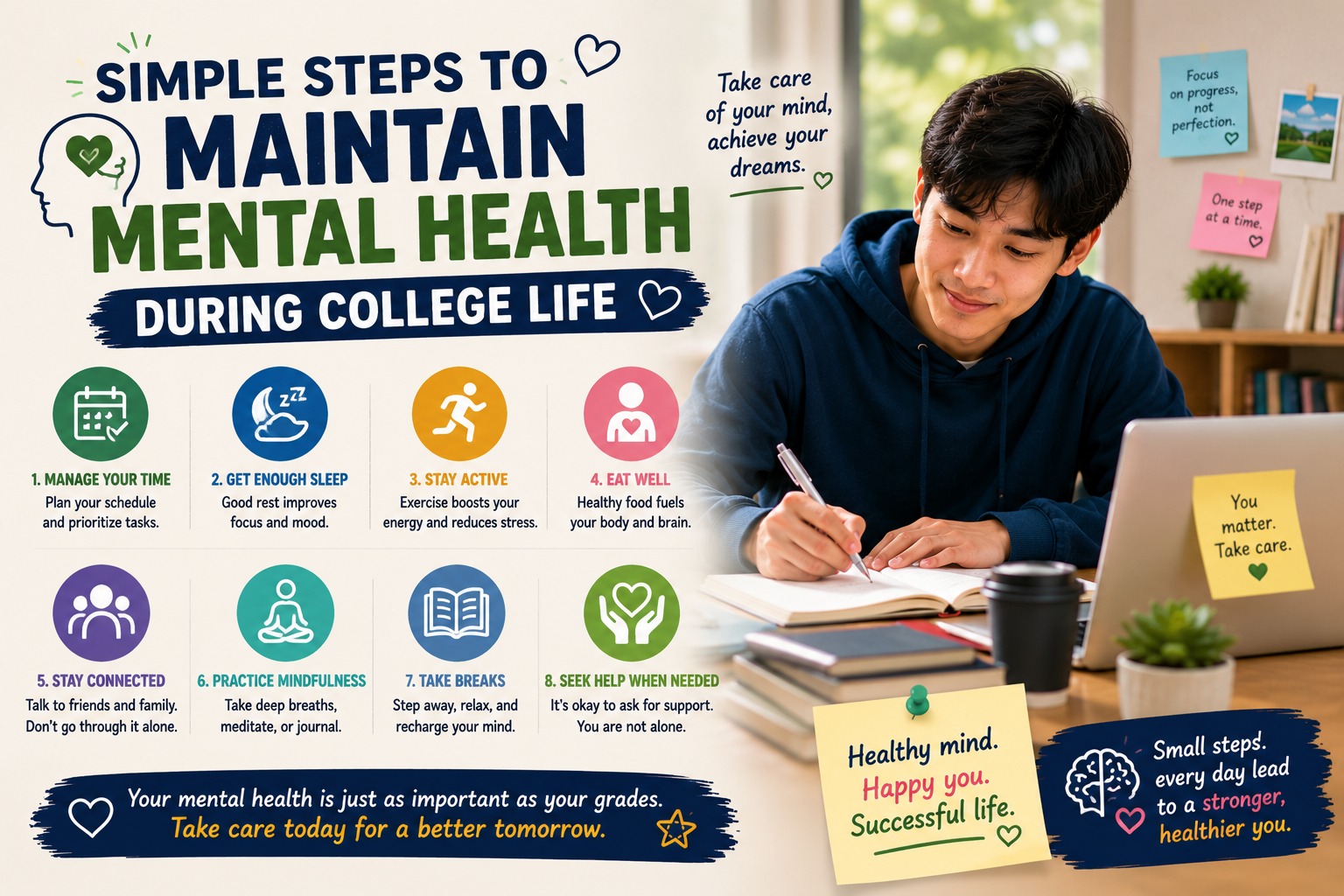
College life is an exciting stage filled with new experiences, friendships, and opportunities for personal growth. However, it also comes with academic pressure, social adjustments, financial concerns, and busy schedules that can affect mental health. Many students struggle to balance their responsibilities while trying to maintain emotional well-being.
Maintaining mental health during college life is essential for staying focused, motivated, and productive. By practicing simple healthy habits and building emotional resilience, students can better handle challenges and enjoy a more balanced academic journey.
UNDERSTANDING THE IMPORTANCE OF MENTAL HEALTH
Mental health affects the way students think, feel, and respond to daily situations. Good mental health helps students stay confident, manage stress, and build positive relationships.
On the other hand, poor mental health may lead to anxiety, emotional exhaustion, lack of motivation, and reduced academic performance. Students who ignore their emotional well-being often find it difficult to concentrate on studies and maintain healthy routines.
Taking care of mental health should therefore become an important part of college life.
MANAGE TIME EFFECTIVELY
One of the simplest ways to reduce stress is through effective time management. College students often have many responsibilities, including assignments, projects, exams, and extracurricular activities.
Creating a study schedule can help students organize tasks and avoid last-minute pressure. Prioritizing important activities and breaking large tasks into smaller steps also make workloads feel more manageable.
Good time management helps students stay productive without becoming overwhelmed.
GET ENOUGH SLEEP
Sleep is extremely important for both physical and mental health. Many students sacrifice sleep to complete assignments or prepare for exams, but lack of rest can negatively affect concentration, mood, and memory.
Students should aim to maintain consistent sleeping habits and avoid staying awake too late regularly. Proper sleep improves focus, emotional stability, and learning ability.
A well-rested mind is more prepared to face academic challenges effectively.
MAINTAIN A HEALTHY LIFESTYLE
Physical health and mental health are closely connected. Eating nutritious food, drinking enough water, and exercising regularly can improve emotional well-being and energy levels.
Exercise is especially beneficial because it helps reduce stress and release hormones that improve mood. Even simple activities such as walking, cycling, or stretching can positively affect mental health.
Avoiding unhealthy habits and maintaining balanced routines support better emotional stability during college life.
BUILD POSITIVE SOCIAL RELATIONSHIPS
Having supportive friends and healthy social connections can significantly improve mental well-being. Students who feel connected to others are less likely to experience loneliness and emotional stress.
Spending time with positive people provides encouragement during difficult moments. Talking openly with trusted friends or family members can also help reduce emotional burdens.
Joining campus organizations or communities is another good way to build friendships and create a sense of belonging.
TAKE BREAKS AND ENJOY HOBBIES
Continuous studying without rest can lead to mental exhaustion and burnout. Students should take regular breaks to relax and recharge their minds.
Doing enjoyable activities such as reading, listening to music, drawing, or spending time outdoors can help reduce stress and improve mood. Hobbies provide emotional balance and prevent students from feeling overwhelmed by academic responsibilities.
Maintaining balance between work and relaxation is important for long-term mental health.
LEARN TO HANDLE STRESS POSITIVELY
Stress is a normal part of college life, but students should learn healthy ways to manage it. Deep breathing exercises, meditation, journaling, and mindfulness practices can help calm the mind and improve emotional control.
Students should avoid keeping problems to themselves. Sharing concerns with supportive people often makes stressful situations feel more manageable.
Developing positive coping strategies helps students stay emotionally strong during challenging times.
SEEK HELP WHEN NECESSARY
Sometimes emotional difficulties become too heavy to manage alone. Seeking help from counselors, psychologists, or trusted mentors is an important step when stress or anxiety becomes overwhelming.
Many educational institutions provide counseling services to support student mental health. Asking for help is not a sign of weakness but a responsible way to protect emotional well-being.
Early support can prevent mental health problems from becoming more serious.
CONCLUSION
Maintaining mental health during college life is essential for academic success and personal well-being. Simple steps such as managing time effectively, getting enough sleep, building supportive relationships, and practicing healthy habits can greatly improve emotional balance.
By taking care of their mental health, students can stay focused, motivated, and better prepared to face academic challenges. A healthy mind allows students to enjoy college life more fully and achieve long-term success.
Tentang Penulis
Gusti Ayu Tita P
Penulis — Universitas STEKOM
Penulis aktif yang berfokus pada isu-isu akademik, teknologi pendidikan, dan pengembangan sumber daya manusia di lingkungan kampus.