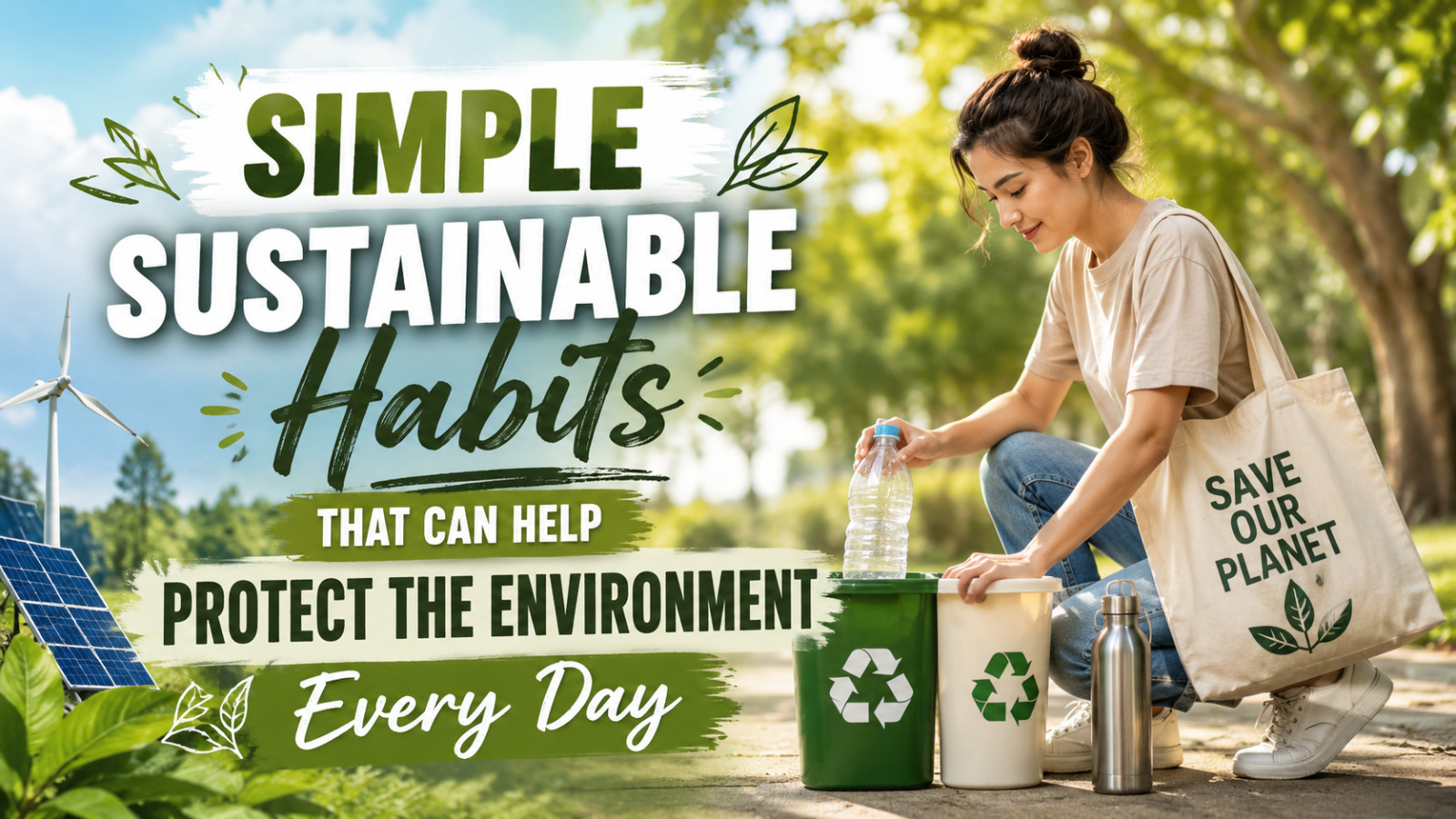
Protecting the environment does not always require major lifestyle changes. In fact, small daily habits can make a significant difference when practiced consistently. As environmental issues such as climate change, pollution, and waste continue to grow, every individual has the opportunity to contribute through simple and practical actions.
This article explores sustainable habits that are easy to adopt in everyday life. These habits not only help reduce environmental impact but also encourage healthier living, lower expenses, and a more responsible use of natural resources.
WHY SUSTAINABLE HABITS MATTER?
Living sustainably means making choices that help protect natural resources for both current and future generations. Everyday actions, no matter how small, can reduce pollution, conserve energy, and decrease unnecessary waste. When millions of people adopt these habits, the combined impact becomes significant for the planet.
Sustainable living also promotes a healthier lifestyle. Reducing waste, using eco-friendly products, and consuming responsibly help create cleaner communities and improve overall well-being. These habits encourage people to think carefully before making purchases or using valuable resources.
REDUCE SINGLE USE PLASTIC
One of the easiest ways to protect the environment is by reducing the use of single-use plastic. Plastic bags, straws, bottles, and food containers often end up in landfills or oceans, where they can remain for hundreds of years. Replacing disposable products with reusable alternatives helps minimize plastic pollution.
Bring a reusable shopping bag, carry a refillable water bottle, and use reusable food containers whenever possible. These simple changes reduce waste while saving money over time. Businesses and communities are also becoming more supportive by encouraging sustainable packaging options.
SAVE ENERGY AT HOME
Saving energy is another effective habit that benefits both the environment and household budgets. Turning off lights when leaving a room, unplugging unused electronics, and choosing energy-efficient appliances reduce electricity consumption. These actions also lower greenhouse gas emissions generated by power production.
Natural lighting and proper ventilation can reduce the need for artificial lighting and air conditioning during the day. Even adjusting the thermostat by a small amount can make a noticeable difference in energy usage. Consistent energy-saving habits create long-term environmental benefits.
CONSERVE WATER EVERY DAY
Water is one of the Earth's most valuable resources, yet it is often wasted through daily activities. Taking shorter showers, fixing leaking faucets, and turning off the tap while brushing your teeth are simple ways to conserve water. These habits help preserve freshwater supplies for future generations.
Using water-efficient appliances and collecting rainwater for gardening are additional methods to reduce unnecessary consumption. Every drop saved contributes to protecting ecosystems and reducing the energy required to treat and distribute clean water.
CHOOSE SUSTAINABLE TRANSPORTATION
Transportation is a major source of carbon emissions worldwide. Walking, cycling, or using public transportation whenever possible helps reduce air pollution and fuel consumption. Even combining errands into one trip can lower vehicle emissions.
For longer distances, carpooling with friends or coworkers is another environmentally friendly option. Electric and hybrid vehicles also provide cleaner transportation alternatives as technology continues to improve. Choosing greener travel methods supports cleaner air and healthier communities.
PRACTICE RESPONSIBLE CONSUMPTION
Responsible consumption means buying only what is truly needed and selecting products that are durable and environmentally friendly. Before making a purchase, consider whether the item is necessary and whether it can be reused or recycled. This mindset helps reduce unnecessary production and waste.
Supporting local businesses, choosing products with minimal packaging, and purchasing high-quality items that last longer also contribute to sustainability. Responsible shopping encourages manufacturers to adopt more environmentally friendly practices.
RECYCLE AND COMPOST PROPERLY
Proper recycling prevents valuable materials such as paper, glass, metal, and plastic from ending up in landfills. Learning local recycling guidelines ensures that recyclable items are sorted correctly. Clean and separated materials are more likely to be successfully processed into new products.
Organic waste such as fruit peels, vegetable scraps, and garden waste can be composted instead of thrown away. Compost enriches soil naturally and reduces methane emissions from landfills. Combining recycling and composting significantly decreases household waste.
ENCOURAGE OTHERS TO LIVE SUSTAINABLY
Sustainable habits become even more effective when shared with family, friends, and communities. Leading by example often inspires others to adopt environmentally friendly behaviors without feeling pressured. Simple conversations about sustainability can raise awareness and encourage positive action.
Schools, workplaces, and community organizations can also promote eco-friendly initiatives through recycling programs, tree planting events, and educational campaigns. Working together creates a stronger collective impact than individual efforts alone.
CONCLUSION
Protecting the environment begins with simple sustainable habits that anyone can practice every day. Actions such as reducing plastic use, saving energy, conserving water, recycling, and making responsible purchasing decisions may seem small individually, but together they create meaningful environmental benefits.
Building these habits requires consistency rather than perfection. By making environmentally conscious choices every day, individuals can contribute to a cleaner planet, preserve natural resources, and help create a healthier future for generations to come.
Tentang Penulis
Gusti Ayu Tita P
Penulis — Universitas STEKOM
Penulis aktif yang berfokus pada isu-isu akademik, teknologi pendidikan, dan pengembangan sumber daya manusia di lingkungan kampus.