Smart Career Planning Tips for Students After Vocational School
Gusti Ayu Tita P
31 Juli 2026
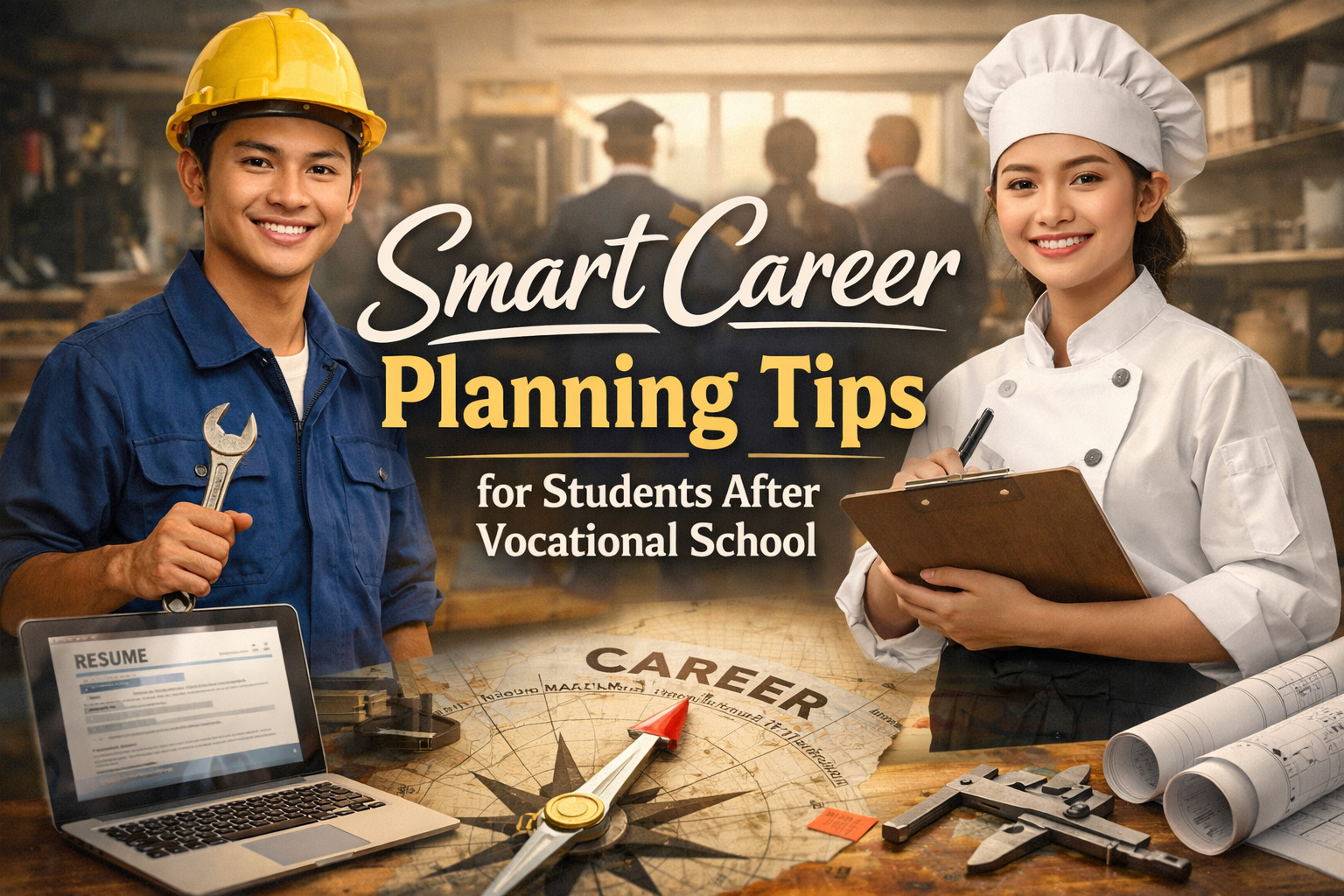
Finishing vocational school is an important milestone, but it is only the beginning of a professional journey. Many graduates already have practical skills, yet they may still feel confused about which career direction to choose. Smart career planning can help students understand their strengths, explore opportunities, and make better decisions about their future. With the right strategy, vocational school graduates can build a career path that matches their skills, interests, and long-term goals.
UNDERSTAND YOUR SKILLS AND STRENGTHS
The first step in career planning is understanding the skills you already have. Vocational school students often develop practical abilities related to fields such as technology, business, engineering, hospitality, design, healthcare, or other specialized industries. Identifying your strongest technical skills can help you determine which career opportunities are most suitable. You should also consider soft skills such as communication, teamwork, problem-solving, adaptability, and time management.
It is important to evaluate your strengths honestly instead of choosing a career simply because it is popular. Ask yourself which tasks you enjoy, which activities you perform well, and what type of work motivates you to keep learning. A clear understanding of your abilities can make it easier to choose a career direction that feels realistic and meaningful.
EXPLORE DIFFERENT CAREER OPTIONS
Many vocational school graduates assume that their career must follow the exact specialization they studied. However, modern industries often provide opportunities that connect different skills and fields. For example, a student with a technology background may work in technical support, digital services, data-related roles, or business technology. Exploring different options allows you to discover career opportunities that you may not have considered before.
Research different job positions, industries, and workplace environments before making a final decision. Read job descriptions, study the skills required by employers, and learn about the future development of each industry. Career research can help you make decisions based on real information rather than assumptions.
SET CLEAR SHORT TERM AND LONG TERM GOALS
A successful career usually develops through a series of realistic steps. Instead of focusing only on a distant dream job, create short-term goals that can help you move forward. These goals may include improving a technical skill, completing a certification, building a portfolio, or gaining work experience. Small achievements can gradually lead to larger professional opportunities.
You should also create long-term goals that describe the type of career you want to build. Consider where you would like to be in the next three, five, or ten years. Your goals do not need to remain exactly the same because career interests can change as you gain more experience. However, having a general direction can help you make better decisions and avoid moving forward without a clear purpose.
BUILD RELEVANT TECHNICAL AND SOFT SKILLS
Employers often look for candidates who have both technical knowledge and strong personal abilities. Technical skills can help you perform specific tasks, while soft skills help you communicate, collaborate, and solve problems in the workplace. A graduate who combines both types of skills may have a stronger advantage when applying for jobs.
The skills you need will depend on your chosen industry, so research what employers currently value. You may need to improve your digital skills, communication abilities, analytical thinking, or industry-specific knowledge. Continuous learning is essential because technology and workplace requirements continue to change.
GAIN EXPERIENCE BEFORE APPLYING FOR FULL TIME JOBS
Practical experience can make a significant difference when you begin searching for employment. Internships, apprenticeships, freelance projects, volunteer work, and school projects can help you understand how professional environments operate. These experiences can also help you develop confidence and demonstrate your abilities to potential employers.
Even small projects can become valuable parts of your professional portfolio. Try to document your achievements, responsibilities, and results from every relevant experience. Employers are often interested in what you can actually do, so showing real examples of your work can make your application more convincing.
CREATE A STRONG PROFESSIONAL PORTFOLIO
A professional portfolio is especially valuable for graduates in fields such as design, technology, marketing, engineering, media, and other practical industries. It allows employers to see examples of your abilities instead of relying only on your academic background. Your portfolio can include school projects, personal projects, internship results, certifications, or other relevant work.
Make sure your portfolio is organized, simple, and focused on your strongest achievements. Explain your role in each project and highlight the skills you used to complete it. A well-prepared portfolio can help you stand out from other candidates, especially when you have limited professional experience.
DEVELOP A PROFESSIONAL RESUME AND ONLINE PRESENCE
A clear resume is one of the most important tools for starting a career. Your resume should highlight your education, technical skills, certifications, experience, projects, and achievements. Avoid adding unnecessary information and focus on details that are relevant to the position you want to apply for.
You should also consider building a professional online presence. A professional networking profile or online portfolio can help recruiters discover your skills and experience. Make sure the information you share online presents a positive and professional image because employers may review a candidate's digital presence during the recruitment process.
NETWORK WITH PEOPLE IN YOUR TARGET INDUSTRY
Building professional relationships can open doors to opportunities that may not be publicly advertised. You can connect with teachers, mentors, alumni, industry professionals, internship supervisors, and other people who have experience in your desired field. These connections may provide useful advice, information, and opportunities for professional growth.
Networking does not mean asking everyone for a job. Instead, focus on building genuine professional relationships and learning from people who understand the industry. Professional networking can help you gain valuable insights about workplace expectations, career paths, and the skills needed to succeed.
KEEP LEARNING AND ADAPTING TO INDUSTRY CHANGES
The job market continues to change because of technology, automation, globalization, and new business models. Skills that are valuable today may develop or change in the future. For this reason, vocational school graduates should remain open to learning new tools, technologies, and methods related to their careers.
You can improve your knowledge through online courses, workshops, professional certifications, books, practical projects, and industry events. Learning does not have to stop after graduation. Career growth often depends on a person's willingness to improve and adapt throughout their professional life.
CHOOSE A CAREER PATH BASED ON BOTH INTEREST AND OPPORTUNITY
Personal interest is an important part of career planning, but it should not be the only factor you consider. A smart career decision should also consider industry demand, required skills, salary potential, job stability, and opportunities for future development. Finding a balance between what you enjoy and what the job market needs can create a more sustainable career path.
You do not need to find the perfect career immediately after graduating. Many professionals change roles, develop new interests, or discover better opportunities as they gain experience. The most important thing is to make informed decisions, remain flexible, and continue developing skills that can support your future.
CONCLUSION
Smart career planning can help vocational school students move confidently from education into the professional world. By understanding personal strengths, exploring career options, setting clear goals, developing relevant skills, and gaining practical experience, graduates can prepare themselves for greater opportunities. Building a portfolio, creating a professional resume, networking, and continuing to learn can also improve long-term career development. The best career path is not always discovered immediately, but careful planning and continuous improvement can help you build a successful and meaningful professional future.
Tentang Penulis
Gusti Ayu Tita P
Penulis — Universitas STEKOM
Penulis aktif yang berfokus pada isu-isu akademik, teknologi pendidikan, dan pengembangan sumber daya manusia di lingkungan kampus.