Smart Strategies for Protecting Marine Resources in the Modern Era
Gusti Ayu Tita P
30 Juli 2026
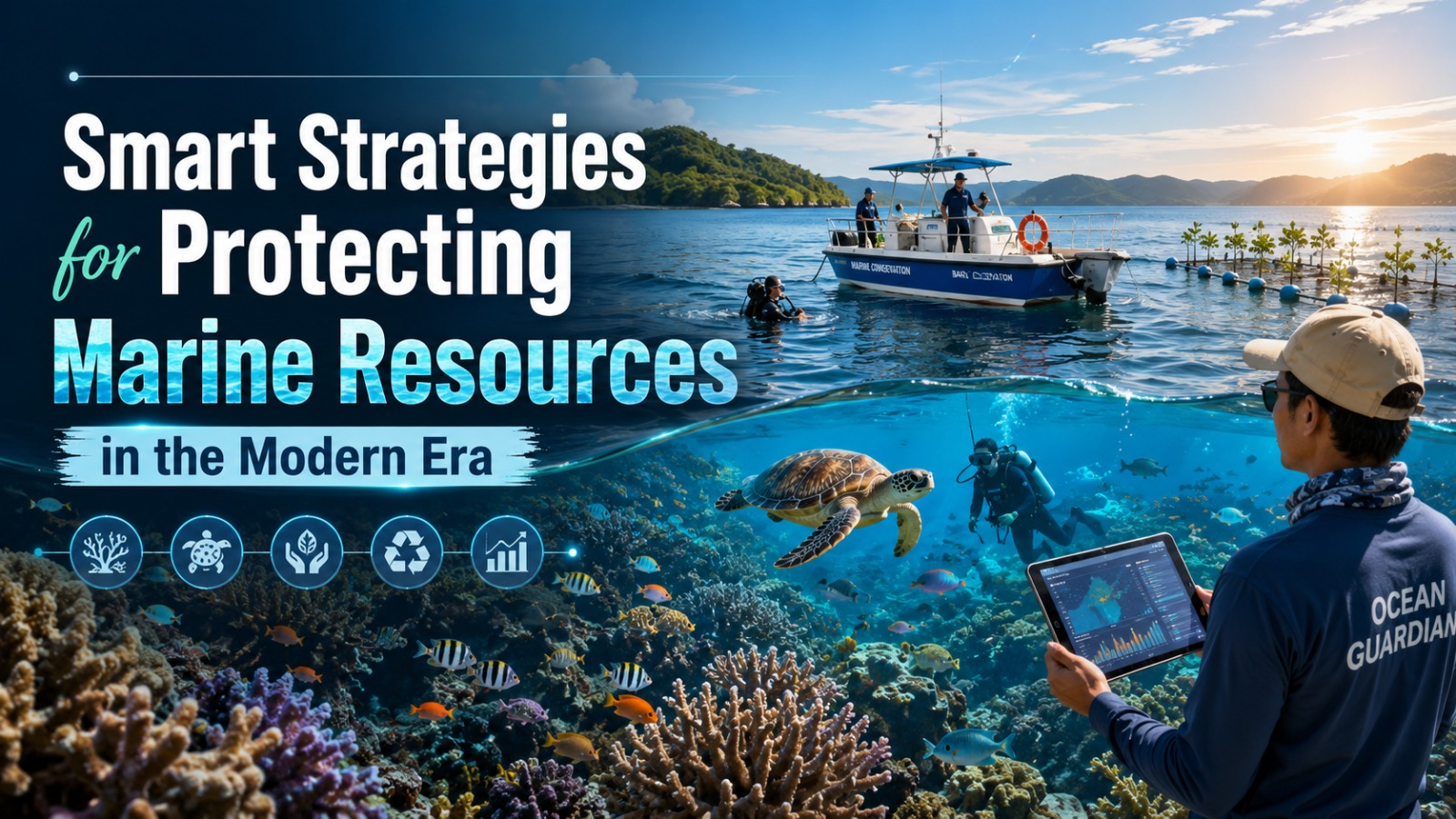
Marine resources are among the world's most valuable natural assets, providing food, employment, transportation, biodiversity, and climate regulation. As global demand for seafood and marine products continues to rise, protecting oceans has become increasingly important for ensuring long-term environmental and economic sustainability. However, marine ecosystems face significant threats from overfishing, pollution, habitat destruction, and climate change.
Developing smart conservation strategies allows governments, industries, scientists, and local communities to work together in protecting marine resources while supporting economic development. By combining modern technology, effective policies, and public participation, societies can maintain healthy oceans for present and future generations.
THE IMPORTANCE OF PROTECTING MARINE RESOURCES
Marine ecosystems support millions of livelihoods worldwide through fisheries, tourism, shipping, and renewable energy. Healthy oceans also produce much of the oxygen humans breathe and absorb large amounts of carbon dioxide, helping regulate the Earth's climate. Protecting marine resources therefore benefits both people and nature.
Without sustainable management, marine biodiversity declines rapidly, affecting fish populations and disrupting entire ecosystems. Coral reefs, mangroves, and seagrass beds serve as critical habitats for countless marine species while protecting coastlines from erosion. Conservation efforts ensure these ecosystems continue providing essential environmental and economic benefits.
MAJOR THREATS TO MARINE ECOSYSTEMS
One of the greatest challenges facing marine environments is overfishing, which reduces fish populations faster than they can naturally recover. Illegal, unreported, and unregulated fishing further accelerates resource depletion, making sustainable fisheries management increasingly difficult.
Marine pollution also poses severe risks. Plastic waste, chemical runoff, oil spills, and untreated wastewater contaminate coastal waters and threaten marine wildlife. Meanwhile, climate change increases ocean temperatures, causes coral bleaching, raises sea levels, and alters marine habitats, placing additional pressure on already vulnerable ecosystems.
SMART TECHNOLOGIES SUPPORTING MARINE CONSERVATION
Modern technology plays a vital role in protecting oceans more efficiently. Satellite monitoring, drones, GPS tracking, and artificial intelligence help authorities detect illegal fishing activities, monitor marine protected areas, and collect valuable environmental data.
Scientists also use underwater sensors, remote-operated vehicles, and data analytics to study marine biodiversity and ocean health. These innovations enable faster decision-making and improve conservation planning. Digital technologies are making marine resource management more accurate, transparent, and cost-effective than ever before.
SUSTAINABLE MANAGEMENT STRATEGIES
Governments can strengthen marine conservation by establishing Marine Protected Areas (MPAs) where fishing and harmful activities are carefully regulated. Protected areas allow fish populations and ecosystems to recover naturally while supporting long-term fisheries productivity.
Sustainable fisheries management also includes science-based fishing quotas, seasonal closures, selective fishing gear, and strict enforcement against illegal fishing. Encouraging responsible fishing practices ensures that marine resources remain available for future generations without compromising current economic opportunities.
THE ROLE OF COASTAL COMMUNITIES
Local communities are essential partners in marine conservation. Fishermen possess valuable traditional knowledge about local ecosystems and can contribute significantly to sustainable resource management. Community-based conservation programs often achieve better long-term outcomes because local people actively participate in protecting their own environment.
Education and awareness campaigns also encourage responsible behaviour, including reducing plastic waste, protecting coastal habitats, and supporting sustainable seafood choices. Public participation strengthens conservation efforts while creating new opportunities for eco-tourism, sustainable fisheries, and marine-based businesses.
BUILDING A SUSTAINABLE FUTURE FOR THE OCEANS
Protecting marine resources requires cooperation among governments, research institutions, private companies, environmental organisations, and the public. International collaboration is equally important because oceans connect every country, making marine conservation a shared global responsibility.
As innovation continues to advance, combining technology, sustainable policies, and community engagement offers the best path toward healthier oceans. By investing in smart conservation strategies today, societies can secure marine biodiversity, strengthen coastal economies, improve food security, and support sustainable development for generations to come.
Tentang Penulis
Gusti Ayu Tita P
Penulis — Universitas STEKOM
Penulis aktif yang berfokus pada isu-isu akademik, teknologi pendidikan, dan pengembangan sumber daya manusia di lingkungan kampus.