Smart Strategies for Saving Money During Homecoming
Gusti Ayu Tita P
10 Agustus 2026
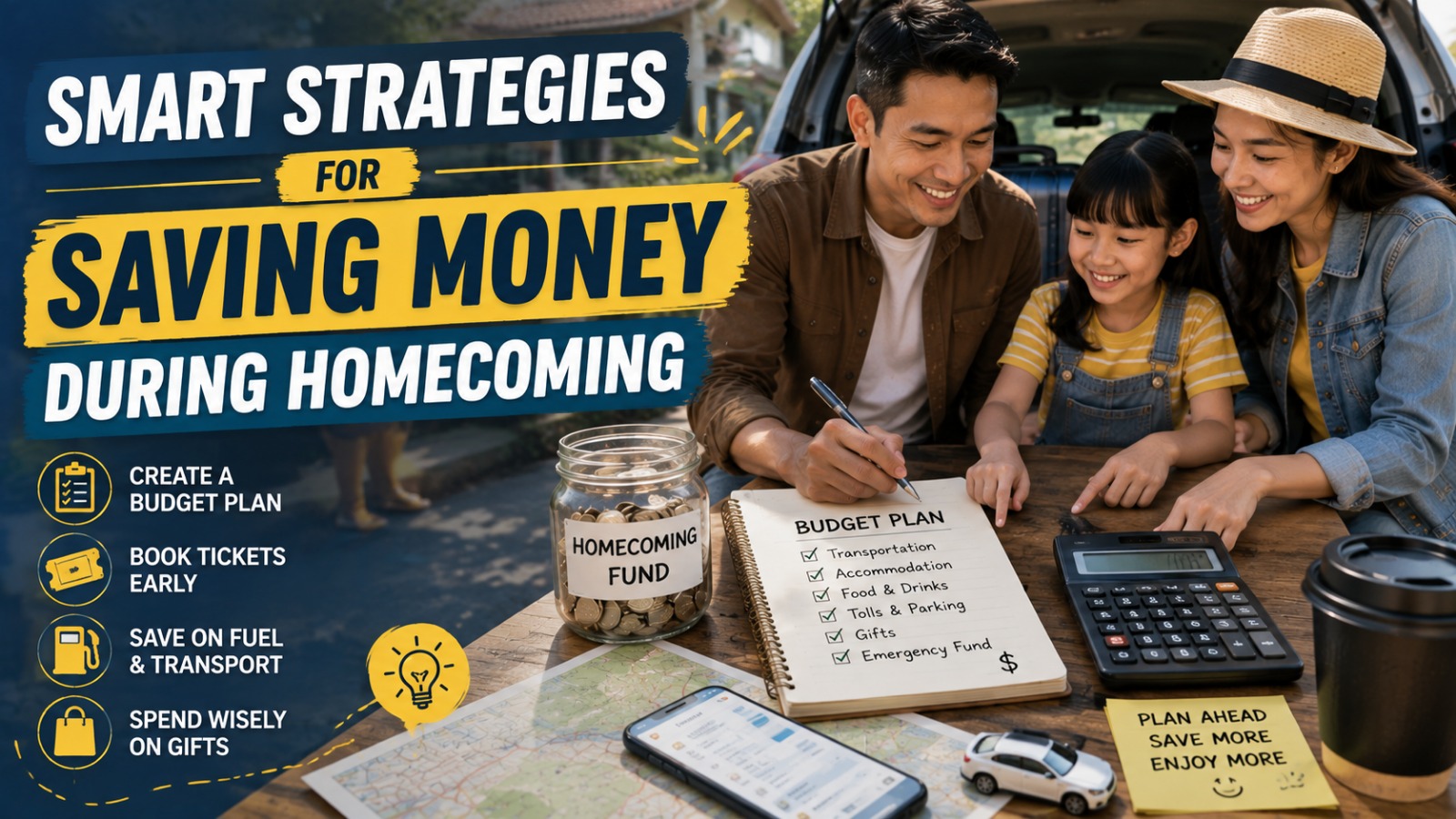
Homecoming is an important moment for many people because it provides an opportunity to reunite with family and enjoy time in their hometown. However, traveling during the holiday season can require a significant amount of money. Transportation, food, accommodation, fuel, tolls, and gifts can quickly increase total spending if they are not planned carefully. Without a clear budget, even small purchases can become a financial burden after the holiday ends. Therefore, applying smart strategies for saving money during homecoming can help travelers enjoy the journey while keeping their finances under control.
CREATE A REALISTIC HOMECOMING BUDGET
The first step to saving money is creating a realistic homecoming budget before leaving. List all expected expenses, including transportation, fuel, tolls, meals, accommodation, parking, and gifts. Separate essential expenses from optional spending so you can clearly identify your priorities. A detailed budget also makes it easier to estimate how much money is actually needed for the entire trip.
Do not forget to prepare a small emergency fund for unexpected situations. Vehicle problems, schedule changes, additional transportation, or urgent needs may require extra money. Avoid setting a budget that is too optimistic because travel conditions can change, especially during busy holiday periods. A realistic budget gives you greater control and reduces the risk of overspending.
CHOOSE THE MOST COST EFFECTIVE TRANSPORTATION
Transportation is often one of the largest parts of a homecoming budget. Compare several options such as private cars, buses, trains, or flights before making a decision. Do not compare ticket prices alone because private vehicles may involve fuel, toll, parking, and maintenance costs. Likewise, public transportation may require additional costs to reach stations, terminals, or airports.
Consider the number of travelers and the distance of the trip when comparing transportation options. A private car may be economical for a larger family, while public transportation can be more practical for individuals or smaller groups. Calculate the total travel cost instead of focusing only on the initial price. This approach helps you choose transportation that provides both convenience and financial efficiency.
BOOK TRAVEL SERVICES EARLY
Early planning can provide more opportunities to find reasonable transportation and accommodation prices. If your travel dates are already confirmed, consider booking tickets and accommodation in advance. Earlier reservations may also provide more choices in terms of schedules, seats, and room types. Waiting until the last minute can limit your options and potentially increase your expenses.
Before paying, check the final price and all additional fees. Review cancellation policies, baggage rules, and other conditions so you do not face unexpected charges later. Compare several legitimate options before completing a reservation. Smart booking is not simply about finding the cheapest price but finding the best value for your needs.
BRING FOOD AND DRINKS FROM HOME
Food and drinks can become surprisingly expensive during long-distance travel. Buying meals, snacks, and bottled drinks repeatedly at rest areas or tourist locations can increase your spending. Bringing homemade food and drinking water can significantly reduce unnecessary costs. Choose food that is practical to carry and suitable for the length of the journey.
However, avoid bringing excessive amounts of food because some items may spoil or go unused. Estimate portions according to the number of travelers and the expected travel duration. If you still need to buy food along the way, set a reasonable spending limit. Controlling food expenses is a simple strategy that can make a noticeable difference to your total homecoming budget.
CONTROL SPENDING ON GIFTS
Bringing gifts for family and relatives is a common part of homecoming. However, gift shopping can become expensive when there is no clear limit. Before shopping, determine a gift budget and make a list of the people you plan to buy something for. Choose useful local products that fit your financial situation rather than purchasing too many expensive items.
Avoid buying products simply because they are discounted or attractively packaged. A discount is only useful when the product is actually needed or planned. Set a spending limit before shopping and stick to it. This allows you to maintain the tradition of bringing gifts without disrupting your main travel budget.
USE PROMOTIONS WISELY
Travel promotions can help reduce the cost of transportation, accommodation, meals, and other necessities. However, travelers should not purchase something simply because it comes with a discount. Check the final price, additional fees, terms, and expiration date before using a promotion. Sometimes a discounted product can still be more expensive than another suitable option.
Compare several offers before making a purchase. Consider quality, convenience, and total cost rather than looking only at the percentage of the discount. Use promotions as a saving tool, not as a reason to spend more money. This simple habit can prevent unnecessary purchases during the holiday season.
REDUCE IMPULSE PURCHASES
Small spontaneous purchases can gradually consume a large portion of a travel budget. Snacks, souvenirs, drinks, and entertainment may seem inexpensive individually, but frequent purchases can quickly add up. Create a daily spending limit and monitor your expenses throughout the journey. Recording even small transactions can help you understand where your money is going.
Families can also agree on spending limits before leaving home. Children, for example, can be given a reasonable amount for personal purchases rather than being allowed to buy everything they see. Avoiding impulse spending does not mean eliminating enjoyment from the trip. Instead, it ensures that money is spent intentionally and according to your priorities.
USE DIGITAL PAYMENTS RESPONSIBLY
Digital payments can make traveling more convenient because they reduce the need to carry large amounts of cash. Before leaving, check your account balance, payment applications, cards, and available funds. Make sure your preferred payment methods are accepted along the planned route. It is also wise to keep a reasonable alternative payment method in case a service becomes temporarily unavailable.
At the same time, convenience should not lead to uncontrolled spending. Review your transactions regularly so you know whether you are still following your budget. Track digital payments carefully because cashless transactions can sometimes feel less noticeable than physical spending. Good monitoring helps keep holiday expenses under control.
PREPARE AN EMERGENCY FUND
An emergency fund is important when traveling far from home. Unexpected situations such as vehicle repairs, medical needs, schedule changes, or additional transportation can require immediate payment. Keep emergency money separate from your regular spending budget so it is not accidentally used for shopping or entertainment. The amount should depend on the length of the journey, transportation method, and personal circumstances.
Store emergency funds securely and make sure they remain accessible when genuinely needed. If possible, use more than one payment method as a backup. Do not treat emergency money as extra spending money because it is intended for unexpected situations. Having this reserve can make the journey more secure and less stressful.
PLAN YOUR ROUTE TO SAVE TIME AND MONEY
A well-planned route can help reduce unnecessary travel time and expenses. Before leaving, check traffic conditions, road options, fuel stations, rest areas, and possible alternative routes. Navigation applications can be useful for estimating travel times and identifying congestion. However, drivers should never use a phone while driving and should rely on a passenger or safe hands-free system when necessary.
If you are driving a private vehicle, check its condition before the trip. Proper tire pressure, sufficient fuel, and regular maintenance can help reduce the risk of unexpected problems. Good route planning combined with vehicle preparation can prevent unnecessary costs while supporting a safer journey.
REVIEW YOUR SPENDING AFTER THE TRIP
Financial planning should not end when you arrive home. After the journey, compare your actual spending with your original budget. Identify which expenses were higher than expected and which strategies helped you save money. This information can become useful when planning your next homecoming trip.
Do not view the review as a way to criticize yourself for every unexpected expense. Instead, use it to improve future planning. Learning from previous travel expenses can make your next budget more accurate and realistic. Over time, this habit can help create better financial discipline during every holiday journey.
ENJOY HOMECOMING WITHOUT FINANCIAL STRESS
Saving money during homecoming does not mean avoiding every enjoyable activity. The main goal is to spend according to your priorities and financial ability. Planning transportation, preparing food, limiting unnecessary purchases, using promotions wisely, and maintaining an emergency fund can make a significant difference. These strategies allow travelers to enjoy valuable family moments without creating unnecessary financial pressure.
Homecoming should be about reconnecting with loved ones and creating meaningful memories. A well-managed budget can make the journey more comfortable because you know how much you can safely spend. With careful preparation and disciplined spending, homecoming can remain enjoyable, practical, and financially responsible.
Tentang Penulis
Gusti Ayu Tita P
Penulis — Universitas STEKOM
Penulis aktif yang berfokus pada isu-isu akademik, teknologi pendidikan, dan pengembangan sumber daya manusia di lingkungan kampus.