Smart Travel Tips for a Safer Post Holiday Journey
Gusti Ayu Tita P
10 Agustus 2026
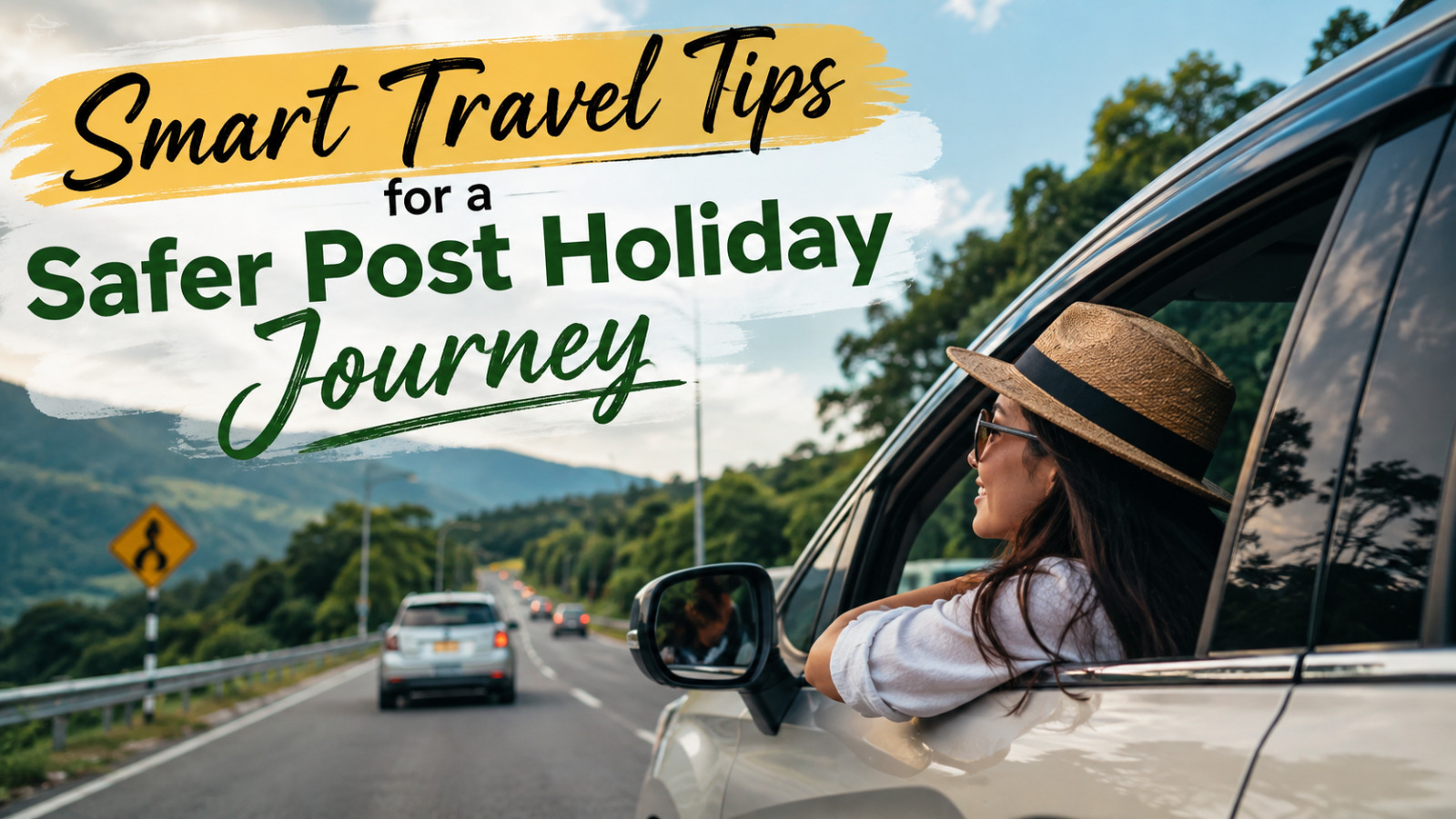
Returning home after a holiday can be tiring, especially when roads are busy and travel times become longer than expected. A well-planned journey can help travelers reduce stress, avoid unnecessary delays, and arrive home safely. Preparation, patience, and responsible driving are important factors during the post-holiday return trip.
Whether traveling by private car, motorcycle, bus, or another form of transportation, travelers should prepare themselves and their vehicles before departure. Understanding road conditions, choosing the right departure time, and taking regular breaks can make the journey more comfortable and safer.
PLAN YOUR JOURNEY BEFORE DEPARTURE
Good preparation is one of the most effective ways to make a post-holiday journey safer. Before leaving, travelers should check the planned route, estimated travel time, weather conditions, and possible traffic congestion. Navigation applications can help identify alternative routes and provide updates about road conditions.
Travelers should also prepare important items such as identification documents, electronic devices, chargers, drinking water, snacks, and necessary medicines. If traveling with children or elderly family members, additional personal necessities should be prepared. A clear travel plan can reduce last-minute decisions and help everyone remain more relaxed throughout the journey.
CHECK YOUR VEHICLE CONDITION
Vehicle condition plays an important role in travel safety, particularly when driving long distances. Before departure, drivers should inspect tires, brakes, engine oil, lights, coolant, battery, and windshield wipers. Tire pressure should also be checked according to the vehicle manufacturer's recommendations.
A small mechanical problem can become a serious issue when it occurs in heavy traffic or on a long highway journey. Drivers should not ignore unusual sounds, warning lights, or other signs of vehicle problems. If necessary, have the vehicle inspected by a qualified mechanic before starting the trip.
CHOOSE A SAFE DEPARTURE TIME
Selecting the right departure time can make a major difference during the holiday return period. Travelers should consider traffic patterns and expected congestion when deciding when to leave. Departing outside the busiest periods may help reduce time spent in traffic.
However, avoiding congestion should never mean driving when the driver is extremely tired. If a driver needs to travel very early in the morning or late at night, adequate rest beforehand is essential. Safety should always be more important than saving a few hours of travel time.
TAKE REGULAR REST BREAKS
Long-distance driving requires concentration, and fatigue can reduce a driver's ability to react quickly. Travelers should take regular breaks at safe rest areas, service stations, or other appropriate locations. Getting out of the vehicle, stretching, drinking water, and resting for a while can help reduce physical fatigue.
Drivers should never force themselves to continue driving when they feel sleepy. Signs such as frequent yawning, difficulty focusing, heavy eyelids, or slower reactions indicate that it is time to stop. If necessary, another qualified driver can take over after the first driver has had enough rest.
DRIVE DEFENSIVELY IN HEAVY TRAFFIC
Heavy traffic requires extra patience and attention from every road user. Drivers should maintain a safe following distance, avoid sudden lane changes, and use turn signals properly. Aggressive behavior such as speeding, unnecessary overtaking, or frequent lane switching can increase the risk of accidents.
Traffic conditions can change quickly, particularly around toll roads, intersections, rest areas, and major urban roads. Drivers should remain alert and avoid distractions such as using a mobile phone while driving. Defensive driving helps travelers respond more safely when other road users make unexpected movements.
PREPARE FOR UNEXPECTED DELAYS
Even careful planning cannot guarantee a completely smooth journey. Accidents, road repairs, weather conditions, vehicle problems, and unexpected congestion can cause significant delays. Travelers should therefore prepare extra travel time and basic emergency supplies.
It is also useful to inform family members or other people at the destination about possible delays. Keeping a phone charged and carrying sufficient water can be helpful if the journey takes longer than expected. A flexible mindset can make unexpected situations easier to manage.
KEEP PASSENGERS COMFORTABLE
Passenger comfort is another important part of a safe post-holiday journey. Travelers should make sure that everyone uses appropriate safety restraints, including seat belts and suitable child safety equipment when necessary. Heavy luggage should be placed securely so that it does not become dangerous during sudden braking.
Families should also plan rest stops based on the needs of passengers. Children may need more frequent breaks, while older passengers may require additional time to rest. Comfortable passengers are generally easier to manage during long journeys, helping the driver maintain concentration.
CONCLUSION
A safer post-holiday journey begins with proper preparation and responsible decisions. Travelers should plan their routes, check their vehicles, choose a suitable departure time, take regular breaks, and drive defensively. Preparing for possible delays can also reduce stress when traffic conditions change unexpectedly.
The most important goal of a return journey is not simply reaching home quickly but arriving safely, comfortably, and in good condition. By following practical travel safety measures, travelers can make the post-holiday trip more organized and enjoyable for everyone.
Tentang Penulis
Gusti Ayu Tita P
Penulis — Universitas STEKOM
Penulis aktif yang berfokus pada isu-isu akademik, teknologi pendidikan, dan pengembangan sumber daya manusia di lingkungan kampus.