SNBT and the Burden of Expectations, Does This Exam Become a Trigger for Discipline or a Source of Anxiety That Quietly Grows?
Gusti Ayu Tita P
4 Juni 2026
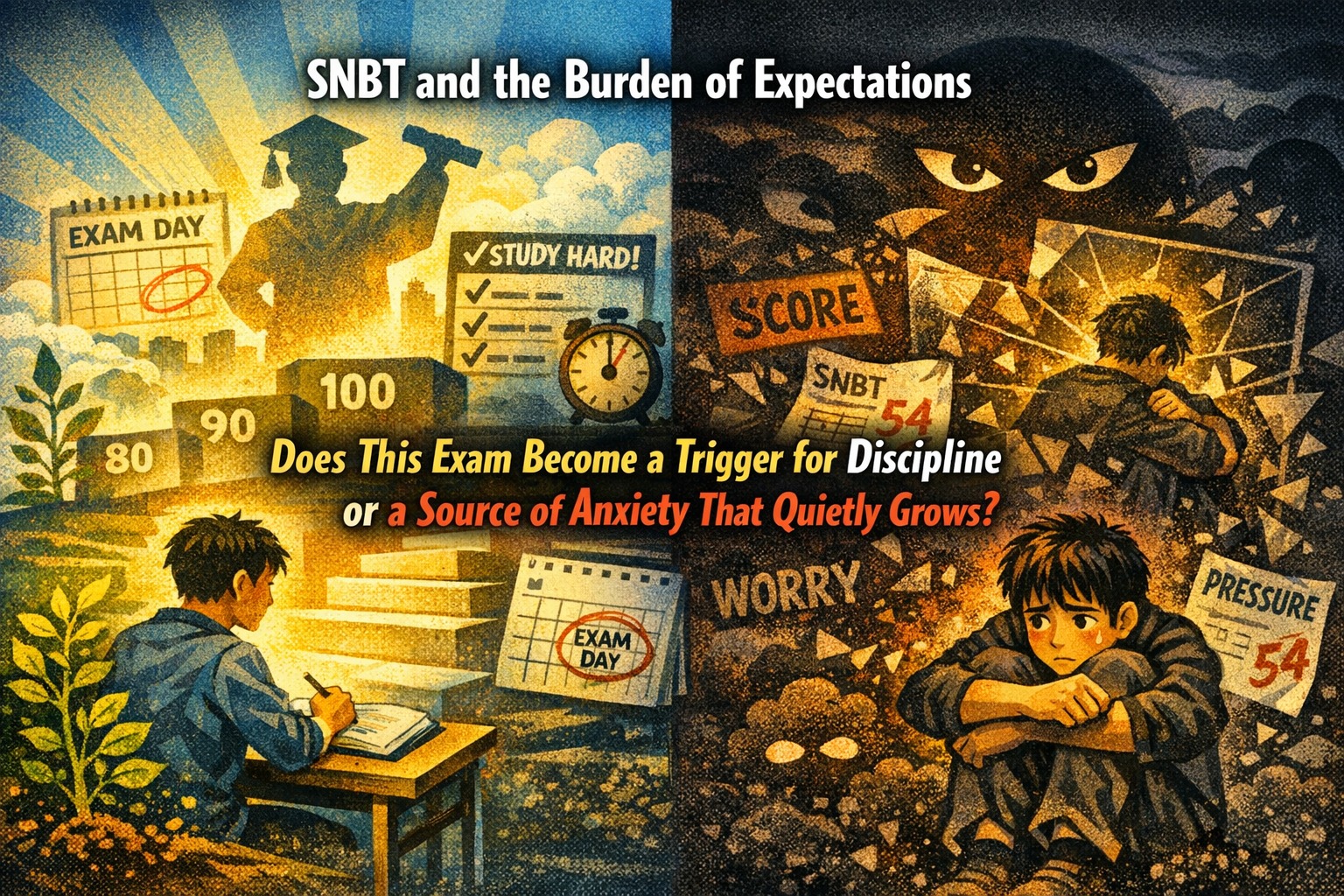
For many students in Indonesia, the transition from high school to university is one of the most important moments in life. It is a period filled with hope, ambition, and difficult decisions. Among the many pathways to higher education, SNBT (Seleksi Nasional Berdasarkan Tes) stands as one of the most competitive and emotionally demanding. More than just an entrance examination, SNBT is often viewed as a major life checkpoint that can shape academic opportunities and future careers.
Because of this, students prepare with extraordinary seriousness. They attend extra classes, solve practice tests repeatedly, and spend months trying to improve their scores. Families often invest time, money, and emotional energy into this preparation. Teachers encourage students to perform their best, while society places high value on acceptance into prestigious universities. Slowly, SNBT becomes more than an exam—it becomes a symbol of success, pride, and expectation.
However, behind this motivation lies a deeper question. Does SNBT truly help students become more disciplined and responsible, or does it create anxiety that grows silently and damages their mental well-being? For some students, the exam becomes a positive challenge that builds maturity. For others, it becomes a constant source of fear that affects confidence, sleep, and emotional stability.
This issue deserves serious attention because education should help students grow, not break them under invisible pressure. Understanding both sides of SNBT is necessary if we want a healthier and more balanced learning environment.
SNBT AS A TRIGGER FOR DISCIPLINE AND FOCUS
One of the strongest positive effects of SNBT is the way it creates clear academic direction. Many students who previously studied without strong purpose begin to feel more focused once they decide on their target university and major. A dream of becoming a doctor, architect, teacher, or engineer gives their daily effort real meaning.
This clarity often improves discipline. Students learn how to create study schedules, manage distractions, and stay consistent over long periods. They realize that success in SNBT is not built from sudden effort but from continuous preparation and commitment.
The exam also teaches responsibility. Students must evaluate their weaknesses honestly, seek better learning methods, and take ownership of their progress. They cannot depend only on school lessons; independent learning becomes an essential part of the journey.
In addition, SNBT introduces students to healthy persistence. Not every tryout result is satisfying, and mistakes are common during preparation. Learning how to recover from disappointment and keep moving forward builds resilience that will be useful in university life and future careers.
When approached with balance, SNBT can become a training ground for discipline, maturity, and personal development. It teaches students that ambition requires structure, patience, and hard work.
WHEN EXPECTATIONS TURN INTO EMOTIONAL PRESSURE
The problem begins when expectations become too heavy to carry. Students are not only trying to achieve personal dreams—they are often trying to meet family hopes, teacher standards, and social definitions of success. This creates emotional pressure that can slowly become overwhelming.
Many parents want the best for their children, but constant reminders such as “you must pass” or “you have to enter this university” can turn encouragement into fear. Students begin to study not because they are inspired, but because they are afraid of disappointing the people they love.
Teachers may also unintentionally increase pressure by focusing too much on rankings and university acceptance statistics. While motivation is important, excessive emphasis on results can make students feel that their value depends only on performance.
Social media adds another layer of comparison. Seeing friends share high tryout scores, acceptance stories, and academic achievements can trigger insecurity. Students may feel left behind even when they are making real progress.
When expectations are too high, studying becomes emotionally exhausting. Instead of feeling challenged, students feel trapped. The dream of university starts to look less like opportunity and more like a burden.
THE QUIET GROWTH OF ANXIETY
Anxiety related to SNBT often develops quietly. It does not always appear dramatically. Sometimes it grows through sleepless nights, overthinking, and the constant fear of not being good enough. Because these feelings become common, many students believe they are simply part of normal preparation.
Students may start doubting themselves after one bad tryout score. They question their intelligence, compare themselves to others, and imagine worst-case scenarios. This emotional pattern can damage self-confidence over time.
Sleep problems are also common. Some students stay awake worrying about the exam, future plans, or family expectations. Lack of rest reduces concentration and makes learning less effective, creating a cycle of stress and poor performance.
Physical symptoms may also appear, such as headaches, fatigue, and loss of appetite. Yet these signs are often ignored because academic pressure is considered more important than emotional well-being.
The most dangerous part is that anxiety often remains invisible. Students may continue attending school and studying normally while silently feeling exhausted inside. Without support, this quiet anxiety can become long-term emotional distress.
WHEN SCORES START DEFINING SELF-WORTH
A serious issue in the SNBT experience is the belief that scores define personal value. Many students begin to think that high scores mean they are intelligent and worthy, while low scores mean failure and disappointment.
This mindset creates unhealthy emotional dependence on academic results. Confidence rises when scores improve and collapses when results are poor. Students stop seeing exams as learning tools and start treating them as judgments of identity.
Rankings strengthen this problem. Instead of focusing on progress, students become obsessed with comparison. Being “better than others” feels more important than understanding the material itself.
This perspective is harmful because failure becomes personal. A rejected university application is no longer seen as one challenge among many—it feels like proof that they are not good enough.
Education should help students discover potential, not reduce them to numbers. When self-worth depends entirely on scores, students risk losing confidence, passion, and even their sense of identity.
THE IMPORTANCE OF SUPPORTIVE ENVIRONMENTS
Students need more than textbooks and tryout questions—they need emotional support. The role of parents, teachers, and schools is critical in shaping whether SNBT becomes a healthy challenge or a harmful burden.
Supportive parents remind students that love and respect are not conditional on university admission results. They encourage effort while also protecting emotional safety at home. This creates confidence instead of fear.
Teachers can help by emphasizing progress rather than perfection. Honest feedback is important, but students also need reassurance that mistakes are part of learning. A teacher who listens can sometimes reduce more stress than hours of extra lessons.
Schools should provide counseling services and open discussions about mental health. Students must know that asking for help is not weakness. Emotional awareness should be part of academic preparation, not something ignored until problems become severe.
Peer support also matters. Friends who encourage rather than compete aggressively can make the preparation process less lonely and more sustainable.
A healthy environment does not remove challenges—it helps students face them without losing themselves.
REDEFINING SUCCESS BEYOND ONE EXAM
One of the biggest mistakes in academic culture is treating SNBT as the final definition of success. Many students believe that failing to enter a dream university means losing their future. This belief creates unnecessary fear and emotional damage.
In reality, success has many paths. Public universities are valuable, but private universities, vocational education, entrepreneurship, scholarships, and professional experience can also lead to meaningful achievement.
Sometimes rejection opens unexpected opportunities. Students may discover new interests, stronger resilience, and better directions through paths they never originally planned. Failure can be a lesson, not an ending.
Success should be measured by growth, character, and long-term contribution—not only by one exam result. A student who learns discipline, resilience, and self-awareness has already achieved something valuable, regardless of admission outcomes.
When students understand this broader definition of success, SNBT becomes less frightening. It remains important, but it no longer controls their entire identity or future.
Ultimately, the goal of education is not simply to produce perfect scores. It is to help young people become capable, confident, and emotionally healthy individuals.
SNBT can be a trigger for discipline and personal growth, but only when expectations are balanced with compassion and perspective. Without that balance, it risks becoming a silent source of anxiety that grows deeper each day.
The challenge is not the exam itself, but how society chooses to frame it. If students are taught that their future depends on one score, fear will always dominate. But if they are taught that exams are only one part of a much larger journey, learning can remain meaningful and hopeful.
Students deserve ambition without fear, discipline without emotional damage, and dreams without the constant burden of proving their worth through numbers alone.
Tentang Penulis
Gusti Ayu Tita P
Penulis — Universitas STEKOM
Penulis aktif yang berfokus pada isu-isu akademik, teknologi pendidikan, dan pengembangan sumber daya manusia di lingkungan kampus.