
Social Pressure in Education and Future Career Choices
Gusti Ayu Tita P
8 September 2026
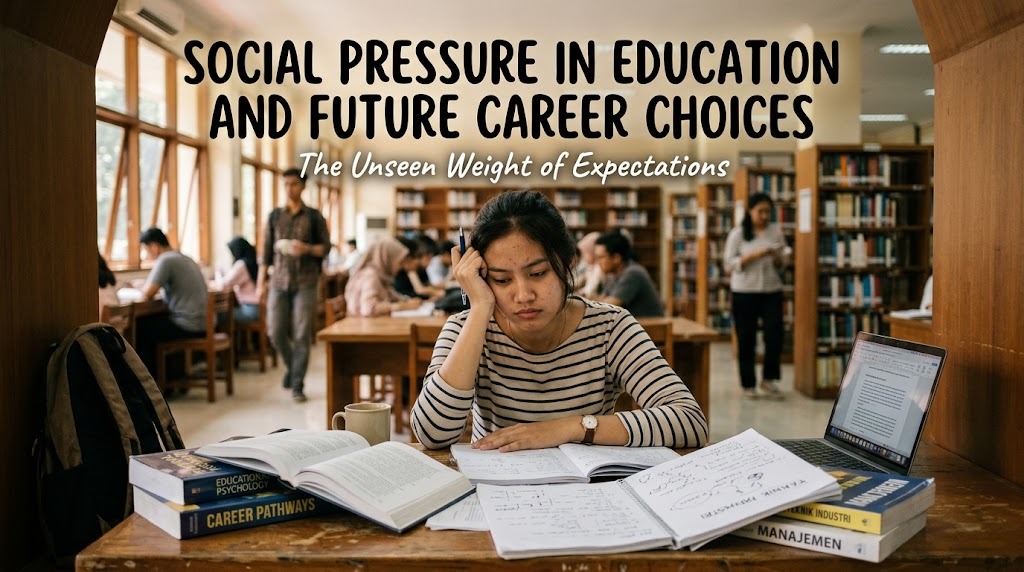
Social pressure can strongly influence educational decisions and future career choices. Students often receive expectations from parents, teachers, friends, and society about what they should study or what career they should pursue. Some guidance can be helpful, especially when it is based on experience and realistic information. However, pressure becomes a problem when students feel they must follow a certain path to receive approval or avoid disappointment.
Education and career decisions can have long-term effects, so they should be considered carefully. A student may choose a field because it is popular, financially attractive, or respected by society rather than because it matches their interests and abilities. When external expectations become stronger than personal goals, students may struggle to feel satisfied with their choices. Understanding social pressure can help young people make more informed and confident decisions.
HOW SOCIAL PRESSURE AFFECTS EDUCATIONAL CHOICES?
Students often hear opinions about which schools, universities, or academic programs are considered successful. Family members may recommend a particular field because they believe it offers better opportunities. Friends can also influence choices when students want to remain in the same environment. These influences can be useful, but they should not automatically determine a student's educational path.
A suitable education should consider interests, abilities, learning preferences, financial circumstances, and future goals. A field that works well for one student may not be suitable for another. Taking time to explore different options can help students understand what they genuinely want. Personal suitability is an important factor when making educational decisions.
FAMILY EXPECTATIONS CAN CREATE CAREER PRESSURE
Families often have hopes for their children's future. Parents may encourage careers they consider stable, prestigious, or financially secure. Their expectations usually come from concern and a desire to provide a good future. However, strong expectations can become stressful when students feel they have no opportunity to express different interests.
Open communication can reduce unnecessary conflict. Students can explain their strengths, interests, concerns, and reasons for considering a particular career. Parents can provide advice while allowing students to participate actively in the decision. A healthy discussion combines family experience with the student's personal goals.
PEER INFLUENCE CAN CHANGE STUDENT DECISIONS
Friends and classmates can have a significant influence during educational years. Students may choose the same major, school activity, or career direction as their friends because they want to remain connected. The desire to belong can sometimes become stronger than personal preferences.
Peer influence is not always negative. Friends can introduce students to new interests and encourage them to develop useful skills. Problems arise when someone feels unable to choose differently because they are afraid of being judged. Students should be able to maintain friendships while making educational choices that suit their own abilities and goals.
SOCIAL STATUS CAN SHAPE CAREER PREFERENCES
Some careers receive greater social recognition than others. Jobs in medicine, technology, business, law, or other highly respected fields may be presented as symbols of success. These professions can offer valuable opportunities, but social status alone should not determine a person's career choice.
A prestigious career may not match everyone's personality, interests, or strengths. Someone may perform better and feel more satisfied in a less publicly celebrated profession. Career decisions should consider practical opportunities while also considering personal suitability. A successful career is not defined only by its social reputation.
SOCIAL MEDIA CAN INFLUENCE FUTURE GOALS
Social media exposes students to career success stories, lifestyle content, entrepreneurs, influencers, and professionals. This information can provide inspiration and introduce young people to new possibilities. However, constant exposure to highly successful people can create unrealistic expectations about how quickly career success should happen.
Online content usually shows selected achievements rather than the complete process behind them. Students may see someone's income, business growth, or professional lifestyle without seeing years of preparation and difficulties. This can create pressure to achieve similar results immediately. Career development usually requires time, learning, experience, and adaptation.
COMPARISON CAN MAKE STUDENTS FEEL LEFT BEHIND
Students may compare their grades, university choices, internships, skills, or career progress with their peers. Comparison can provide motivation when used constructively, but constant comparison can damage confidence. Another student's progress does not mean that everyone else is falling behind.
Different students have different opportunities, responsibilities, interests, and starting points. Someone may enter a career earlier while another person may spend more time exploring options. Both paths can lead to meaningful outcomes. Career development should be evaluated according to individual progress rather than a universal timeline.
FEAR OF DISAPPOINTING OTHERS
Some students are afraid that choosing a different path will disappoint their parents or other important people. This fear can become a major source of pressure. A student may prioritize other people's expectations even when the chosen field does not match personal interests.
Disappointment is not necessarily a sign that a decision is wrong. People may need time to understand a different perspective, especially when they have strong expectations. Students can communicate their plans respectfully and support their decisions with realistic information. Honest communication can help separate genuine concern from unnecessary pressure.
CHOOSING A CAREER BASED ON PERSONAL STRENGTHS
Personal strengths are important when considering future careers. Students can examine their skills, interests, personality, learning preferences, and activities that naturally attract their attention. Understanding personal strengths can make career decisions more realistic and meaningful.
Career exploration should also include practical research. Students can learn about required qualifications, typical responsibilities, employment opportunities, work environments, and potential career development. Talking to experienced professionals can provide useful insights. Combining self knowledge with reliable career information creates a stronger basis for decision-making.
LEARNING TO EVALUATE OTHER PEOPLE'S ADVICE
Advice from parents, teachers, mentors, and professionals can be valuable. However, not every recommendation will fit a student's circumstances. Good advice should be considered carefully rather than accepted automatically.
When receiving advice, ask why the recommendation is being made and what evidence supports it. Consider whether the advice matches personal abilities, interests, financial circumstances, and long-term goals. Different opinions can be compared before reaching a decision. Critical thinking allows students to benefit from guidance while maintaining personal independence.
SETTING HEALTHY BOUNDARIES
Students have the right to participate in decisions about their education and future. This does not mean ignoring family guidance or refusing constructive feedback. Healthy boundaries allow students to listen to others while maintaining responsibility for their own choices.
Boundaries can be communicated respectfully. A student can explain that they appreciate someone's concern but need time to consider different options. If conversations become overly controlling or repeatedly dismiss personal preferences, stronger boundaries may be necessary. Respectful communication can protect independence without creating unnecessary conflict.
BUILDING CONFIDENCE IN CAREER DECISIONS
Career confidence develops through exploration and experience rather than certainty from the beginning. Students do not need to know every detail of their future before choosing their next step. It is normal for interests and career goals to change as people gain knowledge and experience.
Small actions can increase confidence, such as researching programs, joining relevant activities, developing skills, attending career events, or gaining practical experience. These activities provide information that can make future decisions clearer. Confidence grows when students actively explore their options instead of relying entirely on other people's expectations.
CONCLUSION
Social pressure in education and future career choices can influence students through family expectations, peer influence, social status, comparison, and social media. Guidance from others can be useful, but excessive pressure may cause students to choose paths that do not match their interests or abilities. When this happens, education and career decisions can become sources of stress rather than opportunities for development.
A healthier approach combines self awareness, reliable information, critical thinking, communication, and personal responsibility. Students can listen to advice while still considering their own strengths, interests, circumstances, and goals. Choosing a future path does not require satisfying every social expectation. The most meaningful career direction is one that balances personal suitability with realistic opportunities and long-term development.
Tentang Penulis
Gusti Ayu Tita P
Penulis — Universitas STEKOM
Penulis aktif yang berfokus pada isu-isu akademik, teknologi pendidikan, dan pengembangan sumber daya manusia di lingkungan kampus.



