
SPV KPIs How to Measure and Evaluate Supervisor Performance?
Gusti Ayu Tita P
28 Juni 2026
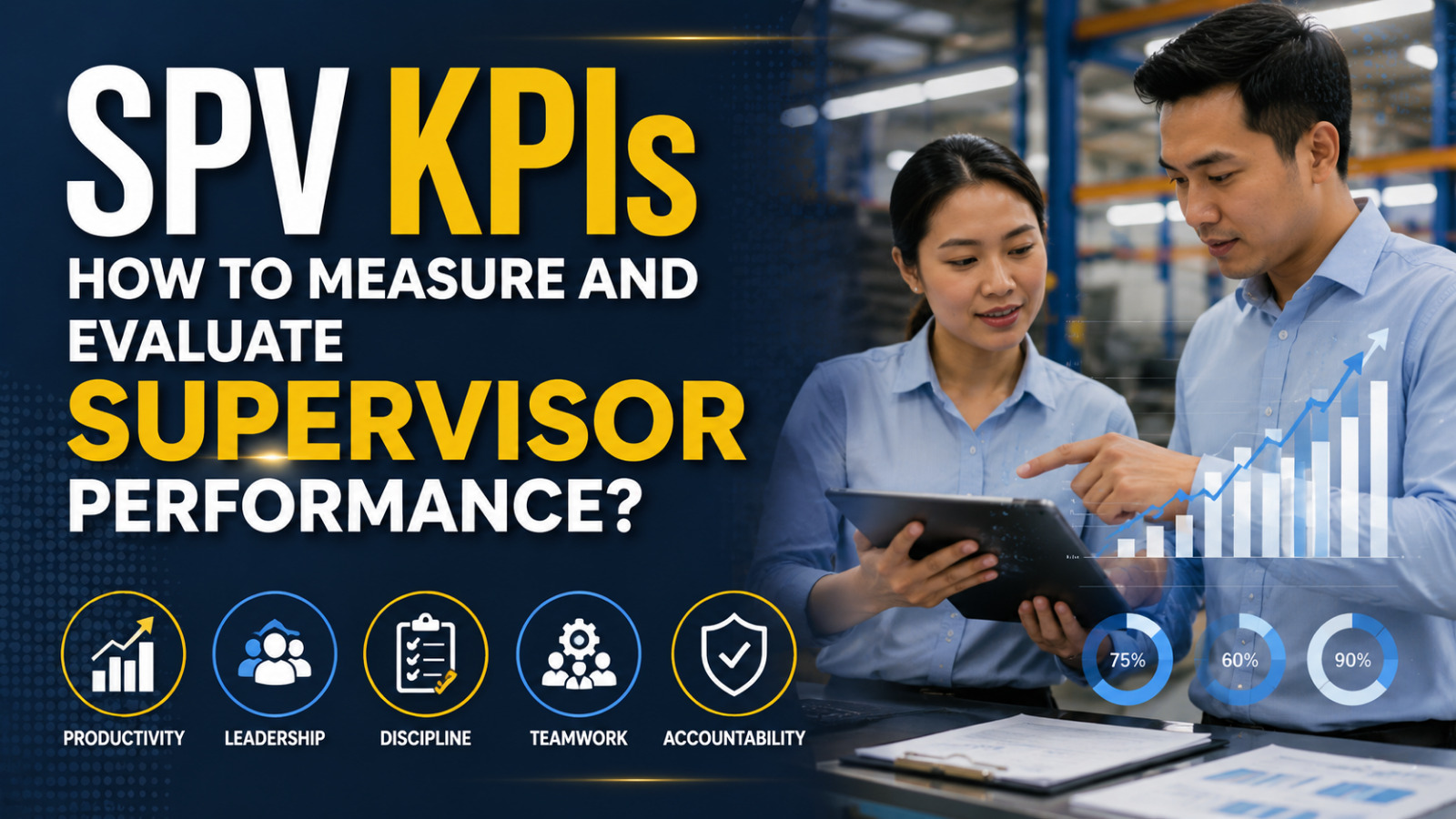
Supervisor performance plays a crucial role in determining the success of a company’s daily operations. Supervisors, often called SPVs, are responsible for managing teams, ensuring productivity, maintaining discipline, and supporting organizational goals. Because of their important position, companies need effective Key Performance Indicators (KPIs) to measure and evaluate supervisor performance accurately.
Well-designed SPV KPIs help organizations monitor leadership effectiveness, improve team productivity, and ensure supervisors contribute positively to business success. Clear evaluation standards also help supervisors understand expectations and continuously improve their management skills.
WHY SUPERVISOR KPIS ARE IMPORTANT?
KPIs provide measurable standards that help companies assess supervisor performance objectively. Without proper evaluation methods, it can be difficult to identify leadership strengths, operational problems, or areas that need improvement.
Effective supervisor KPIs can help companies:
- Improve team productivity
- Increase employee discipline
- Strengthen communication
- Monitor operational efficiency
- Support leadership development
Supervisors who understand their performance targets are more likely to manage teams effectively and achieve organizational objectives.
CHARACTERISTICS OF EFFECTIVE SPV KPIS
Good supervisor KPIs should be:
- Specific
- Measurable
- Achievable
- Relevant
- Time-bound
These characteristics ensure performance indicators remain clear, realistic, and easy to evaluate.
TEAM PRODUCTIVITY KPI
One of the most important responsibilities of supervisors is ensuring team productivity. Companies often measure how effectively supervisors manage their teams to achieve operational targets.
EXAMPLES OF PRODUCTIVITY KPIS:
- Team output achievement percentage
- Daily or monthly production targets
- Project completion rate
- Work efficiency improvement
- Task completion accuracy
High productivity indicates strong supervision and effective team coordination.
EMPLOYEE DISCIPLINE KPI
Supervisors are responsible for maintaining workplace discipline and ensuring employees follow company policies.
EXAMPLES OF DISCIPLINE KPIS
- Employee attendance rate
- Punctuality improvement
- Reduction in workplace violations
- Compliance with company regulations
- Overtime management efficiency
Strong discipline management helps create a more organized and professional work environment.
TEAM PERFORMANCE KPI
Supervisor success is often reflected in the overall performance of the team they manage.
EXAMPLES OF TEAM PERFORMANCE KPIS
- Team performance evaluation scores
- Employee productivity growth
- Achievement of department goals
- Error reduction rate
- Team collaboration effectiveness
These KPIs measure how well supervisors guide and support their employees.
COMMUNICATION AND LEADERSHIP KPI
Good supervisors must communicate effectively and lead their teams professionally.
EXAMPLES OF LEADERSHIP KPIS
- Employee feedback satisfaction score
- Conflict resolution effectiveness
- Team communication quality
- Employee engagement level
- Leadership assessment results
Strong leadership improves workplace morale and employee motivation.
PROBLEM-SOLVING KPI
Supervisors frequently handle operational challenges and employee issues. Their ability to solve problems efficiently is an important performance indicator.
EXAMPLES OF PROBLEM-SOLVING KPIS
- Speed of issue resolution
- Number of operational disruptions resolved
- Decision-making effectiveness
- Customer complaint handling success
- Crisis management performance
Effective problem-solving helps maintain smooth business operations.
TRAINING AND EMPLOYEE DEVELOPMENT KPI
Supervisors are also responsible for supporting employee growth and skill improvement.
EXAMPLES OF DEVELOPMENT KPIS
- Employee training completion rate
- Team skill improvement progress
- Coaching session frequency
- Internal promotion success rate
- Employee performance improvement after training
Supervisors who develop their teams contribute to long-term organizational success.
CUSTOMER SERVICE KPI
In customer-focused industries, supervisor performance may also affect customer satisfaction.
EXAMPLES OF CUSTOMER SERVICE KPIS
- Customer satisfaction score
- Complaint resolution rate
- Service quality improvement
- Response time efficiency
- Customer retention performance
Strong supervision can improve both employee service quality and customer experiences.
WORKPLACE SAFETY KPI
In industries involving physical operations, supervisors play an important role in maintaining workplace safety.
EXAMPLES OF SAFETY KPIS
- Workplace accident reduction rate
- Safety compliance percentage
- Safety training participation
- Incident response effectiveness
- Equipment inspection completion rate
Safety KPIs help companies reduce risks and maintain secure work environments.
HOW TO EVALUATE SUPERVISOR PERFORMANCE EFFECTIVELY
To evaluate supervisors fairly and accurately, companies should combine multiple assessment methods.
1. PERFORMANCE REVIEW
Regular evaluations help monitor progress and identify improvement areas.
2. EMPLOYEE FEEDBACK
Input from team members provides insight into leadership effectiveness and communication quality.
3. DATA ANALYSIS
Performance reports and KPI results provide measurable evidence of supervisor achievements.
4. CONTINUOUS IMPROVEMENT
Supervisors should receive coaching, support, and development opportunities to improve their leadership skills.
CONCLUSION
SPV KPIs are essential tools for measuring and evaluating supervisor performance in the workplace. Effective KPIs help companies assess leadership quality, operational efficiency, team productivity, and employee development.
By implementing clear and measurable supervisor KPIs, organizations can improve management performance, strengthen teamwork, and achieve long-term business success. Proper evaluation also encourages supervisors to grow professionally and lead their teams more effectively.
Tentang Penulis
Gusti Ayu Tita P
Penulis — Universitas STEKOM
Penulis aktif yang berfokus pada isu-isu akademik, teknologi pendidikan, dan pengembangan sumber daya manusia di lingkungan kampus.



