Steps Regents Can Take to Improve Public Services
Gusti Ayu Tita P
12 Agustus 2026
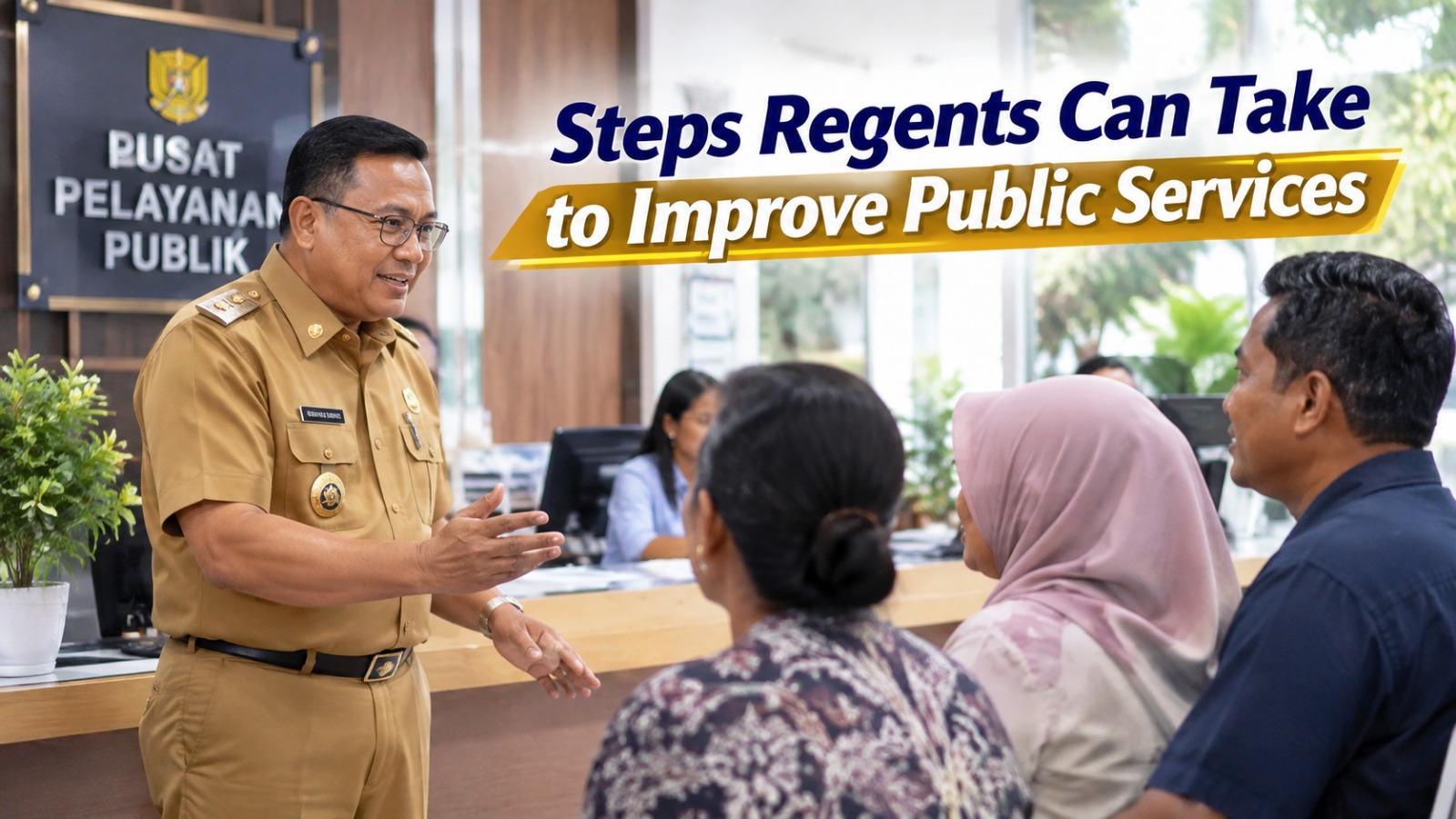
Public services are an essential part of people's daily lives. Citizens rely on government services for administration, healthcare, education, infrastructure, licensing, social programs, and access to public information. As the head of a regency government, a regent has an important leadership role in ensuring that services within regional authority are delivered effectively, fairly, and according to applicable standards. Improving public services requires more than creating new programs because it also involves improving procedures, staff performance, technology, accessibility, and accountability.
UNDERSTANDING THE IMPORTANCE OF PUBLIC SERVICES
Public services represent one of the most direct ways citizens experience government. When services are fast, accessible, transparent, and professional, people are more likely to trust public institutions. On the other hand, complicated procedures, unclear information, and long waiting times can create frustration. A regent therefore needs to make service quality improvement an important part of regional government management.
Good public services should respond to the actual needs of residents. Different communities may face different barriers depending on their location, economic conditions, age, or access to technology. Government agencies should identify these differences before designing improvements. Regular feedback from citizens can help officials understand which services require the most attention. A citizen-focused approach can make regional government services more effective.
EVALUATING EXISTING SERVICES
The first step toward improvement is understanding how existing services perform. A regent can encourage regional government agencies to evaluate procedures, waiting times, service standards, staff performance, complaints, and accessibility. Service evaluation can reveal unnecessary steps and areas where resources are not being used effectively. Evaluation should be based on reliable information rather than assumptions.
Performance indicators can help government officials measure progress. For example, agencies can monitor processing times, complaint resolution, service availability, and citizen satisfaction where appropriate. The results should be reviewed regularly so that problems can be addressed quickly. Services that consistently fail to meet standards may require changes in procedures or staffing. Continuous evaluation can create a culture of public service improvement.
SIMPLIFYING ADMINISTRATIVE PROCEDURES
Complicated administrative procedures can make citizens spend unnecessary time and money. A regent can encourage agencies to review procedures and remove steps that do not provide meaningful value, while ensuring that legal requirements remain fulfilled. Clear forms, instructions, and service standards can help residents understand what they need to prepare. Simplified public services can reduce confusion and improve efficiency.
Procedures should also be communicated through accessible channels. Information can be provided through government offices, official websites, digital platforms, public announcements, and community outreach. Citizens should know the expected processing time and the documents required for a service. Clear communication can reduce repeated visits and prevent misunderstandings. Administrative simplification can make government services more user-friendly and efficient.
STRENGTHENING PUBLIC SERVANT CAPACITY
Technology and procedures cannot fully improve services without capable personnel. Public servants need appropriate knowledge, communication skills, technical abilities, and a strong commitment to professional standards. A regent can support relevant training and capacity-building programs for regional government employees. Public servant development can improve both service quality and organizational performance.
Training should reflect actual service challenges. Employees who work directly with citizens may need additional training in communication, complaint handling, digital systems, and administrative procedures. Managers also need leadership skills to monitor performance and support their teams. Performance feedback can help identify areas where employees need further development. A professional workforce is essential for delivering quality public services.
USING DIGITAL TECHNOLOGY
Digital technology can make many government services faster and easier to access. Online applications, digital information systems, electronic document management, appointment systems, and complaint platforms can reduce unnecessary administrative processes. A regent can encourage appropriate digital public services within regional government responsibilities. Technology can also help agencies manage data and monitor service performance.
However, digital transformation should not exclude residents who lack internet access or digital skills. Government offices should continue to provide suitable alternatives where necessary. Digital systems should also consider data security, reliability, accessibility, and user experience. Staff need proper training to operate and maintain these systems. A balanced digital strategy can improve service efficiency while maintaining inclusion.
IMPROVING ACCESSIBILITY
Public services should be accessible to residents across different locations and circumstances. People living in remote areas may have difficulty reaching government offices because of distance or transportation limitations. A regent can support service arrangements that bring appropriate government services closer to communities. Accessible public services can help reduce geographic inequality.
Accessibility also includes the needs of elderly residents, people with disabilities, and other groups that may face specific barriers. Public facilities should consider appropriate physical access and clear information. Digital services can provide additional options when implemented properly. Government agencies should regularly assess whether citizens can realistically use available services. Improving accessibility can strengthen equal access to government services.
STRENGTHENING COMPLAINT AND FEEDBACK SYSTEMS
Citizens should have clear channels for reporting problems and providing feedback about public services. A regent can encourage government agencies to establish or strengthen official complaint mechanisms. Public feedback can provide valuable information about service problems that may not appear in administrative reports. Complaints should be handled professionally and according to applicable procedures.
A complaint system is most useful when citizens can see that their concerns receive appropriate responses. Agencies should record complaints, categorize problems, investigate relevant issues, and take corrective action when necessary. Repeated complaints about the same issue may indicate a systemic problem that requires broader reform. Regular analysis of feedback can help government leaders identify priorities. This can turn citizen feedback into service improvement.
INCREASING TRANSPARENCY AND ACCOUNTABILITY
Transparency helps citizens understand how government services operate. Service standards, requirements, procedures, fees where applicable, processing times, and complaint mechanisms should be communicated clearly within the framework of applicable regulations. A regent can encourage agencies to provide reliable and accessible public information. Transparent public services can reduce confusion and strengthen public trust.
Accountability means that government institutions should be responsible for their performance. Agencies need appropriate monitoring systems and should evaluate whether they meet established service standards. When problems occur, officials should investigate the causes and take corrective measures. Oversight mechanisms can also contribute to responsible administration. Transparency and accountability together support good regional governance.
COORDINATING REGIONAL GOVERNMENT AGENCIES
Many public services require cooperation between multiple government agencies. Poor coordination can result in duplicated processes, conflicting information, or delays. A regent can strengthen communication and coordination between regional organizations so that services are delivered more consistently. Interagency coordination can help create a smoother experience for citizens.
Integrated planning can also improve the use of government resources. Agencies can share relevant information and coordinate programs while respecting applicable rules regarding data and administrative responsibilities. Regular coordination meetings can help identify operational problems and develop solutions. Strong leadership is necessary to ensure that cooperation does not remain only at the planning level. Better coordination can improve regional service delivery.
MONITORING RESULTS AND CONTINUOUSLY IMPROVING
Improving public services should be treated as an ongoing process. A regent and regional government agencies need to monitor results and compare performance with established objectives and service standards. Continuous improvement allows government institutions to respond to new community needs and technological changes. Programs should be adjusted when evidence shows that existing approaches are not effective.
Evaluation should consider both quantitative and qualitative information. Service statistics can show processing times and usage levels, while citizen feedback can reveal practical experiences. Officials can use these findings to identify successful practices and areas requiring further improvement. Sharing lessons between regional agencies can also strengthen institutional learning. This approach can gradually build a more responsive and efficient public service system.
CONCLUSION
Regents can improve public services through a series of coordinated steps. These include evaluating existing services, simplifying procedures, strengthening public servant capacity, using digital technology, improving accessibility, listening to citizen feedback, increasing transparency, and strengthening coordination. Every improvement should be based on actual community needs and applicable regulations. Regular monitoring is necessary to ensure that reforms produce meaningful results. With consistent leadership and a citizen-focused approach, regional governments can provide more efficient, accessible, transparent, and reliable public services.
Tentang Penulis
Gusti Ayu Tita P
Penulis — Universitas STEKOM
Penulis aktif yang berfokus pada isu-isu akademik, teknologi pendidikan, dan pengembangan sumber daya manusia di lingkungan kampus.