Strategic Minerals Supporting National Industrial Development
Gusti Ayu Tita P
20 Agustus 2026
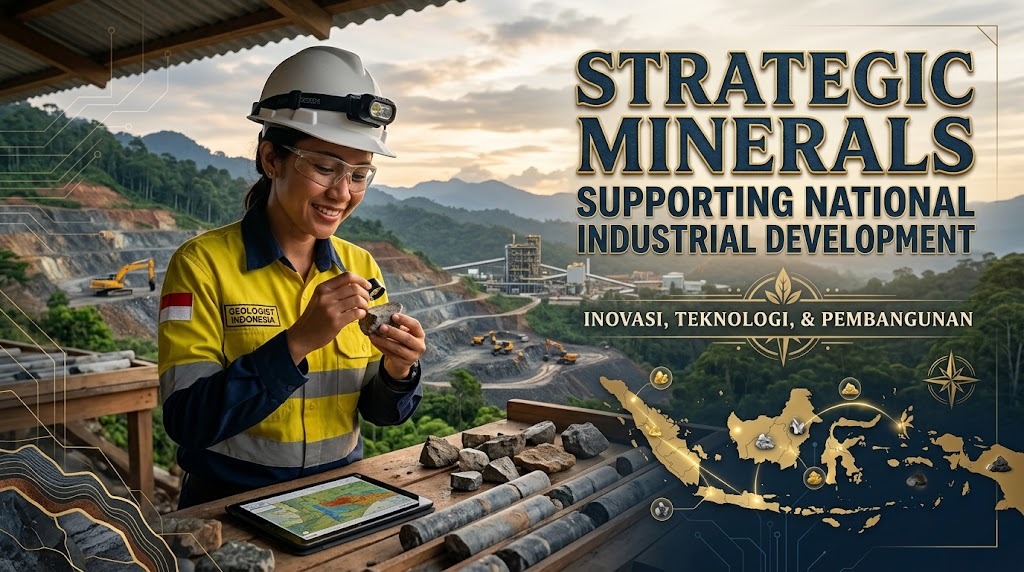
Strategic minerals have become increasingly important as countries strengthen their industrial capacity and adapt to changes in technology and global supply chains. Minerals such as nickel, copper, bauxite, tin, and other critical materials are used in manufacturing, construction, electronics, transportation, energy infrastructure, and advanced technologies. Their availability can influence the competitiveness and resilience of national industries.
For countries with significant mineral resources, the challenge is not simply extracting and selling raw materials. Value-added processing, technological development, skilled workers, infrastructure, and responsible environmental management are needed to turn mineral wealth into lasting industrial benefits. With appropriate policies and investment, strategic minerals can support broader economic development and strengthen domestic industries.
WHY STRATEGIC MINERALS MATTER FOR INDUSTRY?
Modern industries depend on a wide range of mineral materials. Copper is important for electrical systems, aluminum supports transportation and manufacturing, while nickel has applications in stainless steel and certain battery technologies. Strategic minerals therefore play an important role in maintaining industrial production and supporting technological development.
Their importance can increase when global demand changes or supply chains become disrupted. Countries that have reliable access to important minerals may have greater opportunities to develop domestic industries. However, mineral availability alone does not guarantee industrial growth because processing capacity, infrastructure, investment, technology, and market access are also essential.
NICKEL SUPPORTING INDUSTRIAL DEVELOPMENT
Nickel is one of the minerals receiving significant attention because of its role in stainless steel production and some battery supply chains. Indonesia has substantial nickel resources, creating opportunities to develop industries beyond the extraction stage. Nickel processing can generate additional economic value when mineral resources are refined and processed domestically.
Developing a complete industrial ecosystem requires more than building processing facilities. It also involves infrastructure, reliable energy, skilled workers, technology, environmental controls, and supporting businesses. If these elements develop together, nickel resources can contribute to broader industrial activity and employment.
COPPER STRENGTHENING ELECTRICAL INFRASTRUCTURE
Copper is essential for electrical wiring, power transmission, electronics, machinery, and many industrial applications. As countries expand electricity networks and adopt new technologies, demand for copper resources can remain important. This makes copper a significant material for industrial and infrastructure development.
Domestic copper production and processing can support industries that depend on electrical materials. Opportunities may also emerge in engineering, manufacturing, transportation, and maintenance services. Responsible development is necessary to ensure that copper production provides economic benefits while managing environmental and social impacts.
BAUXITE AND ALUMINUM FOR MANUFACTURING
Bauxite is the main ore used to produce alumina, which can then be processed into aluminum. Aluminum is widely used in construction, packaging, transportation, machinery, and manufacturing because it is relatively lightweight and versatile. Bauxite development can therefore support the expansion of domestic industrial supply chains.
Developing refining and processing capacity can increase the value generated from bauxite resources. It may also encourage investment in infrastructure and supporting industries. However, processing activities require significant energy and careful environmental management, making efficient technology and responsible planning important factors in long-term development.
TIN AND OTHER MINERALS SUPPORTING TECHNOLOGY
Tin is widely used in electronics and other industrial applications, including soldering materials. Other minerals can also support industries ranging from construction to renewable energy and advanced manufacturing. Mineral diversity can provide a country with opportunities to participate in multiple industrial supply chains.
The strategic value of a mineral depends on factors such as demand, availability, technological applications, processing capacity, and supply chain conditions. Countries need accurate geological information and long-term planning to understand which resources can contribute most effectively to national development.
DOWNSTREAM INDUSTRIES CREATE GREATER VALUE
A major opportunity associated with strategic minerals is downstream development. Processing minerals into refined materials or industrial products can create more economic value than exporting unprocessed resources. Downstream industries can also generate jobs and encourage the development of domestic suppliers.
However, successful downstream development requires substantial investment and supporting infrastructure. Reliable electricity, transportation networks, skilled labor, technology, financing, and stable regulations are important components of industrial growth. Strong coordination between government and industry can help create conditions that encourage responsible investment.
TECHNOLOGY IMPROVES MINERAL RESOURCE MANAGEMENT
Modern technology can improve the way strategic minerals are explored, extracted, processed, and monitored. Mining technology includes automation, remote sensing, artificial intelligence, connected equipment, and advanced data analysis. These tools can help companies improve productivity and make resource management more precise.
Technology can also support environmental monitoring and workplace safety. Digital systems can track energy consumption, water use, equipment performance, and environmental conditions. When combined with skilled workers and effective regulations, technological innovation can help make mineral development more efficient and responsible.
ENVIRONMENTAL RESPONSIBILITY IS ESSENTIAL
Strategic mineral development can create economic opportunities, but mining and processing may also affect land, water, ecosystems, and local communities. Environmental management must therefore be integrated into industrial development strategies. Companies need to manage waste, monitor environmental conditions, control emissions, and conduct appropriate land rehabilitation.
Long-term industrial development depends on maintaining public trust and protecting natural resources. Strong environmental standards and transparent monitoring can help reduce risks. Sustainable practices can also improve the ability of mining industries to meet changing expectations from investors, customers, governments, and communities.
BUILDING A SKILLED INDUSTRIAL WORKFORCE
Strategic mineral development requires workers with a broad range of skills. Engineers, geologists, technicians, equipment operators, environmental specialists, data analysts, and business professionals all have important roles. Workforce development is therefore essential for turning mineral resources into competitive industrial capabilities.
Educational institutions and companies can work together to provide technical training, vocational education, internships, and professional development. Building domestic expertise can reduce dependence on external capabilities and create better employment opportunities. A skilled workforce also helps industries adopt advanced technologies more effectively.
STRENGTHENING NATIONAL INDUSTRIAL RESILIENCE
Strategic minerals can contribute to industrial resilience by supporting domestic supply chains and reducing excessive dependence on imported materials. Developing local processing and manufacturing capacity can help countries respond more effectively to changes in global markets.
Nevertheless, diversification remains important. A strong industrial strategy should avoid excessive dependence on a single mineral or commodity. By developing multiple mineral-based industries alongside manufacturing, services, technology, and other economic sectors, a country can create a more balanced and resilient economy.
Tentang Penulis
Gusti Ayu Tita P
Penulis — Universitas STEKOM
Penulis aktif yang berfokus pada isu-isu akademik, teknologi pendidikan, dan pengembangan sumber daya manusia di lingkungan kampus.