Strategies for Handling Work Mistakes with Responsibility
Gusti Ayu Tita P
7 Juli 2026
INTRODUCTION
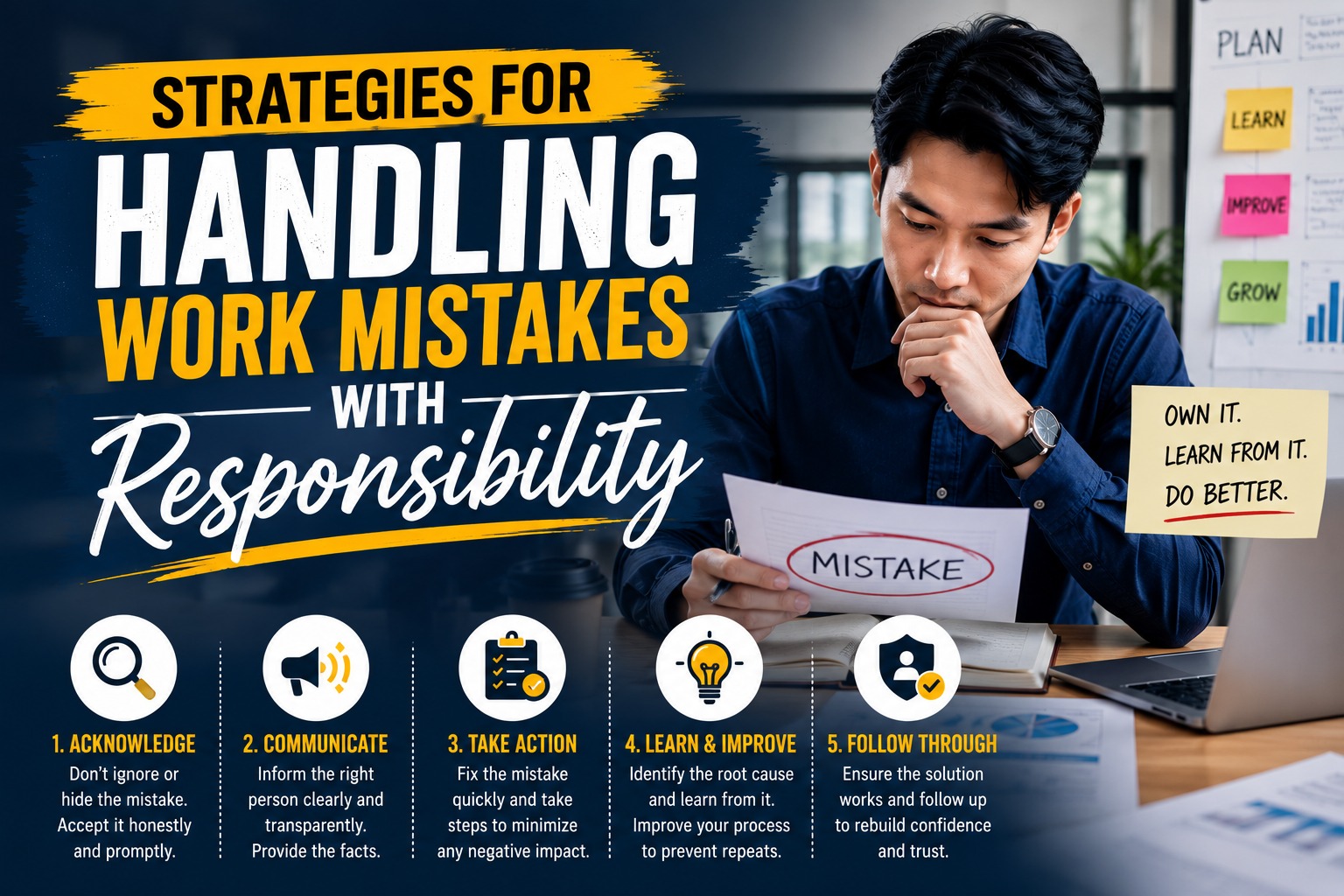
Making mistakes at work is a normal part of professional life. Even highly experienced employees can occasionally make errors due to miscommunication, oversight, or unexpected challenges. However, what truly matters is how those mistakes are handled. Demonstrating work responsibility when dealing with errors can help maintain trust, protect professional credibility, and support continuous improvement.
Employees who respond responsibly to mistakes are often viewed as mature, reliable, and committed to their work. Instead of avoiding accountability, they focus on finding solutions and preventing similar issues in the future. Learning effective strategies for handling work mistakes can contribute to both personal growth and organizational success.
ACKNOWLEDGE THE MISTAKE IMMEDIATELY
The first step in demonstrating work responsibility is acknowledging the mistake as soon as it is discovered. Ignoring or hiding an error can often make the situation worse and create additional problems for the team or organization. Being honest about a mistake allows corrective actions to begin quickly.
Managers generally appreciate employees who are transparent and willing to admit errors. Acknowledging mistakes shows integrity and accountability, which are essential qualities in a professional environment. Taking responsibility early can also help reduce the impact of the issue.
ANALYZE THE CAUSE OF THE ERROR
After recognizing a mistake, it is important to understand why it happened. Responsible employees take the time to identify the root cause rather than focusing only on the outcome. This process helps prevent similar mistakes from occurring in the future and improves overall performance.
Analyzing the cause may involve reviewing work processes, communication methods, or decision-making practices. Understanding what went wrong allows employees to develop better strategies and strengthen their work accountability moving forward.
COMMUNICATE OPENLY WITH YOUR MANAGER
Open communication is a crucial part of employee accountability. Employees should inform their manager or supervisor about significant mistakes in a timely and professional manner. Providing accurate information about the issue helps management make informed decisions and respond appropriately.
Honest communication also demonstrates respect and professionalism. Managers are more likely to trust employees who communicate openly about challenges rather than attempting to conceal problems. Transparency often strengthens workplace relationships and promotes a culture of accountability.
TAKE CORRECTIVE ACTION QUICKLY
Identifying a mistake is only the beginning. Responsible employees actively work to correct the issue and minimize any negative consequences. Taking prompt action demonstrates commitment to solving problems and protecting organizational interests.
Corrective action may involve revising work, updating information, contacting affected parties, or collaborating with team members to resolve the situation. Employees who focus on solutions rather than excuses are often viewed as dependable and proactive professionals.
AVOID BLAMING OTHERS
One of the clearest signs of responsibility in the workplace is refusing to shift blame to others. Even when multiple factors contribute to a mistake, responsible employees focus on their own role and how they can improve. Blaming coworkers often damages trust and creates unnecessary workplace conflict.
Accepting personal accountability demonstrates maturity and professionalism. Managers appreciate employees who are willing to take ownership of their actions because it shows honesty and a commitment to growth.
LEARN FROM THE EXPERIENCE
Every mistake provides an opportunity to develop stronger work responsibility skills. Employees who reflect on their experiences can identify lessons that improve future performance. Learning from mistakes helps build confidence, competence, and professional resilience.
Continuous improvement is an important part of career development. By applying lessons learned, employees can reduce the likelihood of repeating errors and strengthen their ability to handle future challenges effectively.
IMPLEMENT PREVENTIVE MEASURES
Preventing future mistakes is a key aspect of long-term work accountability. After resolving an issue, employees should consider what changes can be made to improve processes and reduce risks. This proactive approach demonstrates commitment to quality and professional excellence.
Preventive measures may include creating checklists, improving time management, enhancing communication, or seeking additional training. Small improvements can have a significant impact on reducing errors and increasing workplace efficiency.
MAINTAIN A POSITIVE AND PROFESSIONAL ATTITUDE
Mistakes can be discouraging, but maintaining a positive attitude is essential. Responsible employees view setbacks as learning opportunities rather than personal failures. They remain focused on solutions and continue working toward organizational goals.
Professionalism during difficult situations helps preserve trust and credibility. Employees who respond calmly and constructively to mistakes are often respected by managers and coworkers for their resilience and dedication.
CONCLUSION
Handling mistakes with work responsibility is an important skill that can strengthen professional reputation and workplace trust. Acknowledging errors, communicating openly, taking corrective action, and learning from experiences demonstrate accountability and maturity.
By practicing strong employee accountability, professionals can turn mistakes into valuable learning opportunities. Responsibility not only helps resolve workplace challenges but also supports long-term career growth, improved performance, and organizational success.
Tentang Penulis
Gusti Ayu Tita P
Penulis — Universitas STEKOM
Penulis aktif yang berfokus pada isu-isu akademik, teknologi pendidikan, dan pengembangan sumber daya manusia di lingkungan kampus.