Strategies For Mayors To Develop Local Economic Potential
Gusti Ayu Tita P
12 Agustus 2026
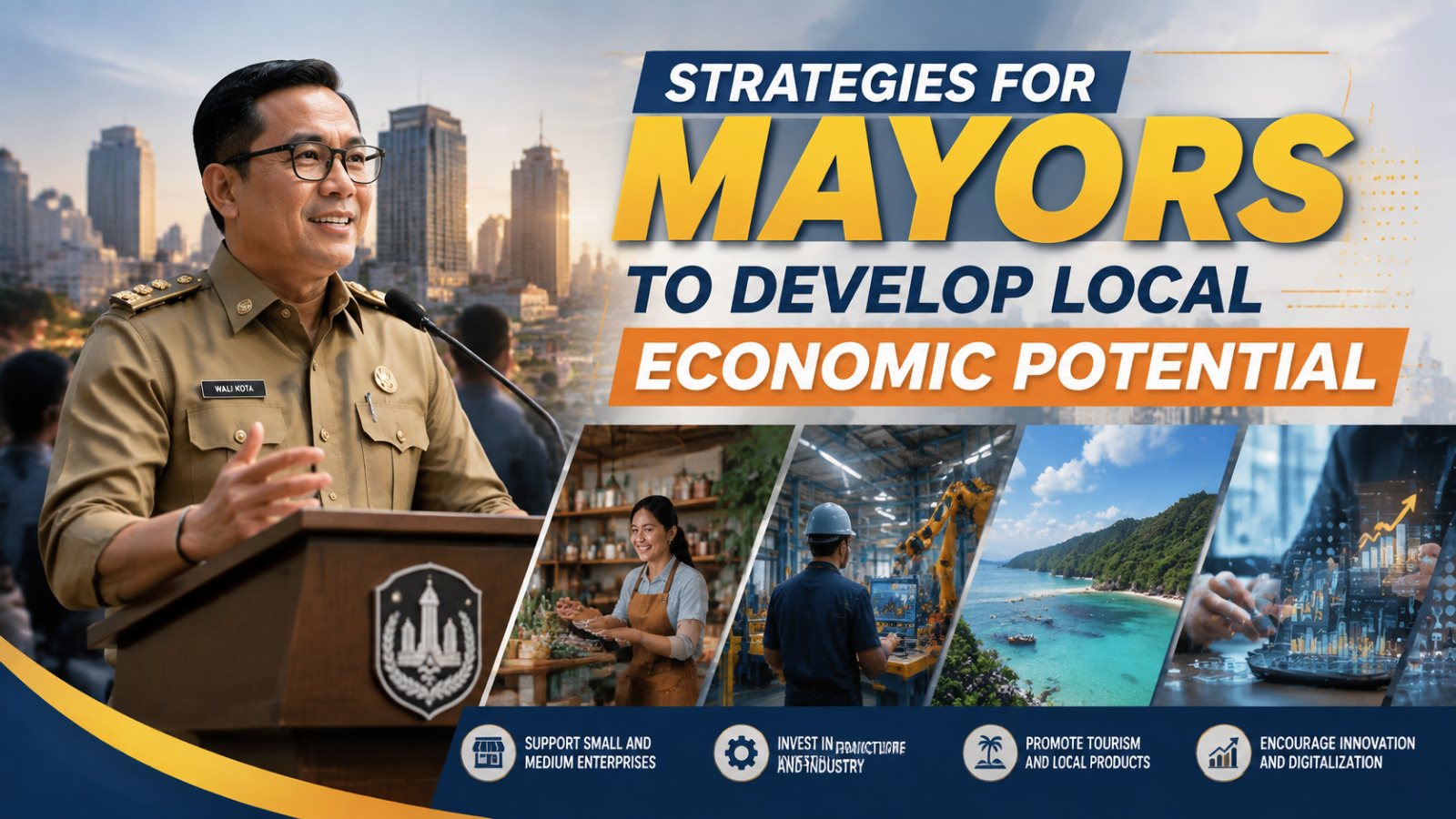
Developing the local economy is an important responsibility for a mayor because a strong economy can improve employment opportunities and community welfare. Every city has different economic strengths, such as tourism, trade, agriculture, manufacturing, creative industries, or technology. A mayor needs to identify these strengths and create policies that support their responsible development. Local Economic Development should not focus only on increasing business activity but also on creating opportunities for local communities. Effective economic strategies require cooperation between government, businesses, communities, educational institutions, and other stakeholders.
IDENTIFY LOCAL ECONOMIC POTENTIAL
The first step is to understand the economic resources and advantages available in the city. A mayor can examine local industries, natural resources, human resources, infrastructure, consumer demand, and existing businesses. Reliable data can help identify sectors that have realistic opportunities for growth. Community discussions can also reveal local products and skills that may have been overlooked. Understanding Economic Potential allows the government to establish development priorities based on actual local conditions.
A city should avoid depending too heavily on only one economic sector. Diversifying economic activities can help reduce risks when one industry experiences a downturn. Mayors can encourage the development of complementary sectors that support existing businesses. For example, tourism development can be connected with local food, transportation, handicrafts, accommodation, and creative industries. This approach can create a broader economic ecosystem.
SUPPORT LOCAL BUSINESSES
Local businesses can contribute significantly to Business Growth and employment. Mayors can support entrepreneurs by improving access to business information, training, markets, and appropriate government programs. Simplifying administrative procedures within the government's authority can also make it easier for businesses to operate. Local products can be promoted through exhibitions, marketplaces, and digital platforms. Strong local businesses can contribute to a more resilient city economy.
Small businesses often face challenges involving capital, technology, marketing, and management. Local government can work with financial institutions, business organizations, universities, and training providers to help address these challenges. Programs should be designed according to actual business needs rather than simply providing short-term assistance. Encouraging businesses to improve their quality and competitiveness can create more sustainable results. Support should also encourage independence and innovation.
ATTRACT RESPONSIBLE INVESTMENT
Local Investment can bring capital, technology, employment opportunities, and new business activities to a city. A mayor can improve the investment environment by supporting reliable infrastructure, transparent procedures, and predictable local policies within the government's authority. Potential investors also need clear information about local opportunities and requirements. However, attracting investment should not be based solely on the amount of capital entering the city. Economic, social, and environmental impacts should also be considered.
Responsible investment can create long-term benefits for both businesses and communities. Local governments should encourage investment that respects applicable regulations and contributes to sustainable development. Cooperation between investors and local communities can also help reduce potential conflicts. A balanced investment strategy can support Economic Development while protecting public interests. This makes investment a tool for long-term growth rather than simply a short-term target.
IMPROVE INFRASTRUCTURE AND HUMAN RESOURCES
Good infrastructure is an important foundation for economic activity. Roads, transportation systems, markets, internet connectivity, public facilities, and reliable utilities can make it easier for businesses to operate. Mayors should prioritize infrastructure projects based on economic needs, public benefits, available resources, and long-term development plans. Proper maintenance is also necessary so that infrastructure continues to provide value. Better infrastructure can support both Business Growth and investment.
Human resources are equally important because economic development requires skilled workers. Local governments can cooperate with educational institutions and training organizations to improve skills that match local industry needs. Programs can focus on digital skills, entrepreneurship, technical abilities, communication, and other relevant competencies. A skilled workforce can increase productivity and improve the competitiveness of local businesses. This can contribute to sustainable Job Creation.
ENCOURAGE INNOVATION AND DIGITAL ECONOMY
Technology creates new opportunities for local businesses and entrepreneurs. Mayors can encourage digital adoption by supporting training, digital marketplaces, innovation programs, and collaboration between businesses and educational institutions. Small businesses can use digital tools to promote products, manage operations, and reach customers outside their local area. Economic Innovation can also help traditional industries adapt to changing consumer behavior. However, digital programs should consider accessibility for communities with limited technology access.
Innovation should be connected to real economic needs. A city does not need to adopt every new technology simply because it is popular. Instead, government leaders should evaluate whether a technology can improve productivity, create opportunities, or solve local problems. Partnerships with universities, businesses, and community organizations can help develop practical solutions. A strong innovation environment can make the local economy more adaptable and competitive.
CONCLUSION
Mayors can develop local economic potential by identifying local strengths, supporting businesses, attracting Local Investment, improving infrastructure and human resources, and encouraging innovation. Effective Economic Development should create opportunities for businesses while also improving community welfare. Collaboration between government, businesses, educational institutions, and residents is essential for achieving sustainable results. With strategic planning and responsible leadership, cities can strengthen Economic Potential, encourage Job Creation, and build a more resilient local economy.
Tentang Penulis
Gusti Ayu Tita P
Penulis — Universitas STEKOM
Penulis aktif yang berfokus pada isu-isu akademik, teknologi pendidikan, dan pengembangan sumber daya manusia di lingkungan kampus.