Strategies for Regents to Address Poverty and Social Inequality
Gusti Ayu Tita P
12 Agustus 2026
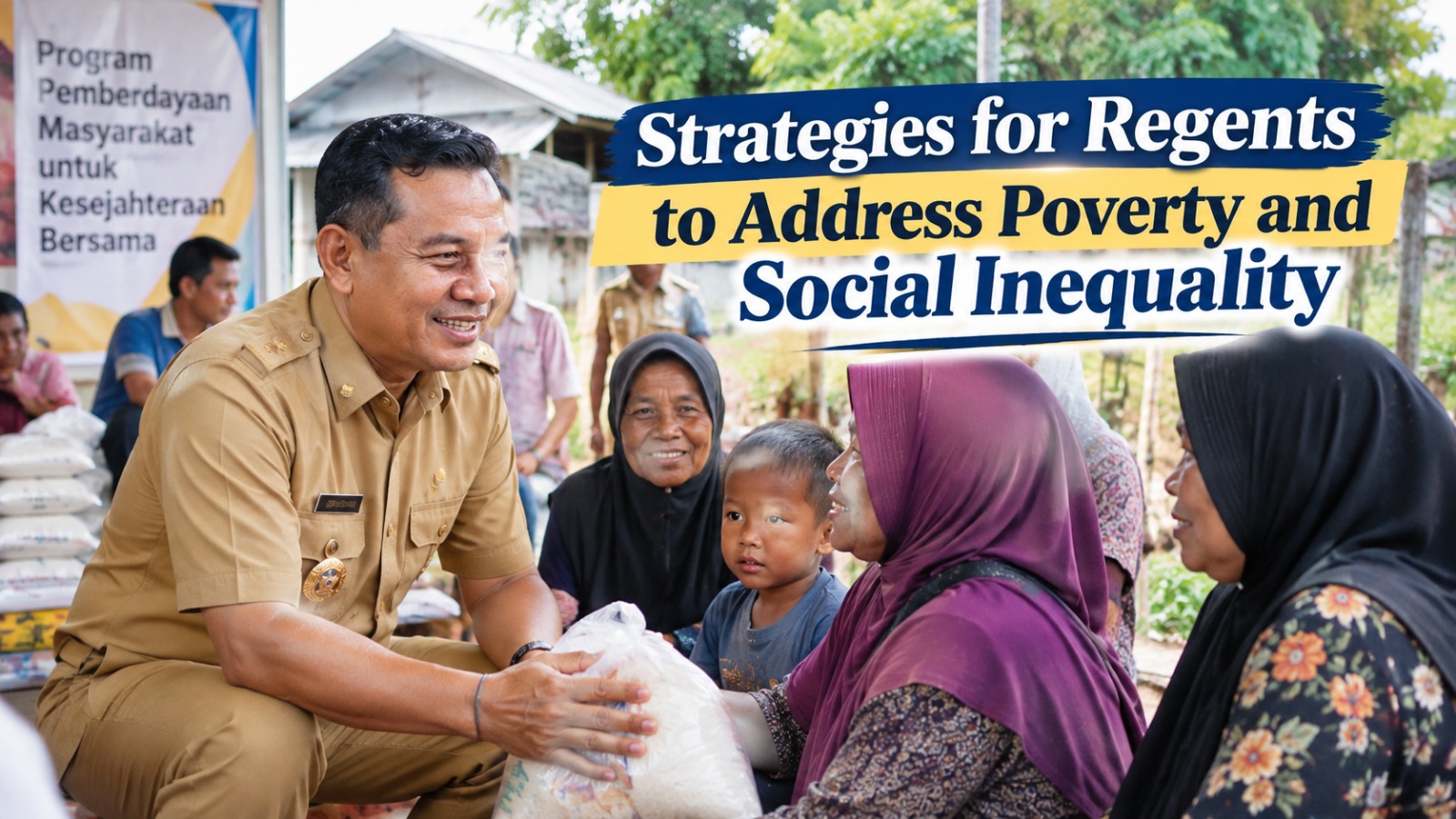
Poverty and social inequality remain important challenges for regional governments. People who have limited income may also face difficulties accessing education, healthcare, employment, housing, infrastructure, and public services. A regent has an important role in coordinating regional policies and programs that can help reduce these disadvantages within the authority of local government. Effective strategies should not focus only on short-term assistance but also on creating opportunities for people to become more economically independent. Through inclusive regional development, local government can work toward a fairer and more prosperous community.
UNDERSTANDING POVERTY AND SOCIAL INEQUALITY
Poverty is not simply a lack of income. It can also involve limited access to education, healthcare, decent housing, employment, transportation, and other basic needs. Social inequality occurs when different groups have significantly different access to opportunities and resources. A regent needs to understand these conditions before developing effective policies. Poverty reduction should therefore consider both economic and social factors.
The causes of poverty can differ between communities. Some areas may face limited employment opportunities, while others may experience poor infrastructure, geographical isolation, or inadequate access to services. Reliable regional data can help identify these differences and determine which problems require priority attention. Programs based on accurate information are more likely to reach the people who need them. This can make regional development more targeted and effective.
USING ACCURATE DATA TO IDENTIFY VULNERABLE COMMUNITIES
Effective poverty reduction requires accurate information about households and communities. Regional governments can use relevant socioeconomic data to identify groups that may require assistance or greater access to services. A regent can encourage coordination between government agencies so that programs are based on reliable and updated information. Data-driven poverty reduction can reduce the risk of resources being directed to the wrong priorities.
Data should not only be collected but also analyzed and used to improve policies. Government officials need to understand why certain communities remain vulnerable and what barriers prevent them from improving their living conditions. Regular updates are important because household circumstances can change over time. Monitoring can also help determine whether assistance produces meaningful results. Better data management supports more effective social programs.
CREATING EMPLOYMENT OPPORTUNITIES
Employment is one of the most important ways to improve household income and reduce poverty. A regent can support policies that encourage local business development, investment, entrepreneurship, vocational training, and productive economic activities within regional authority. Job creation can provide residents with more stable sources of income and reduce dependence on short-term assistance.
Employment programs should reflect the actual needs of the regional economy. Agriculture, tourism, fisheries, manufacturing, services, and creative industries may provide different opportunities depending on local conditions. Cooperation between government, businesses, training institutions, and communities can help match workers with available opportunities. A stronger labor market can improve household resilience and contribute to local economic growth.
STRENGTHENING SMALL AND MEDIUM ENTERPRISES
Small and Medium Enterprises can play an important role in reducing poverty because they provide income and employment for many communities. A regent can support SMEs through appropriate training, market access, business information, digital skills, and infrastructure. SME development should help entrepreneurs become more competitive and financially sustainable.
Small businesses in rural areas may need additional support because they can face transportation and market-access challenges. Digital platforms can help local entrepreneurs reach customers beyond their immediate communities when reliable connectivity and skills are available. Government programs should also encourage product quality, innovation, and sound financial management. Stronger SMEs can create more employment and support community economic empowerment.
IMPROVING ACCESS TO EDUCATION
Education is a powerful long-term tool for reducing poverty and inequality. Children from disadvantaged families may face greater risks of dropping out or receiving fewer educational opportunities. A regent can support appropriate programs that improve school facilities, access, learning resources, and student support within regional responsibilities. Equal access to education can help young people develop skills that improve their future opportunities.
Education should also connect students with changing employment needs. Vocational training, digital literacy, entrepreneurship, and practical skills can complement academic education. Cooperation with schools, training institutions, and local industries can help make learning more relevant to regional economic opportunities. Better education can increase employability and support long-term poverty reduction.
EXPANDING ACCESS TO HEALTHCARE
Poor health can make poverty more difficult to overcome. Families with limited resources may face greater difficulties accessing healthcare, especially when facilities are far away or transportation is expensive. A regent can support improvements in healthcare access, community health programs, sanitation, and preventive services within regional authority. Accessible healthcare can help protect households from health-related economic pressures.
Preventive healthcare is particularly important because many health problems can be reduced through early action and public awareness. Community programs can promote nutrition, sanitation, maternal and child health, disease prevention, and healthy lifestyles. Remote communities may require additional attention because geographic barriers can affect access. Better healthcare can improve quality of life while strengthening the productivity of the local workforce.
IMPROVING BASIC INFRASTRUCTURE
Infrastructure can strongly influence people's access to opportunities. Poor roads, limited public transportation, inadequate water systems, weak internet connectivity, and insufficient sanitation can make it harder for residents to study, work, access healthcare, or operate businesses. A regent can prioritize infrastructure projects that address important gaps in underserved communities. Basic infrastructure development can reduce barriers that contribute to poverty and inequality.
Infrastructure planning should consider both urban and rural areas. Remote communities may require different solutions because of geographical conditions and population distribution. Projects should be based on clear priorities and should include appropriate maintenance after construction. Better infrastructure can connect communities to markets, schools, healthcare facilities, and government services. This can contribute to more inclusive regional development.
STRENGTHENING SOCIAL PROTECTION
Social protection can provide important support for people who face serious economic difficulties. A regent can help coordinate regional welfare programs with relevant national and provincial initiatives within the local government's responsibilities. Assistance should be targeted appropriately so that vulnerable households receive the support they are eligible for. Social protection programs can help families manage difficult circumstances while longer-term solutions are developed.
Social assistance should ideally be combined with empowerment. Beneficiaries may benefit from skills training, employment services, entrepreneurship support, or other programs that help improve their economic independence. Regular monitoring can determine whether assistance is reaching the intended groups. Government should also make information about available programs clear and accessible. A balanced approach can connect short-term protection with long-term economic empowerment.
IMPROVING ACCESS TO DIGITAL OPPORTUNITIES
Digital technology can create new opportunities for education, employment, entrepreneurship, and public services. However, residents with limited internet access or digital skills may be left behind. A regent can support improvements in digital connectivity and digital literacy within regional authority. Digital inclusion can help more communities participate in the modern economy.
Digital programs should be designed around practical needs. Residents can benefit from training in online business, digital payments, job searches, communication tools, and other useful skills. At the same time, traditional service channels should remain available for people who cannot easily use digital platforms. Reducing the digital divide can improve access to information and economic opportunities. This can support inclusive economic development.
SUPPORTING VULNERABLE GROUPS
Different groups may experience different barriers to economic and social participation. People with disabilities, elderly residents, low-income families, young people, and communities in remote areas may require specific forms of support. A regent can encourage programs that improve accessibility and participation within the authority of regional government. Inclusive public services can help ensure that vulnerable groups are not excluded from development opportunities.
Policies should be based on the actual needs of each group rather than using a one-size-fits-all approach. Consultation with communities and relevant organizations can provide valuable information about barriers and possible solutions. Public facilities and services should also consider accessibility where appropriate. Inclusion can strengthen social participation and improve people's ability to contribute to regional development. A fairer society can support stronger community welfare.
ENCOURAGING COMMUNITY PARTICIPATION
Residents should have opportunities to participate in decisions that affect their communities. A regent can encourage public consultations, community discussions, surveys, and other appropriate participation mechanisms. Community participation allows residents to communicate their needs and provide information about local problems. It can also improve the relevance of poverty reduction programs.
Participation should be meaningful rather than limited to formal meetings. Government agencies should listen to feedback and explain how community input is considered in planning and implementation. Community organizations, businesses, educational institutions, and other stakeholders can also contribute to development initiatives. Collaboration can create additional knowledge and resources. Strong participation can improve public trust and regional policy effectiveness.
BUILDING TRANSPARENT AND ACCOUNTABLE PROGRAMS
Poverty reduction programs involve public resources and therefore require transparency and accountability. A regent should encourage proper planning, implementation, monitoring, reporting, and evaluation according to applicable regulations. Citizens should have access to appropriate information about government programs and service procedures. Transparent governance can strengthen public confidence and reduce misunderstandings.
Accountability also means evaluating whether programs actually improve people's conditions. If a program does not achieve its intended results, officials should identify the causes and make appropriate improvements. Complaint and feedback mechanisms can provide additional information about problems in implementation. Regular evaluation can help government agencies use resources more effectively. Strong accountability is essential for sustainable poverty reduction.
CONCLUSION
Addressing poverty and social inequality requires coordinated and long-term strategies. Regents can contribute by strengthening employment opportunities, SMEs, education, healthcare, infrastructure, social protection, digital inclusion, and support for vulnerable groups. Accurate data, community participation, transparent governance, and continuous evaluation are also essential for achieving meaningful results. Development should focus not only on helping people overcome immediate difficulties but also on creating lasting opportunities for economic independence. With inclusive policies and responsible leadership, regional governments can help build a fairer, more prosperous, and more resilient society.
Tentang Penulis
Gusti Ayu Tita P
Penulis — Universitas STEKOM
Penulis aktif yang berfokus pada isu-isu akademik, teknologi pendidikan, dan pengembangan sumber daya manusia di lingkungan kampus.