Strategies for Teaching Bhinneka Tunggal Ika Values to Students
Gusti Ayu Tita P
4 Agustus 2026
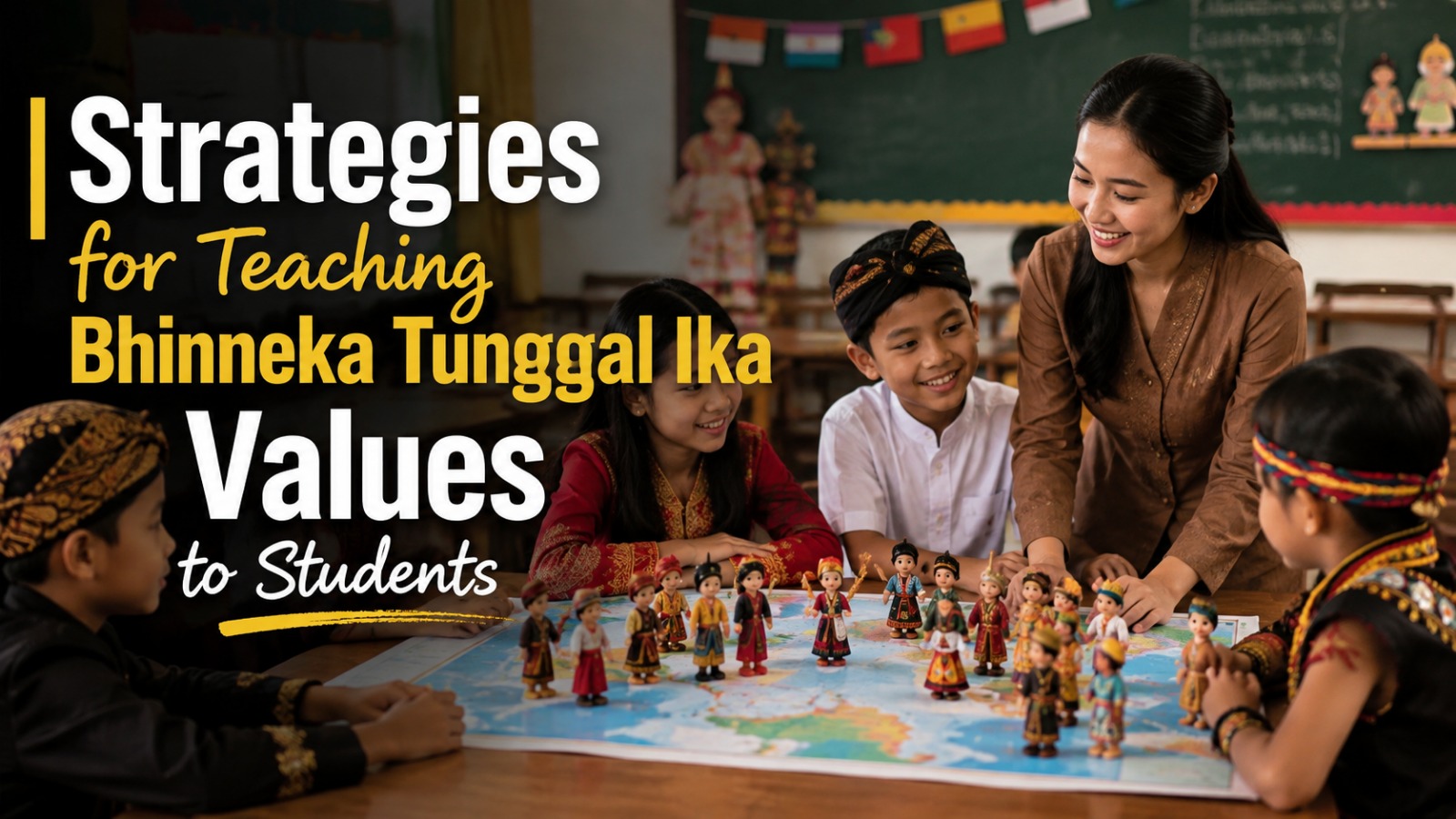
Indonesia is a diverse country with many ethnic groups, religions, languages, cultures, and traditions. This diversity is a valuable national asset, but students need to understand how to respect differences and maintain unity. Bhinneka Tunggal Ika, commonly understood as “Unity in Diversity,” provides an important foundation for teaching these attitudes. Introducing its values from an early age can help students develop tolerance, respect, cooperation, and a strong sense of national identity.
Teaching Bhinneka Tunggal Ika should not be limited to memorizing its meaning or historical background. Students need opportunities to experience diversity through classroom activities, discussions, teamwork, and community interaction. Practical learning can make national values easier to understand and apply in everyday situations. With appropriate teaching strategies, schools can help students become more open-minded, respectful, and responsible members of society.
INTRODUCING THE MEANING OF BHINNEKA TUNGGAL IKA
The first step is to help students understand the meaning and background of Bhinneka Tunggal Ika. The phrase is commonly translated as “Unity in Diversity” and reflects the idea that differences can exist within one national identity. Teachers can explain that Indonesia has diverse ethnic, religious, linguistic, and cultural communities. This explanation gives students a basic understanding of why unity is important in Indonesian society.
Teachers should present the concept using language appropriate for students’ age and level of understanding. Stories, pictures, short videos, local examples, and classroom discussions can make the topic more engaging. Students can also be encouraged to share traditions from their own communities. This approach helps them recognize diversity as something familiar and valuable rather than something distant or abstract.
USING CULTURAL DIVERSITY AS A LEARNING RESOURCE
Indonesia’s cultural diversity provides many opportunities for meaningful classroom learning. Teachers can introduce students to traditional clothing, regional languages, local arts, traditional foods, music, dances, and community traditions. Students can research different regions and present their findings to classmates. Such activities can increase curiosity and appreciation for cultures outside their immediate environment.
Cultural learning should emphasize respect rather than comparison between which culture is better. Students need to understand that every community has its own history and identity. Teachers can encourage students to identify similarities and differences while avoiding stereotypes or negative generalizations. Through this process, cultural diversity becomes a practical learning resource for developing respect and national unity.
DEVELOPING TOLERANCE THROUGH CLASSROOM DISCUSSIONS
Classroom discussions can help students understand that people may have different opinions, beliefs, and experiences. Teachers can introduce age-appropriate topics related to diversity and ask students to express their views respectfully. Students should learn how to listen carefully, respond politely, and disagree without insulting others. These skills are important for building tolerance in a diverse society.
Teachers can also use real-life situations as discussion topics. For example, students can discuss how to respond when a friend has a different tradition or belief. They can explore possible solutions and consider how their actions might affect others. This method encourages empathy and helps students understand that respecting differences is part of living together peacefully.
IMPLEMENTING COLLABORATIVE LEARNING
Group activities provide students with direct experience of cooperation. Teachers can form diverse groups and give students projects that require shared responsibility. Students may work together on presentations, research, creative projects, or classroom campaigns. Through these activities, they learn to appreciate different skills and perspectives.
Collaborative learning also teaches students how to solve disagreements constructively. Group members may have different ideas about how to complete a task, requiring them to communicate and reach a fair decision. Teachers can guide students to listen to each other and divide responsibilities appropriately. These experiences demonstrate that differences can become useful when people work toward a common goal.
ORGANIZING CULTURAL AND SCHOOL ACTIVITIES
Schools can strengthen Bhinneka Tunggal Ika values through cultural events and student activities. Cultural exhibitions, traditional art performances, language activities, and national celebrations can introduce students to Indonesia’s rich heritage. Students can participate as performers, researchers, organizers, or presenters. Active participation can make cultural learning more memorable than classroom theory alone.
Schools should ensure that these activities promote appreciation rather than stereotypes. Students should learn accurate information about the cultures they present and avoid using cultural elements simply as entertainment without context. Teachers can explain the meaning and history behind traditions when appropriate. In this way, school events can become opportunities for education, respect, and cultural appreciation.
USING DIGITAL MEDIA TO TEACH UNITY
Digital media can make lessons about Bhinneka Tunggal Ika more engaging for students. Teachers can use educational videos, digital presentations, interactive materials, virtual cultural tours, and online discussions. Students can also create digital projects about Indonesian cultures and share them responsibly. This allows them to learn about diversity while developing digital literacy.
However, students also need to understand the risks of digital communication. Social media can spread misinformation, stereotypes, and content that attacks certain communities. Teachers can teach students to verify information, identify unreliable sources, and communicate respectfully online. Digital citizenship is therefore an important part of applying Bhinneka Tunggal Ika in modern life.
CONNECTING LESSONS WITH REAL-LIFE EXPERIENCES
Students are more likely to understand national values when they can connect them with their everyday experiences. Teachers can encourage students to observe diversity in their neighborhoods, schools, families, and communities. They can discuss how people with different backgrounds cooperate in daily life. This helps students see that Bhinneka Tunggal Ika is not simply a concept found in textbooks.
Schools can also organize community service activities involving students from different backgrounds. Activities such as environmental projects, charity programs, and community support can encourage cooperation and empathy. Students learn that helping others does not depend on having the same identity or background. These experiences can turn the values of tolerance and cooperation into practical habits.
INVOLVING FAMILIES AND THE COMMUNITY
Education about Bhinneka Tunggal Ika becomes stronger when schools work together with families and communities. Parents can reinforce values such as respect, fairness, tolerance, and cooperation at home. Teachers can communicate with parents about activities and encourage positive discussions about diversity. Consistent messages between school and home can make students more likely to practice these values.
The wider community can also provide valuable learning experiences. Local cultural organizations, community leaders, artists, and other groups can participate in educational programs. Students can learn directly from people who have experience preserving traditions and working with diverse communities. Collaboration between schools, families, and communities creates a broader environment for developing national unity.
CREATING AN INCLUSIVE SCHOOL ENVIRONMENT
Teaching Bhinneka Tunggal Ika is most effective when students experience its values in the school environment. Schools should create a safe atmosphere where students are treated fairly regardless of their background. Teachers should respond appropriately to bullying, discrimination, and exclusion. Students also need to understand that respecting differences is a shared responsibility.
An inclusive school environment allows students to practice tolerance every day. Teachers can encourage students to support classmates, cooperate across different groups, and resolve conflicts peacefully. School rules should promote fairness and respect for everyone. When students experience inclusion directly, they are more likely to understand why unity and diversity matter.
CONCLUSION
Teaching Bhinneka Tunggal Ika values to students requires more than explaining the meaning of the national motto. Schools can use cultural learning, classroom discussions, collaborative projects, digital media, community activities, and inclusive school practices to make these values meaningful. Through these strategies, students can develop tolerance, mutual respect, empathy, cooperation, and responsibility. These qualities are essential for maintaining unity in a diverse society.
Teachers, families, schools, and communities all have an important role in supporting this learning process. Students need consistent examples and opportunities to practice respect for differences in real situations. When Bhinneka Tunggal Ika becomes part of everyday school life, students can understand that diversity is not a reason for division. Instead, it can become a foundation for building a more peaceful, inclusive, and united Indonesia
Tentang Penulis
Gusti Ayu Tita P
Penulis — Universitas STEKOM
Penulis aktif yang berfokus pada isu-isu akademik, teknologi pendidikan, dan pengembangan sumber daya manusia di lingkungan kampus.