Strategies to Develop a Productive and Sustainable Waste Bank
Gusti Ayu Tita P
20 Agustus 2026
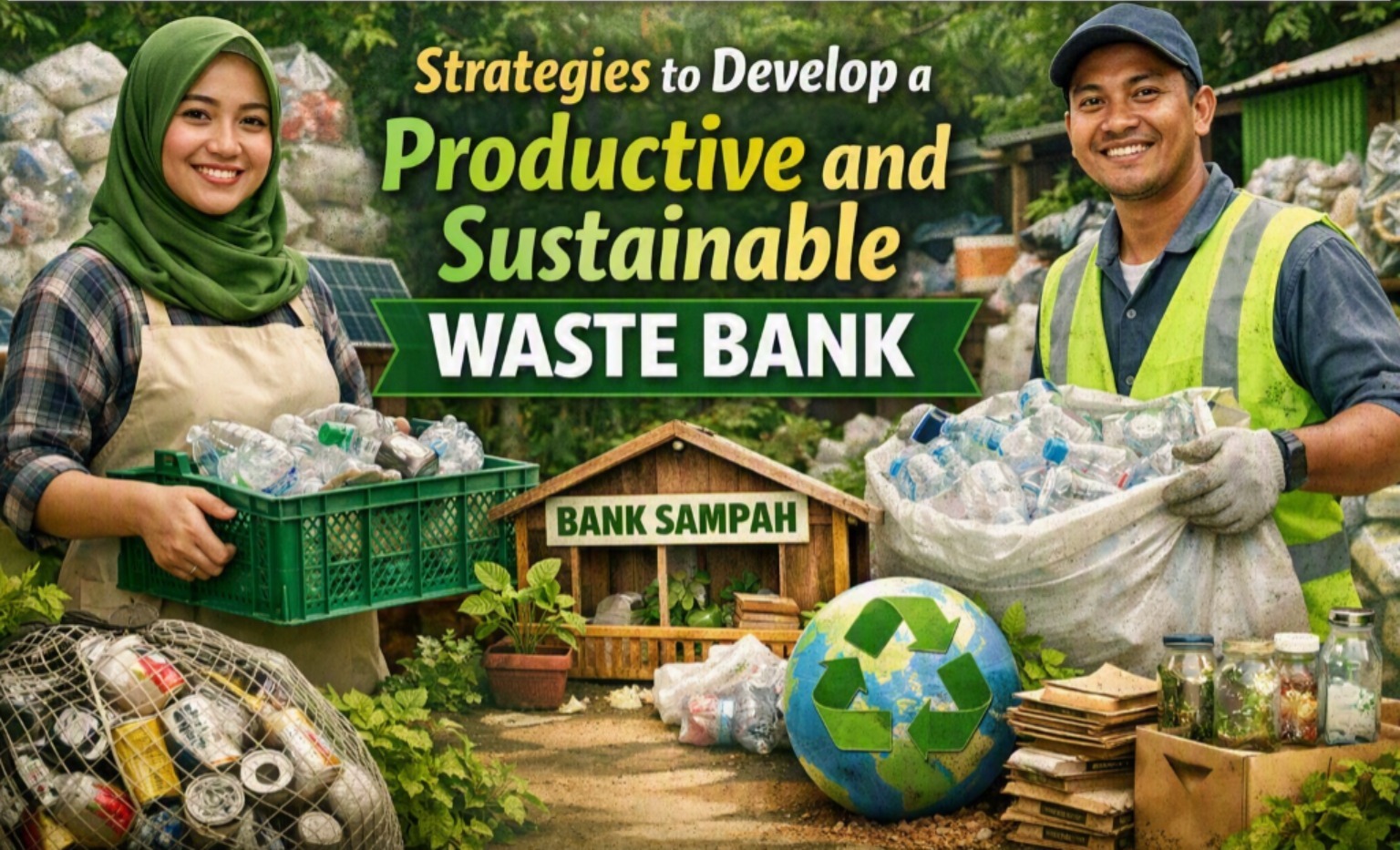
Waste banks can play an important role in reducing waste while creating economic and environmental benefits for communities. Unlike ordinary waste collection systems, a waste bank encourages residents to sort recyclable materials and deposit them for value. However, a waste bank needs good management, active participation, and a reliable recycling network to remain productive over time. A well-managed system can turn recyclable waste into economic value while helping communities build better waste management habits. Therefore, practical strategies are needed to make waste banks productive, sustainable, and beneficial for the wider community.
UNDERSTANDING THE ROLE OF A WASTE BANK
A waste bank is a community-based waste management system that collects and sorts recyclable materials such as paper, cardboard, plastic, metal, and other materials with economic value. Residents can bring sorted waste to the waste bank and receive a recorded value based on the type and amount of material deposited. The collected materials are then sorted again and sold or transferred to recycling partners. This approach helps reduce the amount of waste sent to landfills while encouraging people to see waste as a resource.
A successful waste bank should not focus only on buying and selling recyclable materials. It should also provide environmental education, promote responsible consumption, and encourage regular waste sorting at the household level. When these activities are managed consistently, the waste bank can become an important part of the local waste management system. Its success depends on cooperation between residents, managers, businesses, recyclers, and local authorities.
BUILD AN EFFECTIVE WASTE COLLECTION SYSTEM
An effective collection system is one of the foundations of a productive waste bank. Managers should establish clear schedules, collection points, operating procedures, and rules for acceptable materials. Residents need simple information about waste separation so they understand which materials can be deposited and how they should be prepared. Clear procedures can reduce contamination and make recyclable materials easier to sort and sell.
The waste bank can also provide separate containers for different material categories. For example, paper, plastic, metal, and other recyclable materials can be stored separately to improve efficiency. Regular weighing and recording are also important because they provide accurate information about the amount of waste collected and the value generated. A simple and organized system makes daily operations easier for both managers and community members.
STRENGTHEN COMMUNITY PARTICIPATION
Community participation determines whether a waste bank can operate consistently in the long term. Managers should explain the environmental and economic benefits of waste sorting through meetings, educational activities, social media, schools, and neighborhood programs. Residents are more likely to participate when they understand that their actions can contribute to cleaner surroundings and more responsible resource use. Regular communication can also help maintain motivation and prevent participation from declining over time.
Waste banks can develop simple reward systems to encourage active participation. Rewards do not always have to be financial because recognition, community programs, or useful incentives can also encourage residents to remain involved. Schools, youth groups, community organizations, and local businesses can become partners in promoting waste reduction habits. The stronger the community network, the greater the opportunity for the waste bank to develop sustainably.
IMPROVE FINANCIAL AND BUSINESS MANAGEMENT
A waste bank needs responsible financial management to remain productive. Managers should record income, operating costs, material sales, equipment expenses, and other financial transactions regularly. Accurate records help managers understand whether the waste bank is generating sufficient revenue to support its activities. Transparent financial management can also increase trust among members and partners.
The business model can be expanded beyond selling recyclable materials. A waste bank may develop activities such as recycled product production, educational programs, partnerships with businesses, or other environmentally responsible services when appropriate. However, every additional activity should be evaluated based on market demand, operational capacity, costs, and environmental impact. A realistic business plan can help prevent financial problems and support long-term growth.
DEVELOP STRONG RECYCLING PARTNERSHIPS
Reliable recycling partners are essential because collected materials need a stable destination after sorting. Waste banks should identify reputable collectors, recycling companies, manufacturers, or other organizations that can accept suitable materials. Strong partnerships can provide more predictable demand and help managers understand material quality requirements. This can improve the value and usability of collected recyclables.
Managers should avoid depending on only one buyer whenever possible. Building relationships with several potential partners can reduce business risks when prices, demand, or purchasing policies change. Before establishing cooperation, managers should consider factors such as pricing, transportation, minimum quantities, payment procedures, and material specifications. Long-term partnerships can make waste bank operations more stable and efficient.
USE DIGITAL TECHNOLOGY FOR BETTER MANAGEMENT
Digital technology can make waste bank management more efficient and transparent. Managers can use spreadsheets, simple applications, or digital databases to record member deposits, material weights, balances, sales, and operational information. Digital records can reduce manual errors and make it easier to monitor waste bank performance. Members can also receive clearer information about their deposits and accumulated value.
Digital platforms can also support promotion and education. Social media can be used to announce collection schedules, share environmental information, promote community activities, and attract new members. Simple digital tools are often sufficient, so a waste bank does not necessarily need expensive technology. The most important factor is choosing a system that is easy to operate, affordable, and useful for managers and members.
MEASURE PERFORMANCE AND CONTINUOUSLY IMPROVE
Regular evaluation is necessary to determine whether a waste bank is achieving its objectives. Managers can monitor indicators such as the amount of recyclable waste collected, number of active members, sales revenue, operating costs, and participation levels. These indicators provide useful information for identifying strengths and weaknesses in the current system. Evaluation should be conducted periodically rather than only when major problems occur.
The results can then be used to improve collection procedures, community programs, partnerships, and financial planning. For example, if participation decreases, managers can investigate the causes and adjust communication or incentives. If operating costs become too high, the waste bank can review transportation, storage, and other expenses. Continuous improvement allows the organization to adapt to changing community needs and recycling market conditions.
CONCLUSION
Developing a productive and sustainable waste bank requires more than collecting recyclable materials. It requires organized operations, community participation, sound financial management, reliable recycling partnerships, and appropriate technology. Education is equally important because long-term waste reduction depends on consistent behavior at the household and community levels. Regular performance evaluation can help managers identify problems and improve the system before they become larger challenges. With effective management and strong community cooperation, a waste bank can support waste reduction, environmental protection, and local economic opportunities at the same time.
Tentang Penulis
Gusti Ayu Tita P
Penulis — Universitas STEKOM
Penulis aktif yang berfokus pada isu-isu akademik, teknologi pendidikan, dan pengembangan sumber daya manusia di lingkungan kampus.