Structural Positions As A Key To Efficient Organizational Management
Gusti Ayu Tita P
12 Agustus 2026
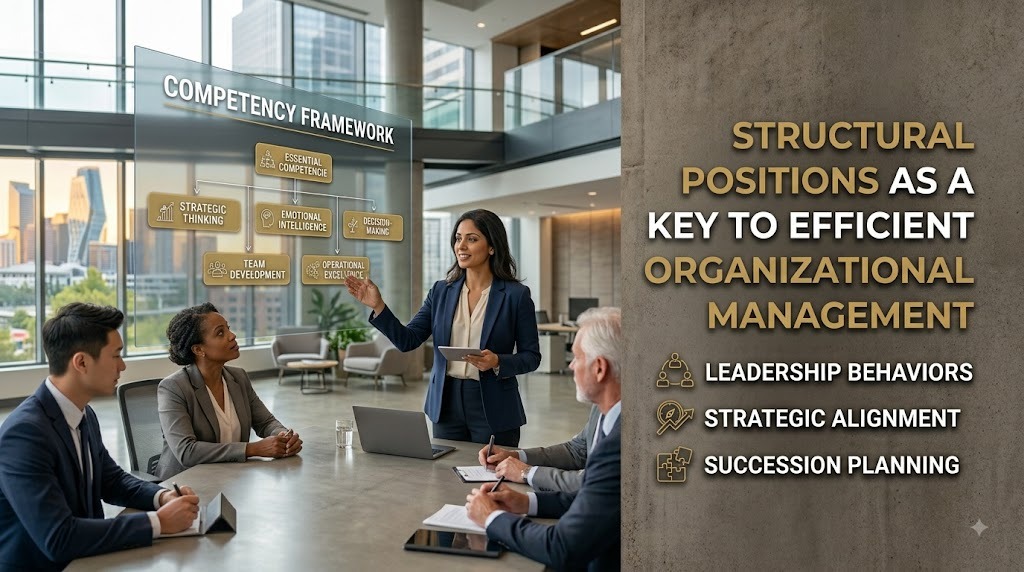
Structural positions play an important role in creating an organized and efficient management system. People who hold these positions are responsible for leading teams, coordinating activities, making decisions, and managing organizational resources. Their authority allows them to direct work and ensure that employees understand their responsibilities. When structural roles are clearly designed and properly managed, organizations can work toward their objectives in a more systematic way.
Efficient organizational management requires more than a formal hierarchy. Leaders need managerial competence, effective communication, accountability, and the ability to respond to changing conditions. Structural leaders also need to ensure that organizational resources are used responsibly and that employees receive appropriate direction. Therefore, strong structural positions can become an important foundation for productivity, coordination, accountability, and sustainable organizational performance.
UNDERSTANDING STRUCTURAL POSITIONS
A structural position is a formal role within an organization that carries specific responsibilities, authority, and accountability. Depending on the organization, structural roles may include supervisors, managers, department heads, or other positions responsible for directing organizational activities. These positions help establish who has authority to make certain decisions and who is responsible for particular outcomes. Clear organizational roles make it easier for employees to understand how their work contributes to broader objectives.
Structural positions also create a framework for coordination between different levels and units. Employees need to know where to report problems, seek guidance, and communicate important information. Without a clear structure, responsibilities may overlap or important tasks may be neglected. A well-defined structure supports order, coordination, and effective management.
THE ROLE OF LEADERSHIP IN ORGANIZATIONAL MANAGEMENT
Leadership is a central responsibility of structural positions. Leaders provide direction, establish priorities, and guide employees toward organizational objectives. They also need to motivate teams and create conditions that encourage employees to perform effectively. Effective leadership can improve employee engagement and strengthen organizational performance.
A professional leader should not rely solely on formal authority. Leaders need to build trust through fairness, consistency, communication, and responsible behavior. They should listen to employee concerns and provide constructive feedback when necessary. Strong leadership can create a positive workplace culture that supports cooperation and productivity.
IMPROVING WORK PLANNING AND ORGANIZATION
Planning allows structural leaders to determine what needs to be achieved and how organizational resources should be used. Leaders need to establish priorities, define activities, set realistic targets, and consider potential risks. Good planning helps employees understand their responsibilities and reduces unnecessary activities. Effective planning can improve the use of time, resources, and employee capabilities.
Organizing is equally important because tasks must be distributed appropriately. Structural leaders should consider employee skills, workload, and organizational priorities when assigning responsibilities. They also need to coordinate activities between teams to prevent duplication and delays. Proper planning and organization contribute to greater efficiency and productivity.
STRENGTHENING DECISION MAKING
Structural leaders are often responsible for decisions that influence organizational activities and employee performance. Good decisions should be based on relevant information, organizational goals, established procedures, and potential risks. Leaders should consider different alternatives before choosing the most appropriate option. Evidence based decision making can improve the quality and fairness of organizational decisions.
Leaders must also be prepared to make decisions when conditions are uncertain. They should evaluate the information available and consider the possible consequences of each alternative. After implementation, decisions should be reviewed to determine whether they produced the expected results. This process supports continuous improvement and organizational learning.
MANAGING ORGANIZATIONAL RESOURCES
Efficient management depends heavily on the responsible use of organizational resources. Resources may include employees, budgets, facilities, equipment, information, time, and technology. Structural leaders need to allocate these resources according to organizational priorities. Responsible resource management can reduce waste and improve organizational outcomes.
Human resources require special attention because employees are directly involved in achieving organizational objectives. Leaders should assign tasks according to employee competencies and workload. They should also support training and professional development to improve employee capabilities. Effective resource management strengthens productivity, efficiency, and organizational sustainability.
PROMOTING ACCOUNTABILITY AND INTEGRITY
Accountability means that employees and leaders are responsible for their duties and decisions. Structural leaders should establish clear performance expectations and monitor progress regularly. Employees should understand what they are responsible for and how their work contributes to organizational results. Strong accountability helps create a culture of responsibility and transparency.
Integrity is equally important because structural leaders have authority over people and resources. Leaders should avoid conflicts of interest, favoritism, misuse of authority, and unethical behavior. They should apply organizational standards consistently and accept responsibility for mistakes. Ethical leadership strengthens trust and supports a professional organizational environment.
MANAGING CHANGE IN MODERN ORGANIZATIONS
Organizations must continuously respond to changes in technology, regulations, economic conditions, and stakeholder expectations. Structural leaders have a responsibility to guide employees through these changes. They should explain the reasons for change and provide appropriate support during implementation. Change management can help reduce resistance and maintain organizational stability.
Digital transformation also requires leaders to understand how technology can improve organizational processes. Digital tools can support communication, data management, reporting, monitoring, and service delivery. However, technology should be introduced according to actual organizational needs and supported by adequate employee skills. Leaders must also consider data security, privacy, and responsible technology use.
MANAGING CONFLICT EFFECTIVELY
Conflict can occur when employees have different opinions, priorities, expectations, or working styles. Structural leaders should identify the causes of conflict and address them fairly. Ignoring workplace conflict can damage employee relationships and reduce productivity. Effective conflict management helps maintain a healthy working environment.
Leaders should listen to all relevant perspectives before deciding how a conflict should be handled. Solutions should be based on organizational policies and objective considerations rather than personal preferences. When necessary, formal procedures should be used to protect fairness and accountability. Professional conflict management can support stronger teamwork and organizational stability.
MEASURING ORGANIZATIONAL EFFICIENCY
Organizational efficiency should be evaluated using appropriate performance indicators. These indicators may include productivity, service quality, target achievement, resource use, employee performance, and stakeholder satisfaction. Regular evaluation allows leaders to determine whether organizational processes are producing the desired results. Performance measurement provides valuable information for future improvements.
Evaluation should not only focus on identifying weaknesses. Leaders should also identify successful practices that can be maintained or expanded. The results can be used to improve planning, resource allocation, employee development, and decision making. A culture of regular evaluation encourages continuous organizational improvement.
CHALLENGES IN MANAGING STRUCTURAL POSITIONS
Structural leaders may face challenges such as limited resources, employee resistance, communication problems, complex decisions, and changing priorities. These challenges can become more difficult when several departments or stakeholders are involved. Leaders need analytical thinking and strong communication skills to manage these situations. Adaptability is especially important when organizational conditions change quickly.
Another challenge is balancing organizational targets with employee needs. Leaders must maintain productivity while ensuring that employees receive fair treatment and appropriate support. They should also remain objective when handling difficult situations. By combining professional judgment, flexibility, and accountability, structural leaders can respond to organizational challenges more effectively.
CONCLUSION
Structural positions are a key to efficient organizational management because they establish clear authority, responsibilities, coordination, and accountability. Leaders in these positions guide employees, manage resources, make decisions, and ensure that organizational activities support strategic objectives. When structural roles are clearly defined and professionally managed, organizations can operate with greater efficiency and consistency.
However, structural positions can only deliver strong results when leaders have the necessary competencies. Effective leadership, communication, integrity, decision making, resource management, and adaptability are essential for successful organizational management. By strengthening these capabilities and continuously evaluating performance, organizations can build a more productive, accountable, and sustainable management system.
Tentang Penulis
Gusti Ayu Tita P
Penulis — Universitas STEKOM
Penulis aktif yang berfokus pada isu-isu akademik, teknologi pendidikan, dan pengembangan sumber daya manusia di lingkungan kampus.