Students on a Silent Stage Where Small Symbols Determine Who Is Considered Superior
Gusti Ayu Tita P
2 Maret 2026
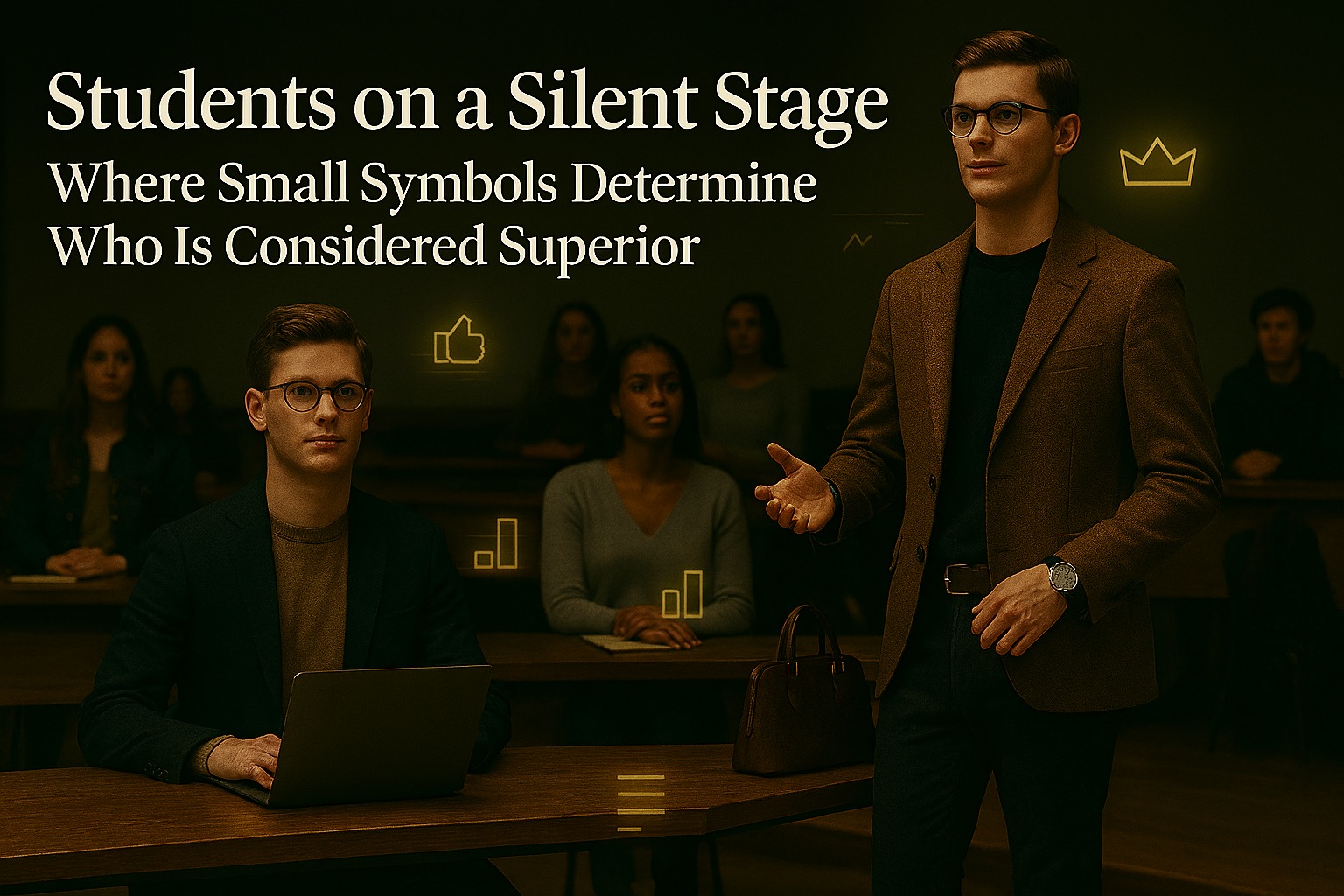
University life is often described as a journey of intellectual growth, independence, and self-discovery. Yet beyond lectures and exams, students also perform on what can be called a silent stage. In this space, small symbols clothing choices, speaking styles, gadgets, and social confidence quietly shape who is considered superior.
These symbols rarely appear in official academic guidelines, but they influence everyday interactions. On campus, perception can become as powerful as performance. This article explores how subtle markers construct informal hierarchies among students and what this means for academic culture.
THE CLASSROOM AS A SOCIAL STAGE
Every classroom functions as more than a learning environment; it is also a social arena. From the first week of classes, students observe one another closely. Who speaks first? Who sounds confident? Who looks professionally dressed?
Without formal announcements, students begin assigning roles in their minds. Some are seen as leaders, others as intellectuals, and some as quiet observers. These roles are often shaped by small visual and behavioral cues rather than measurable academic achievements.
On this silent stage, impressions form quickly and can last throughout the semester.
SMALL SYMBOLS WITH BIG IMPACT
Small symbols carry surprising weight. A premium laptop placed on a desk may suggest preparedness or economic privilege. A polished outfit may signal professionalism. Fluent academic language may create the impression of intelligence.
Individually, these elements seem insignificant. Together, however, they build a narrative about competence and status. Students who align with dominant campus aesthetics may be perceived as more capable before they even present their ideas.
These subtle signals operate beneath the surface, influencing perception without explicit acknowledgment.
THE CREATION OF UNWRITTEN HIERARCHIES
When symbols influence perception, unwritten hierarchies naturally emerge. Certain students may be listened to more attentively, selected more frequently for leadership roles, or invited into influential networks.
These hierarchies are rarely discussed openly. They develop gradually through repeated interactions shaped by confidence, communication style, and visible resources.
The risk is that intellectual potential may be overlooked if it is not paired with the “right” symbols. Students who are less expressive or less concerned with appearance may struggle to gain equal recognition.
SOCIAL MEDIA AND THE EXPANSION OF SYMBOLIC COMPETITION
Digital culture intensifies the silent competition. Social media platforms encourage curated self-presentation, and students often extend their campus identities into online spaces.
Achievements, internships, fashion, and lifestyle are displayed publicly, reinforcing symbolic comparisons. As a result, the silent stage extends beyond physical classrooms into virtual environments.
This expansion makes symbolic competition more visible, but also more demanding.
REDEFINING SUPERIORITY IN ACADEMIC ENVIRONMENTS
To build healthier campus cultures, universities must redefine what it means to be superior. True academic excellence should be measured by critical thinking, collaboration, creativity, and ethical responsibility.
Communication skills and professional presentation are valuable. However, they should amplify intellectual substance rather than replace it. Encouraging inclusive dialogue ensures that diverse communication styles and backgrounds are respected.
When substance becomes the primary measure, small symbols lose their disproportionate power.
CONCLUSION
Students perform daily on a silent stage where small symbols influence who is considered superior. From fashion and gadgets to speaking style and digital presence, subtle cues shape social perception in powerful ways.
While these symbols may open doors, lasting respect and achievement depend on authentic competence and meaningful contribution. In the end, superiority in academic life should reflect depth of thought not just the symbols displayed.
Tentang Penulis
Gusti Ayu Tita P
Penulis — Universitas STEKOM
Penulis aktif yang berfokus pada isu-isu akademik, teknologi pendidikan, dan pengembangan sumber daya manusia di lingkungan kampus.