Successful Time Management Strategies for Productive Civil Servants
Gusti Ayu Tita P
16 Juli 2026
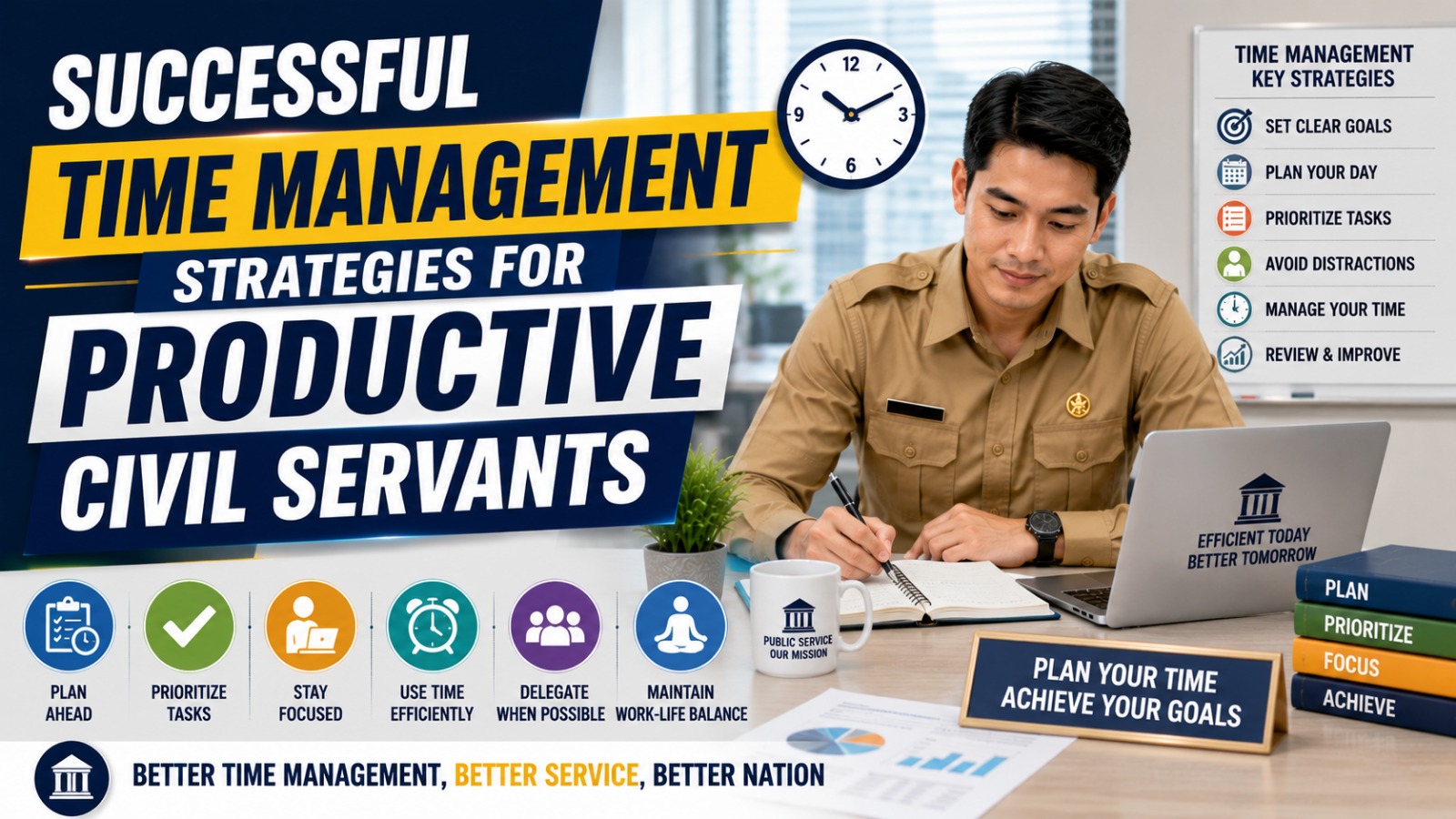
Time management is one of the most important skills for civil servants in today’s fast-paced working environment. Government employees often handle multiple responsibilities, tight deadlines, administrative tasks, and public service demands at the same time. Without proper time management, productivity and service quality can decrease significantly.
Effective time management helps civil servants complete tasks efficiently, reduce stress, and improve overall performance. By using the right strategies, public servants can maintain professionalism while delivering better services to the community.
UNDERSTANDING THE IMPORTANCE OF TIME MANAGEMENT
Civil servants play an essential role in providing public services and supporting government operations. Because of this responsibility, managing time effectively is necessary to maintain efficiency and accuracy in daily work.
Good time management offers several benefits, including:
- Higher productivity
- Better work quality
- Reduced workplace stress
- Faster task completion
- Improved public satisfaction
Employees who manage time wisely can balance responsibilities more effectively and maintain consistent performance.
SETTING CLEAR PRIORITIES
One of the most effective time management strategies is setting clear priorities. Civil servants often face multiple tasks with different levels of urgency and importance.
To prioritize effectively:
- Focus on urgent and important tasks first
- Create daily task lists
- Separate short-term and long-term goals
- Avoid unnecessary activities
- Review priorities regularly
Prioritizing tasks helps employees use their working hours more efficiently.
CREATING A DAILY WORK SCHEDULE
A structured schedule helps civil servants stay organized throughout the day. Planning activities in advance reduces confusion and prevents missed deadlines.
An effective work schedule should include:
- Task deadlines
- Meeting times
- Break periods
- Administrative responsibilities
- Follow-up activities
Using digital calendars or productivity applications can also improve scheduling efficiency.
AVOIDING PROCRASTINATION
Procrastination is one of the biggest obstacles to productivity. Delaying important tasks can increase stress and reduce work quality.
Civil servants can avoid procrastination by:
- Breaking large tasks into smaller steps
- Setting realistic deadlines
- Starting difficult tasks early
- Minimizing distractions
- Maintaining self-discipline
Completing tasks on time improves both personal performance and organizational efficiency.
IMPROVING FOCUS AND CONCENTRATION
Distractions in the workplace can reduce productivity significantly. Emails, phone calls, meetings, and social media can interrupt concentration during important tasks.
To improve focus:
- Work in organized environments
- Limit unnecessary interruptions
- Turn off distracting notifications
- Focus on one task at a time
- Take short breaks when necessary
Strong concentration helps employees complete work faster and with better accuracy.
USING TECHNOLOGY EFFECTIVELY
Modern technology provides many tools that can help civil servants manage time more efficiently. Digital systems simplify communication, scheduling, and document management.
Useful productivity tools include:
- Calendar applications
- Task management software
- Online collaboration platforms
- Digital reminders
- Cloud-based document systems
When used properly, technology can reduce administrative workload and improve efficiency.
LEARNING TO DELEGATE TASKS
Delegation is an important strategy in workplaces that involve teamwork. Civil servants should understand that not every task must be completed individually.
Effective delegation can:
- Reduce workload pressure
- Improve team productivity
- Increase efficiency
- Develop teamwork skills
- Help meet deadlines faster
Delegating tasks appropriately allows employees to focus on higher-priority responsibilities.
MAINTAINING WORK-LIFE BALANCE
Productivity is closely connected to physical and mental well-being. Civil servants who work continuously without proper rest may experience burnout and reduced motivation.
Maintaining work-life balance includes:
- Taking regular breaks
- Managing stress properly
- Spending time with family
- Exercising regularly
- Getting enough sleep
Healthy employees are usually more productive and motivated in the workplace.
CONTINUOUS SELF-IMPROVEMENT
Time management skills can always be improved through practice and learning. Civil servants should evaluate their work habits regularly and identify areas that need improvement.
Participating in training programs and learning new productivity methods can help employees become more organized and efficient in their daily responsibilities.
CONCLUSION
Successful time management is essential for productive civil servants. By setting priorities, creating structured schedules, avoiding procrastination, and using technology effectively, employees can improve performance and provide better public services.
Good time management not only increases productivity but also supports healthier work environments and stronger public trust. With consistent discipline and continuous improvement, civil servants can achieve greater efficiency and professional success.
Tentang Penulis
Gusti Ayu Tita P
Penulis — Universitas STEKOM
Penulis aktif yang berfokus pada isu-isu akademik, teknologi pendidikan, dan pengembangan sumber daya manusia di lingkungan kampus.