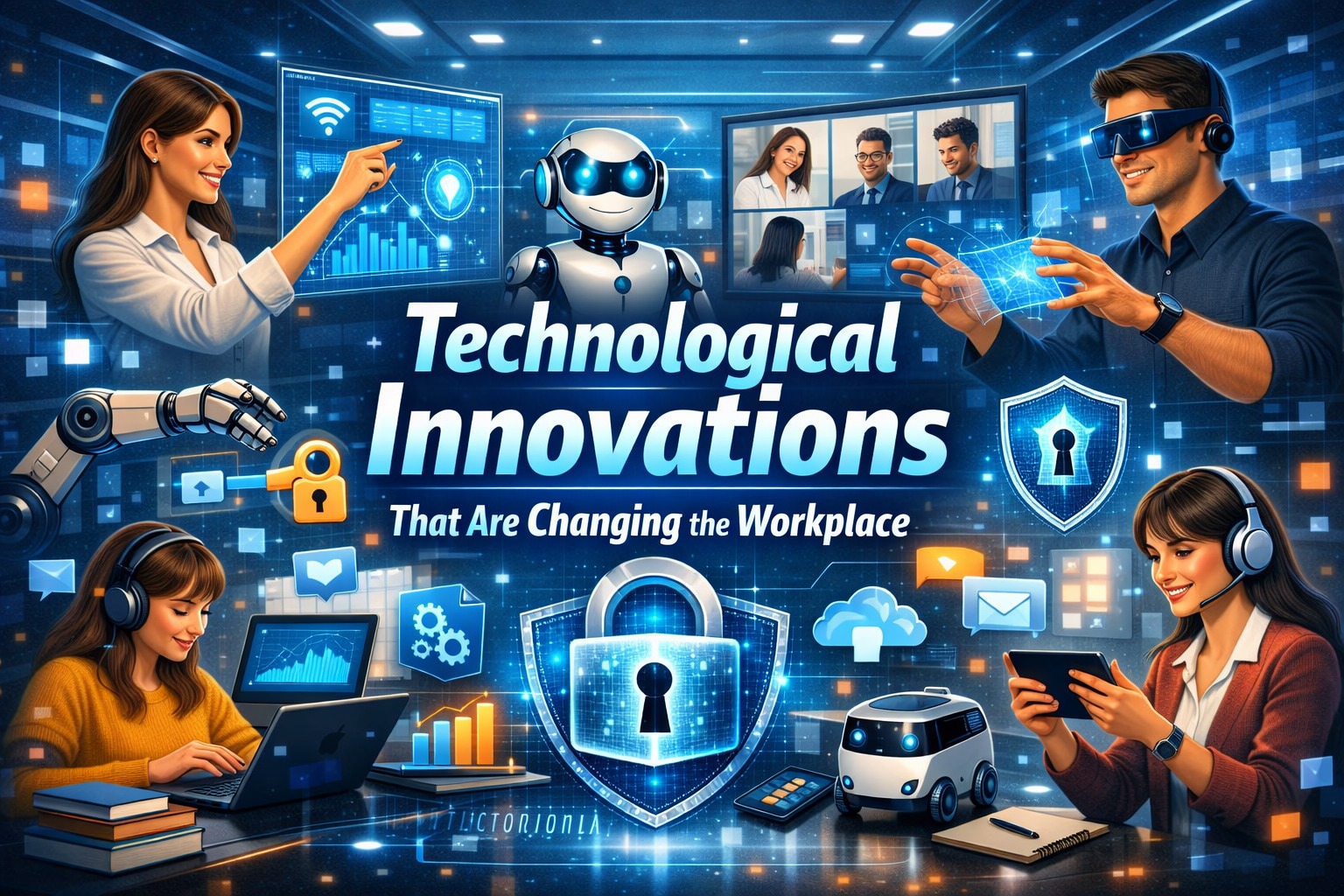
The modern workplace is evolving faster than ever. From artificial intelligence to remote collaboration tools, technology is reshaping how people work, communicate, and grow professionally. Businesses that embrace these innovations gain a competitive advantage, improve productivity, and create more flexible work environments. This article explores the key technological trends transforming the workplace and how they impact employees and organizations.
THE RISE OF ARTIFICIAL INTELLIGENCE IN DAILY WORK
Artificial Intelligence (AI) has moved beyond science fiction and into everyday business operations. AI-powered tools can analyze massive amounts of data, automate repetitive tasks, and support decision-making processes.
Many companies now use AI chatbots to handle customer service inquiries, reducing response times and operational costs. Meanwhile, AI analytics tools help managers predict trends, optimize workflows, and identify potential risks before they occur.
For employees, AI means spending less time on routine tasks and more time focusing on creativity, strategy, and innovation. Rather than replacing human workers, AI is becoming a powerful partner that enhances productivity.
REMOTE WORK AND DIGITAL COLLABORATION TOOLS
Remote work has become a permanent part of modern business culture. Cloud-based platforms and video conferencing tools allow teams to collaborate from anywhere in the world.
Digital collaboration tools enable real-time document editing, virtual meetings, and project tracking. As a result, companies can hire talent globally while employees enjoy improved work-life balance.
This shift has also changed office design. Instead of traditional cubicles, many companies now adopt hybrid workspaces that support both in-person and remote collaboration.
AUTOMATION AND ROBOTIC PROCESS AUTOMATION (RPA)
Automation is revolutionizing how routine business processes are handled. Robotic Process Automation (RPA) uses software robots to perform repetitive digital tasks such as data entry, invoice processing, and scheduling.
The benefits of automation include:
* Increased efficiency and accuracy
* Reduced operational costs
* Faster processing times
* Improved employee satisfaction
By removing repetitive workloads, automation allows employees to focus on strategic and meaningful tasks that require human judgment and creativity.
THE IMPACT OF CLOUD COMPUTING
Cloud computing has transformed how businesses store data and run applications. Instead of relying on physical servers, organizations now use secure cloud platforms to access information anytime and anywhere.
This technology offers scalability, cost efficiency, and enhanced data security. It also supports remote work by enabling seamless access to files and software across multiple devices.
Small businesses benefit significantly from cloud services because they can access advanced technology without heavy infrastructure investments.
CYBERSECURITY IN THE DIGITAL WORKPLACE
As workplaces become more digital, cybersecurity has become a top priority. Organizations must protect sensitive data from cyber threats, phishing attacks, and ransomware.
Modern cybersecurity solutions include multi-factor authentication, encryption, and employee training programs. Educating employees about digital safety is just as important as investing in advanced security systems.
A strong cybersecurity strategy helps build trust with customers and protects business continuity.
THE ROLE OF VIRTUAL AND AUGMENTED REALITY
Virtual Reality (VR) and Augmented Reality (AR) are no longer limited to gaming. Businesses now use these technologies for training, product design, and virtual meetings.
For example, VR training simulations allow employees to practice real-world scenarios in a safe environment. AR tools help technicians visualize instructions while working, improving efficiency and reducing errors.
These immersive technologies create engaging and effective learning experiences that boost workforce development.
EMPLOYEE EXPERIENCE AND SMART WORKPLACES
Technology is also improving employee well-being and workplace satisfaction. Smart offices use Internet of Things (IoT) devices to optimize lighting, temperature, and space usage.
Employee experience platforms help organizations monitor engagement, gather feedback, and create personalized development plans. A positive digital workplace encourages productivity, collaboration, and job satisfaction.
THE FUTURE OF WORK IS TECHNOLOGY-DRIVEN
Technological innovation will continue to reshape the workplace in the coming years. Businesses that adopt new technologies early can adapt faster, attract top talent, and remain competitive in a rapidly changing market.
The future workplace will be more flexible, automated, and connected than ever before. By embracing innovation, organizations can create environments where both employees and businesses thrive.
CONCLUSION
Technological innovation is transforming the modern workplace through artificial intelligence, automation, cloud computing, digital collaboration, and smart workplace solutions. These advancements help businesses improve productivity, strengthen cybersecurity, and create more flexible and efficient work environments. Organizations that embrace new technologies can adapt more quickly to changing market demands while supporting employee growth and well-being. By combining innovation with effective leadership, companies can build a future-ready workplace that drives long-term success.
Tentang Penulis
Gusti Ayu Tita P
Penulis — Universitas STEKOM
Penulis aktif yang berfokus pada isu-isu akademik, teknologi pendidikan, dan pengembangan sumber daya manusia di lingkungan kampus.