The Development of AI Technology and Its Impact on Human Life
Gusti Ayu Tita P
19 Juni 2026
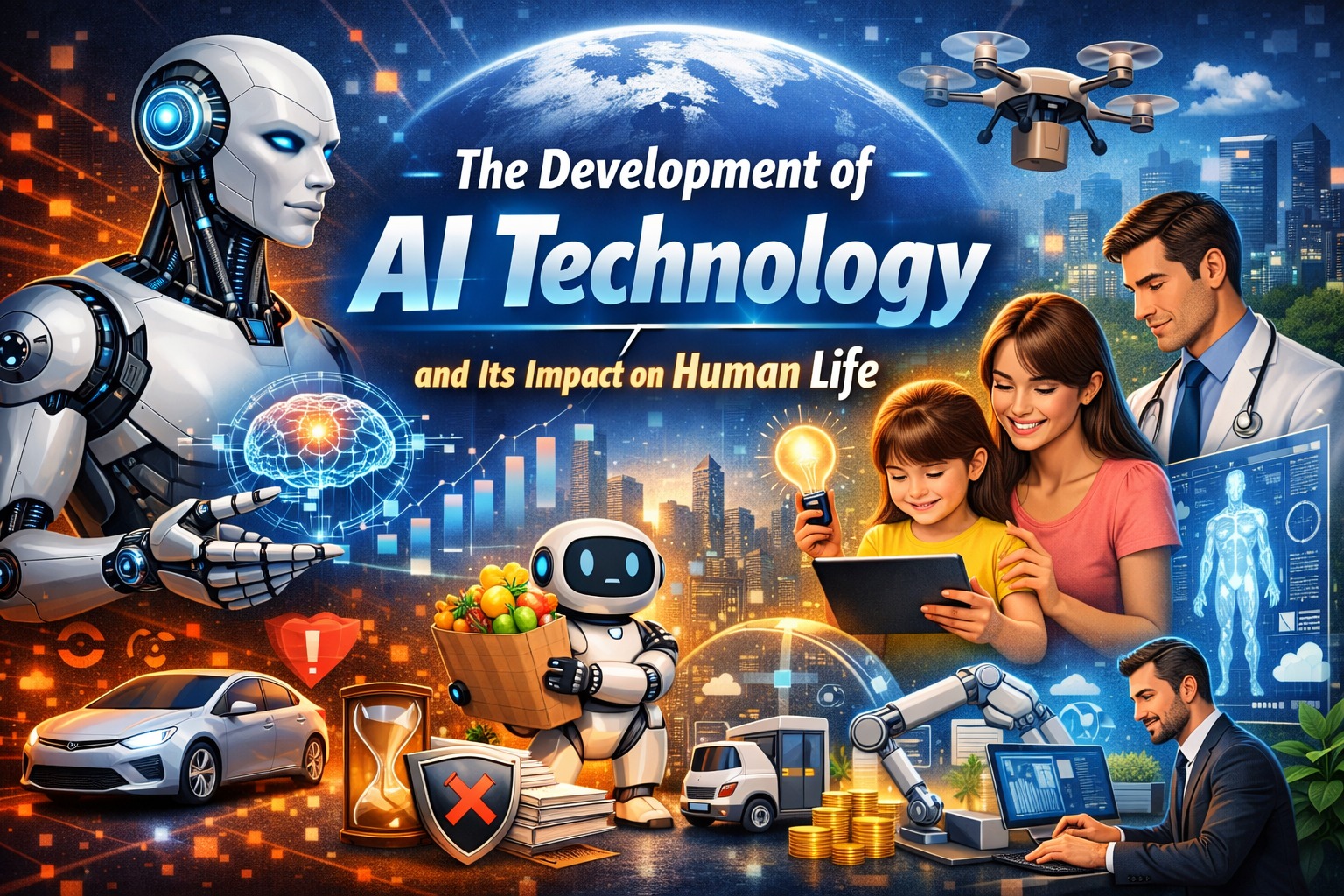
Artificial Intelligence (AI) has rapidly evolved from a futuristic concept into a powerful technology that shapes modern life. From smart assistants to self-driving vehicles, AI is transforming how people work, communicate, learn, and make decisions. This article explores the growth of AI technology and examines its profound influence on human life today and in the future.
THE EVOLUTION OF AI TECHNOLOGY
The journey of AI began decades ago when scientists first attempted to create machines capable of mimicking human intelligence. Early systems were limited and relied on simple rule-based programming. However, breakthroughs in computing power, big data, and machine learning algorithms accelerated AI development significantly.
Today, AI systems can analyze vast datasets, recognize speech and images, predict trends, and even generate creative content. Deep learning and neural networks have enabled machines to learn from experience, making AI smarter and more adaptive than ever before.
AI IN DAILY LIFE
AI is no longer confined to laboratories. It has become an integral part of everyday life in ways many people may not even realize.
Smartphones use AI for facial recognition, voice assistants, and personalized recommendations. Streaming platforms suggest movies and music based on viewing habits. Navigation apps analyze traffic patterns to provide faster routes. Even online shopping experiences rely heavily on AI to recommend products tailored to user preferences.
These conveniences save time, increase efficiency, and create more personalized digital experiences.
TRANSFORMATION OF THE WORKPLACE
One of the most significant impacts of AI is the transformation of the workplace. Automation and intelligent systems are changing how businesses operate and how employees perform their tasks.
AI helps companies analyze data faster, improve customer service through chatbots, and automate repetitive tasks. This allows workers to focus on creative, strategic, and problem-solving activities rather than routine work.
While some fear job loss due to automation, AI also creates new career opportunities in fields such as data science, AI engineering, cybersecurity, and digital marketing. The future workforce will require new skills focused on technology, creativity, and critical thinking.
AI IN HEALTHCARE AND EDUCATION
AI has brought revolutionary changes to healthcare and education—two sectors that directly impact human well-being.
In healthcare, AI assists doctors in diagnosing diseases earlier and more accurately. Predictive analytics helps identify health risks before symptoms appear. Robotic surgery and virtual health assistants are improving patient care and accessibility.
In education, AI enables personalized learning experiences. Intelligent tutoring systems adapt to students’ learning speeds and styles, making education more inclusive and effective. Online learning platforms powered by AI make knowledge accessible to people worldwide.
ETHICAL CHALLENGES AND CONCERNS
Despite its benefits, AI also raises ethical and social concerns. Issues such as data privacy, algorithm bias, and job displacement remain critical topics of discussion.
Responsible AI development requires transparency, fairness, and strong regulations. Governments, companies, and individuals must work together to ensure that AI technologies are used ethically and safely.
Balancing innovation with responsibility is essential to ensure AI benefits society as a whole.
THE FUTURE OF HUMAN–AI COLLABORATION
The future of AI is not about replacing humans but enhancing human capabilities. AI can handle repetitive and complex data tasks, allowing humans to focus on creativity, empathy, and strategic thinking.
Human-AI collaboration has the potential to solve global challenges such as climate change, disease prevention, and resource management. By working together, humans and AI can create a smarter and more sustainable world.
CONCLUSION
The development of AI technology marks one of the most significant technological revolutions in human history. Its impact can be seen in everyday life, workplaces, healthcare, education, and beyond. While challenges remain, responsible innovation and collaboration can ensure that AI continues to improve human life.
As AI evolves, society must adapt, learn, and embrace new opportunities while maintaining ethical responsibility. The future of AI is not just about machines—it is about how humanity chooses to use them.
Tentang Penulis
Gusti Ayu Tita P
Penulis — Universitas STEKOM
Penulis aktif yang berfokus pada isu-isu akademik, teknologi pendidikan, dan pengembangan sumber daya manusia di lingkungan kampus.