
The Future of Android Emerging Trends and Innovations Shaping Mobile Technology
Gusti Ayu Tita P
7 Agustus 2026
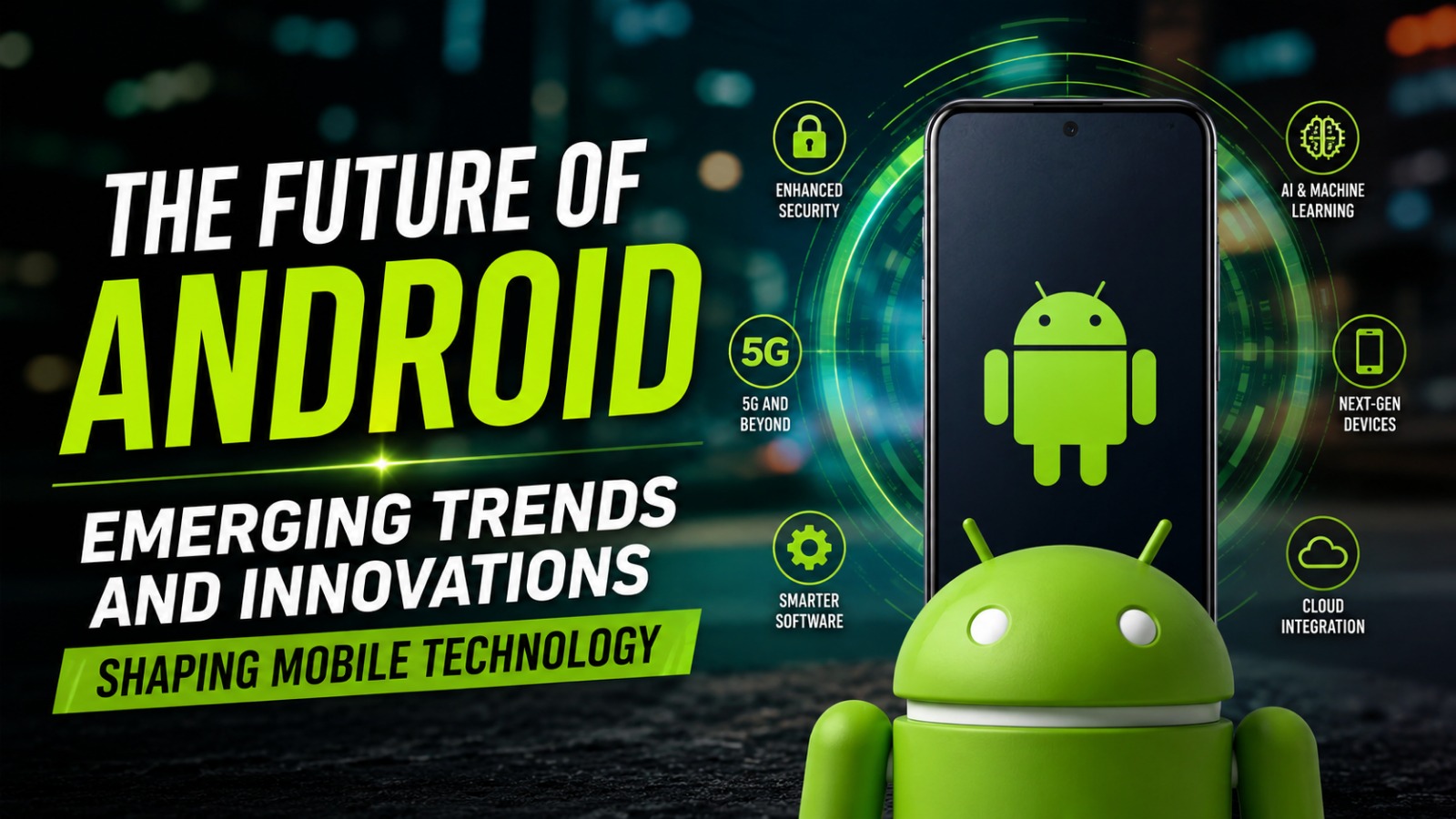
Android has become the world's most widely used mobile operating system, powering billions of smartphones, tablets, smart TVs, wearable devices, and other connected technologies. Over the years, Android has continuously evolved by introducing innovative features that improve performance, security, and user experience. As technology advances, Android is expected to become even smarter, more efficient, and more deeply integrated into everyday life.
The future of Android technology will be driven by innovations in artificial intelligence (AI), cloud computing, cybersecurity, foldable devices, and the Internet of Things (IoT). Understanding these emerging trends can help users and businesses prepare for the next generation of mobile technology.
ARTIFICIAL INTELLIGENCE WILL BECOME MORE INTELLIGENT
Artificial intelligence is expected to play an even greater role in future Android devices. AI already helps users through voice assistants, smart photo editing, predictive text, and personalized recommendations. Future Android versions will likely deliver faster on-device AI processing, allowing smartphones to perform more complex tasks without relying heavily on cloud servers.
AI will also improve battery management, application performance, and user personalization by learning individual habits over time. Smart automation will reduce repetitive tasks, making Android devices more efficient and easier to use. Artificial Intelligence, Android AI, and smart automation will become defining features of future smartphones.
ENHANCED PRIVACY AND CYBERSECURITY
As cyber threats continue to evolve, Android security will become more advanced than ever. Future Android updates are expected to introduce stronger encryption, more detailed permission controls, and enhanced malware detection powered by artificial intelligence. These improvements will help protect personal data from increasingly sophisticated cyberattacks.
Privacy will also receive greater attention by giving users more transparency regarding how applications collect and use personal information. Features that automatically detect suspicious behavior and block harmful software will become increasingly common. Android security, privacy protection, and cybersecurity will remain top priorities for future development.
THE RISE OF FOLDABLE AND FLEXIBLE DEVICES
Foldable smartphones have already begun changing the mobile industry, and Android is leading this transformation. Future Android versions will provide even better support for foldable screens, allowing applications to adapt seamlessly when devices are opened or folded. This creates a smoother multitasking experience and improves productivity.
Flexible display technology may also expand beyond smartphones into tablets, laptops, and wearable devices. As hardware continues to improve, foldable Android devices are expected to become more durable, affordable, and widely available. Foldable Android phones, flexible displays, and multitasking represent exciting innovations in mobile design.
FASTER PERFORMANCE WITH ADVANCED PROCESSORS
Future Android smartphones will benefit from increasingly powerful processors capable of handling demanding applications, advanced gaming, and AI-powered tasks with greater efficiency. Improved chip technology will also reduce energy consumption, extending battery life while delivering higher performance.
Enhanced graphics processing and faster memory will support immersive experiences such as augmented reality (AR), virtual reality (VR), and high-quality mobile gaming. Android performance, mobile processors, and energy efficiency will continue improving as semiconductor technology advances.
GREATER INTEGRATION WITH THE INTERNET OF THINGS
The Internet of Things (IoT) is transforming how devices communicate with one another, and Android will play a central role in this connected ecosystem. Smartphones will increasingly control smart home devices such as lighting systems, security cameras, thermostats, appliances, and entertainment systems from a single interface.
Future Android devices will also interact more efficiently with connected vehicles, wearable technology, and healthcare devices. This seamless integration will simplify everyday life while improving convenience and productivity. Internet of Things, smart home technology, and connected devices will become standard features of the Android ecosystem.
CLOUD COMPUTING WILL EXPAND MOBILE CAPABILITIES
Cloud technology will continue enhancing the Android experience by allowing users to access files, applications, and services from virtually anywhere. Future improvements in cloud integration will make data synchronization faster, more secure, and more reliable across multiple devices.
Cloud computing will also support powerful applications that require significant processing resources, reducing dependence on local hardware limitations. Cloud storage, cloud computing, and cross-device synchronization will help users remain productive regardless of where they work or study.
LONGER BATTERY LIFE AND SMARTER POWER MANAGEMENT
Battery technology continues to evolve alongside software optimization. Future Android devices are expected to feature more intelligent battery management systems that use AI to analyze usage patterns and reduce unnecessary power consumption automatically. This will allow smartphones to operate longer on a single charge.
Manufacturers are also investing in faster charging technologies and more efficient battery materials. Combined with software improvements, these innovations will help users spend less time charging and more time using their devices. Battery optimization, fast charging, and energy-efficient Android devices will remain key areas of innovation.
AUGMENTED REALITY AND IMMERSIVE EXPERIENCES
Augmented Reality (AR) is expected to become increasingly integrated into Android applications. Future smartphones will support more advanced AR experiences for education, navigation, gaming, online shopping, and workplace collaboration. Improved cameras and sensors will make virtual objects appear more realistic and interactive.
Businesses will also benefit from AR through product demonstrations, remote assistance, and virtual training. As hardware continues to improve, Android devices will deliver increasingly immersive digital experiences. Augmented Reality, AR technology, and immersive mobile experiences represent exciting opportunities for users and developers alike.
SUSTAINABLE AND ECO-FRIENDLY MOBILE TECHNOLOGY
Environmental sustainability is becoming an important focus within the smartphone industry. Future Android devices are expected to use more recycled materials, consume less energy, and receive longer software support, helping reduce electronic waste. Manufacturers are also improving repairability to extend the lifespan of smartphones.
Software optimization contributes to sustainability by allowing devices to remain functional for many years without requiring frequent hardware upgrades. Eco-friendly smartphones, sustainable technology, and long-term software support will become increasingly important factors for consumers.
CONCLUSION
The future of Android is filled with exciting possibilities driven by rapid advances in Artificial Intelligence, cybersecurity, foldable technology, cloud computing, battery innovation, and the Internet of Things. These emerging technologies will make Android devices smarter, faster, safer, and more connected than ever before.
As Android continues to evolve, users can expect a more personalized and intelligent mobile experience that enhances productivity, entertainment, communication, and everyday convenience. Staying informed about these innovations will help individuals and businesses take full advantage of the next generation of mobile technology.
Tentang Penulis
Gusti Ayu Tita P
Penulis — Universitas STEKOM
Penulis aktif yang berfokus pada isu-isu akademik, teknologi pendidikan, dan pengembangan sumber daya manusia di lingkungan kampus.