The Future of Civil Servants Amid the Growth of Artificial Intelligence Technology
Gusti Ayu Tita P
29 Juli 2026
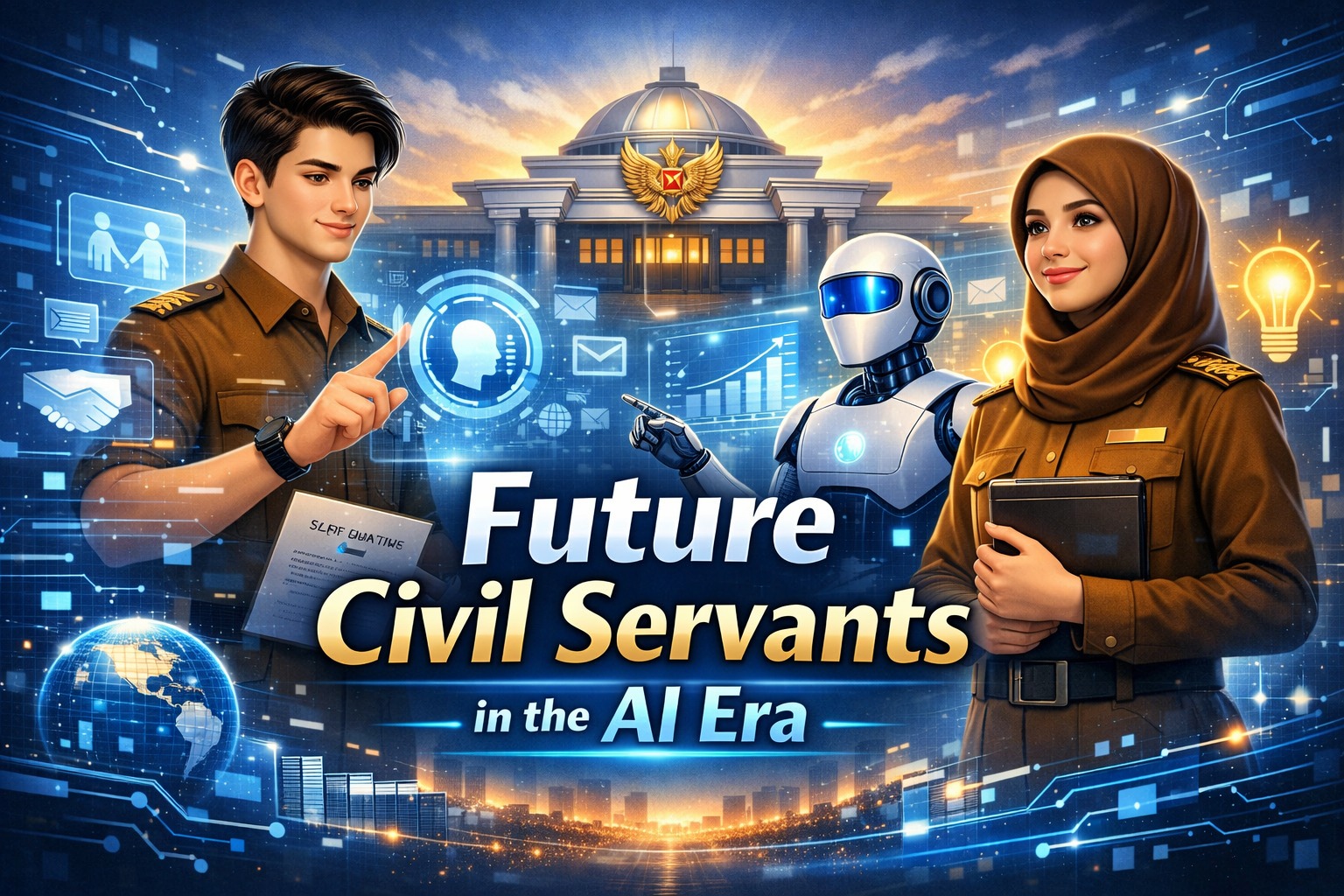
Artificial Intelligence technology is rapidly transforming various sectors around the world, including government institutions and public services. As digital transformation continues to accelerate, civil servants are facing major changes in how they work, communicate, and provide services to society. Many administrative processes that once required manual work are now becoming automated through AI-based systems.
Despite concerns that Artificial Intelligence may replace certain jobs, the future of civil servants remains highly important. Instead of eliminating the role of public employees, AI technology is expected to support civil servants in creating faster, smarter, and more efficient public services.
THE IMPACT OF ARTIFICIAL INTELLIGENCE ON PUBLIC SERVICES
Artificial Intelligence is changing the way governments manage information and serve citizens. AI systems can process data more quickly and accurately than traditional manual methods.
Some examples of AI implementation in public services include:
- Automated administrative systems
- AI chat support for citizens
- Smart data analysis
- Digital document processing
- Predictive public service systems
These technologies help government institutions improve efficiency and reduce service delays.
THE CHANGING ROLE OF CIVIL SERVANTS
As AI technology develops, the role of civil servants is also evolving. Routine administrative tasks may become automated, allowing employees to focus on more strategic and human-centered responsibilities.
Future civil servants will likely focus more on:
- Policy development
- Public communication
- Strategic decision making
- Community engagement
- Problem solving
Human judgment, ethics, and emotional intelligence remain areas where civil servants are still highly needed.
THE IMPORTANCE OF DIGITAL SKILLS
The growth of Artificial Intelligence requires civil servants to improve their digital capabilities. Employees who understand technology will adapt more easily to modern government systems.
Important digital skills include:
- Data analysis
- Digital communication
- Cybersecurity awareness
- AI system management
- Information technology literacy
Continuous learning is essential to remain relevant in the digital government era.
AI HELPS IMPROVE SERVICE EFFICIENCY
One of the greatest advantages of AI technology is its ability to improve efficiency in public administration.
AI can help civil servants by:
- Reducing repetitive tasks
- Processing data faster
- Minimizing human error
- Improving service accuracy
- Supporting faster decision making
As a result, government institutions can provide better and more responsive public services.
HUMAN VALUES REMAIN ESSENTIAL
Although AI technology continues to advance, human interaction remains important in public service. Citizens still need empathy, understanding, and direct communication when facing complex issues.
Civil servants continue to play a major role in:
- Handling sensitive situations
- Building public trust
- Providing emotional support
- Solving social problems
- Maintaining ethical standards
Technology can support public services, but human values cannot be fully replaced by machines.
CHALLENGES FACED BY CIVIL SERVANTS
The integration of Artificial Intelligence into government systems also creates several challenges for civil servants.
Common challenges include:
- Adapting to technological changes
- Learning new digital systems
- Concerns about job transformation
- Cybersecurity risks
- Managing large-scale digital data
Governments need to provide training and support to help employees adapt successfully.
THE NEED FOR CONTINUOUS TRAINING
To prepare for the future, governments must invest in employee development and digital education programs.
Training programs may focus on:
- AI technology understanding
- Digital administration
- Leadership development
- Data management
- Innovation skills
Continuous training helps civil servants remain competitive and productive in modern workplaces.
ETHICS AND RESPONSIBILITY IN AI USAGE
As governments rely more on Artificial Intelligence, ethical issues become increasingly important. Civil servants must ensure that AI systems are used fairly, transparently, and responsibly.
Ethical considerations include:
- Data privacy protection
- Fair decision making
- Transparency
- Accountability
- Responsible technology use
Maintaining ethical standards is crucial for protecting public trust.
THE FUTURE OF SMART GOVERNMENT
Artificial Intelligence is expected to support the development of smarter government systems in the future.
Smart government initiatives may include:
- Integrated digital services
- AI-based public monitoring
- Smart city management
- Automated public administration
- Faster policy analysis
These innovations can improve the quality of public services and strengthen government efficiency.
OPPORTUNITIES FOR YOUNG CIVIL SERVANTS
The growth of AI technology also creates new opportunities for younger generations entering civil service careers.
Young civil servants with digital expertise can contribute by:
- Supporting digital transformation
- Developing innovative solutions
- Improving online services
- Managing technology projects
- Encouraging modernization
Digital talent will become increasingly valuable in government institutions.
CONCLUSION
The future of civil servants amid the growth of Artificial Intelligence technology will involve significant transformation rather than replacement. AI will help automate routine tasks and improve public service efficiency, while civil servants continue to play important roles in leadership, ethics, communication, and decision making.
To remain effective in the digital era, civil servants must continue improving their technological skills, adaptability, and professional competencies. By combining human values with modern technology, governments can create smarter, faster, and more citizen-centered public services for the future.
Tentang Penulis
Gusti Ayu Tita P
Penulis — Universitas STEKOM
Penulis aktif yang berfokus pada isu-isu akademik, teknologi pendidikan, dan pengembangan sumber daya manusia di lingkungan kampus.