The Future of Fisheries Management in a Changing Global Environment
Gusti Ayu Tita P
30 Juli 2026
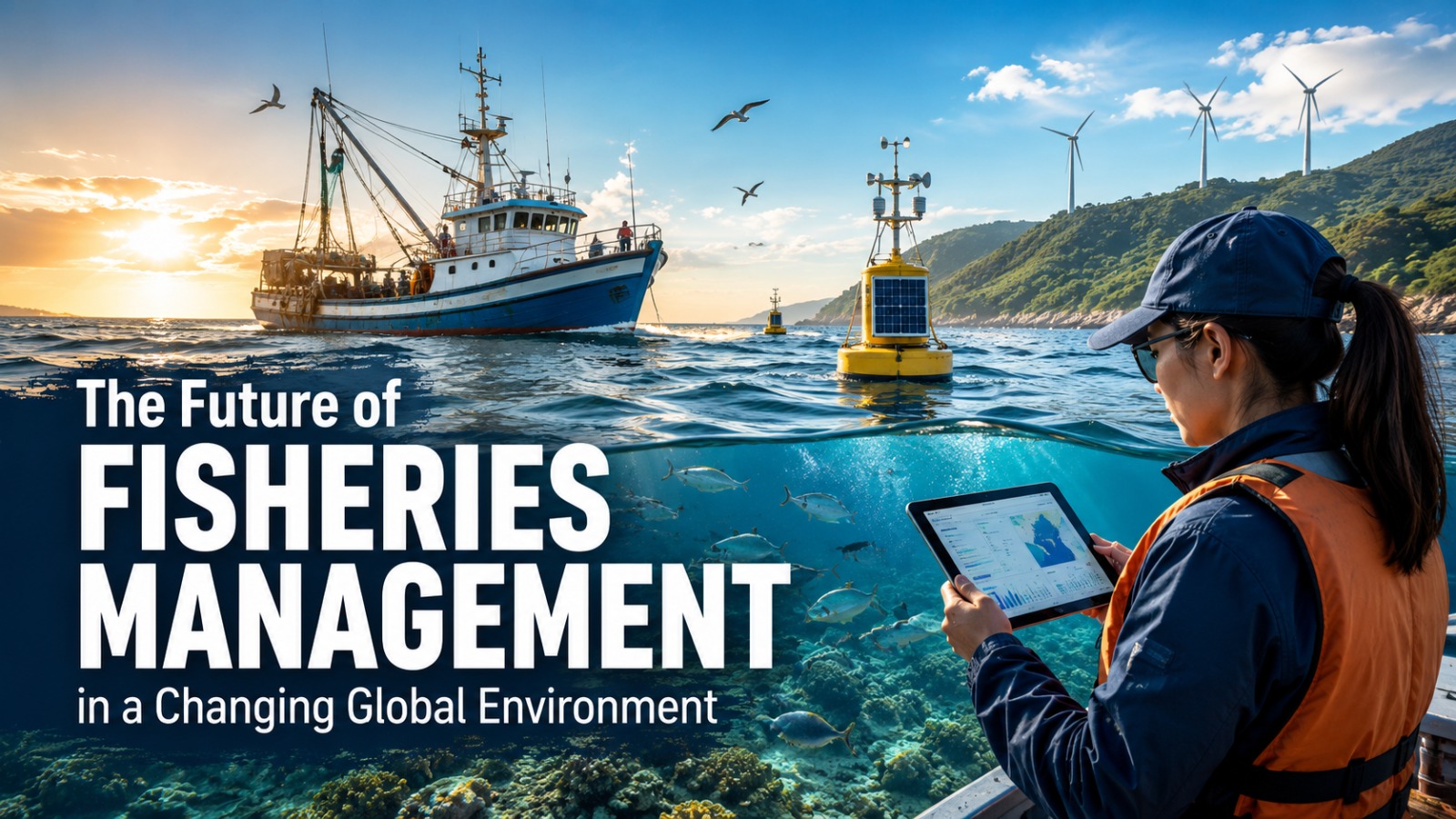
The fisheries sector plays a vital role in supporting global food supplies, creating employment, and sustaining the livelihoods of millions of people worldwide. However, rapid environmental changes, climate change, overfishing, pollution, and technological developments have significantly reshaped the way fisheries are managed. As global demand for seafood continues to increase, effective fisheries management has become more important than ever.
The future of fisheries management depends on adopting sustainable practices, embracing technological innovation, and encouraging collaboration between governments, scientists, industries, and local communities. By balancing economic growth with marine conservation, fisheries can continue providing long-term benefits while protecting valuable ocean ecosystems for future generations.
THE IMPORTANCE OF SUSTAINABLE FISHERIES MANAGEMENT
Sustainable fisheries management ensures that fish populations remain healthy while allowing responsible harvesting to meet human needs. Without proper management, excessive fishing can reduce fish stocks, disrupt marine ecosystems, and threaten food security for millions of people. Science-based regulations, fishing quotas, and seasonal closures help maintain ecological balance and allow fish populations to recover naturally.
In addition, sustainable management supports long-term economic stability for fishing communities. Healthy fish stocks provide consistent income opportunities, reduce financial uncertainty, and strengthen coastal economies. Investing in sustainability today helps secure seafood resources for future generations while preserving biodiversity across marine ecosystems.
THE IMPACT OF CLIMATE CHANGE ON GLOBAL FISHERIES
Climate change has become one of the greatest challenges facing modern fisheries. Rising ocean temperatures, changing currents, ocean acidification, and extreme weather events affect fish migration patterns and breeding habitats. These environmental changes make it increasingly difficult for fisheries managers to predict stock availability and maintain sustainable harvest levels.
To address these challenges, governments and researchers are developing adaptive management strategies based on real-time environmental monitoring and scientific data. Flexible policies allow fishing regulations to respond quickly to changing conditions, improving the resilience of both marine ecosystems and fishing industries.
THE ROLE OF TECHNOLOGY IN MODERN FISHERIES MANAGEMENT
Technological innovation is transforming fisheries management across the world. Satellite monitoring, artificial intelligence, drones, electronic reporting systems, and GPS tracking enable authorities to monitor fishing activities more accurately than ever before. These technologies improve transparency while reducing illegal, unreported, and unregulated fishing.
Digital tools also help scientists collect valuable information about fish populations, water quality, and ecosystem health. Big data analysis enables better forecasting, allowing decision-makers to create more effective conservation policies while supporting sustainable commercial fishing operations.
ECOSYSTEM-BASED MANAGEMENT FOR HEALTHIER OCEANS
Traditional fisheries management often focused only on fish populations. Today, experts increasingly recognise the importance of ecosystem-based management, which considers the health of the entire marine environment, including coral reefs, mangroves, seagrass beds, and other marine species.
Protecting entire ecosystems improves biodiversity, strengthens natural habitats, and increases resilience against climate change. Healthy ecosystems provide breeding grounds for fish, improve water quality, and support tourism, making ecosystem conservation beneficial for both the environment and local economies.
THE IMPORTANCE OF INTERNATIONAL COOPERATION
Many commercially important fish species migrate across national borders, making international cooperation essential. Countries must work together to establish shared management policies, exchange scientific information, and enforce fishing regulations consistently across international waters.
Global partnerships also help combat illegal fishing activities through coordinated surveillance, stronger law enforcement, and information sharing. Collaborative efforts improve resource management while promoting fair competition and sustainable seafood production worldwide.
SUPPORTING COASTAL COMMUNITIES THROUGH SUSTAINABLE DEVELOPMENT
Fishing communities remain at the heart of the global fisheries industry. Successful fisheries management should balance environmental protection with economic opportunities for local people. Community participation allows fishers to contribute valuable local knowledge while increasing public support for conservation measures.
Diversifying income sources through ecotourism, sustainable aquaculture, seafood processing, and marine conservation projects also strengthens community resilience. These opportunities reduce dependence on wild fish stocks while supporting long-term economic development in coastal regions.
THE FUTURE OUTLOOK FOR GLOBAL FISHERIES
The future of fisheries management will depend on combining scientific research, innovative technology, responsible governance, and public awareness. Sustainable fisheries are no longer simply an environmental issue but also an economic and social necessity. Governments, industries, researchers, and consumers all share responsibility for protecting marine resources.
With continued investment in innovation and international collaboration, fisheries can remain productive while preserving ocean biodiversity. Responsible fisheries management offers a pathway towards food security, stronger coastal economies, and healthier oceans for generations to come.
Tentang Penulis
Gusti Ayu Tita P
Penulis — Universitas STEKOM
Penulis aktif yang berfokus pada isu-isu akademik, teknologi pendidikan, dan pengembangan sumber daya manusia di lingkungan kampus.