
The Future of Technology and the Growing Role of Informatics Engineering
Gusti Ayu Tita P
13 Juli 2026
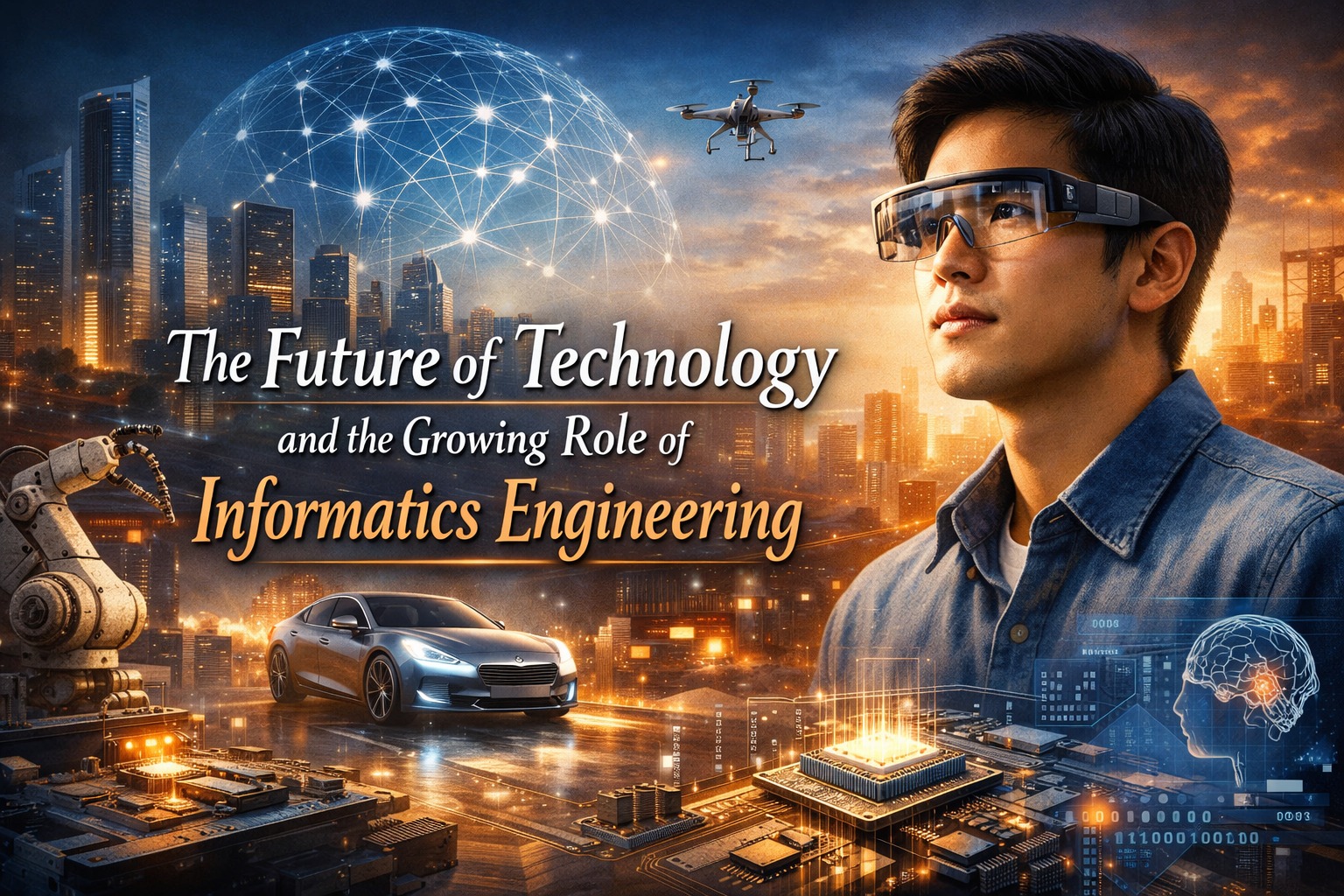
The world is experiencing rapid change driven by technology innovation across every sector of life. One of the most influential fields behind this transformation is Informatics Engineering, which plays a key role in building modern digital systems. From communication to business operations, almost everything now depends on advanced computing solutions. As society becomes more connected, the demand for skilled professionals in this field continues to grow. This article explores how the future of technology is closely linked with the development of informatics and digital expertise.
THE RAPID EVOLUTION OF TECHNOLOGY
Technology has evolved faster in the last decade compared to any other period in history. Innovations such as smartphones, smart devices, and automation systems have changed how humans interact and work. The rise of Artificial Intelligence has also significantly accelerated digital development across industries. Today, machines are capable of learning, analyzing data, and making decisions with minimal human input.
In addition, technologies like Cloud Computing allow businesses to store and access data efficiently from anywhere in the world. This shift has made systems more flexible, scalable, and cost-effective. As a result, organizations are rapidly adopting digital solutions to stay competitive. The continuous evolution of technology ensures that innovation will remain a central part of global development.
WHY INFORMATICS ENGINEERING IS BECOMING ESSENTIAL
Informatics Engineering has become one of the most important fields in the modern digital era. It combines computer science, programming, and system design to solve real-world problems. Many industries now rely on professionals who understand Software Development to build applications and digital platforms. Without these experts, modern systems would not function effectively.
Another reason for its importance is the increasing need for data-driven decision-making. Companies depend on Data Science to analyze large amounts of information and gain valuable insights. This helps businesses improve efficiency and customer satisfaction. As technology continues to expand, informatics engineers will play an even more critical role in shaping the future.
KEY TECHNOLOGIES SHAPING THE FUTURE
Several advanced technologies are shaping the direction of global innovation today. One of the most impactful is Machine Learning, which allows systems to improve automatically through experience. This technology is widely used in recommendation systems, automation tools, and predictive analysis. It is becoming a core part of many digital applications.
Another important field is Cybersecurity, which focuses on protecting data and digital systems from cyber threats. As more information is stored online, the risk of attacks increases significantly. Therefore, cybersecurity experts are in high demand across all industries. Together, these technologies form the foundation of future digital ecosystems powered by Informatics Engineering.
CAREER OPPORTUNITIES IN THE DIGITAL ERA
The growth of technology has created a wide range of career opportunities for graduates in informatics. Professionals in Software Development can work as developers, system analysts, or application designers. These roles are essential for building modern digital solutions used in everyday life. The demand for skilled workers in this field continues to increase globally.
In addition, careers in Artificial Intelligence, data analysis, and cloud systems are becoming more popular. Companies are actively searching for experts who understand Data Science and can turn data into strategic decisions. This makes informatics one of the most promising career paths today. The future job market will continue to expand as digital transformation accelerates.
THE IMPACT OF DIGITAL TRANSFORMATION ON INDUSTRIES
Digital Transformation has changed how industries operate across the world. Traditional systems are being replaced with automated and intelligent solutions. Businesses now rely heavily on digital tools to manage operations, communication, and customer service. This transformation improves efficiency and reduces operational costs.
Industries such as healthcare, education, and finance are also benefiting from modern technologies. With the help of Cloud Computing, organizations can manage large-scale data securely and efficiently. Meanwhile, Artificial Intelligence is improving accuracy in decision-making processes. The integration of these technologies highlights the growing importance of Informatics Engineering in shaping future industries.
CONCLUSION
The future of technology is closely tied to the continuous advancement of Informatics Engineering and digital innovation. Fields such as Artificial Intelligence, Machine Learning, Cybersecurity, Data Science, and Cloud Computing are driving global transformation. These technologies are not only changing how industries operate but also creating new opportunities for future professionals. As digital systems continue to evolve, the importance of informatics will only grow stronger. Understanding and mastering these skills will be essential for success in the modern technological era.
Tentang Penulis
Gusti Ayu Tita P
Penulis — Universitas STEKOM
Penulis aktif yang berfokus pada isu-isu akademik, teknologi pendidikan, dan pengembangan sumber daya manusia di lingkungan kampus.