
The Impact of Character Education on Teen Behavior
Gusti Ayu Tita P
24 Juli 2026
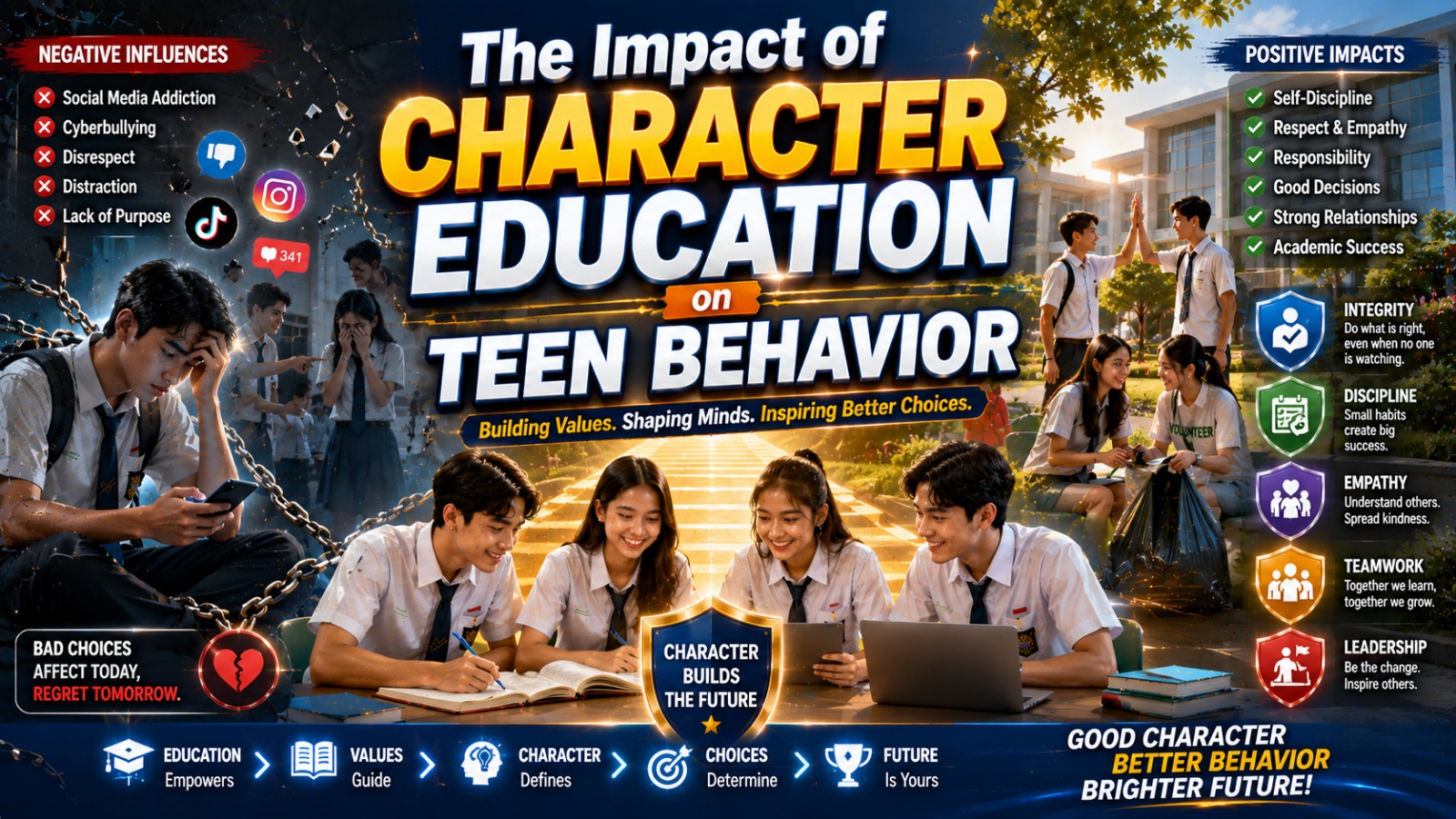
Character education has become one of the most important aspects of modern education, especially in shaping positive teen behavior. In today’s digital era, teenagers are exposed to rapid technological changes, social media influence, peer pressure, and various social challenges that can affect their attitudes and decisions. Without strong moral guidance, teenagers may easily develop negative habits and harmful behaviors.
Character education helps teenagers build positive values such as honesty, discipline, empathy, responsibility, and respect. These values guide them in making wise decisions, improving relationships, and becoming responsible individuals. As a result, character education has a strong impact on emotional, social, and academic development.
WHAT IS CHARACTER EDUCATION?
Character education is the process of teaching moral values, ethics, and positive behavior through learning experiences and daily activities. It aims to help students become individuals who are not only academically intelligent but also morally responsible.
Character education is usually developed through family guidance, school activities, and community support. Positive habits and role models play an important role in strengthening character development among teenagers.
WHY TEEN BEHAVIOR MATTERS?
Teen behavior reflects the values and habits developed during adolescence. This period is very important because teenagers are learning how to interact with society and prepare for adulthood.
Positive teen behavior contributes to:
- Better academic achievement
- Healthier social relationships
- Stronger emotional control
- Increased self-confidence
- Improved communication skills
- Greater future opportunities
Because adolescence is a critical stage of development, character education becomes essential for guiding teenagers toward positive growth.
HOW CHARACTER EDUCATION INFLUENCES TEEN BEHAVIOR?
Character education has a direct effect on how teenagers think, act, and communicate with others. Positive values help teenagers make better choices and avoid harmful actions.
IMPROVING DISCIPLINE
Character education teaches teenagers to manage time wisely, follow rules, and complete responsibilities consistently.
ENCOURAGING RESPONSIBILITY
Teenagers learn to accept the consequences of their actions and become more accountable in daily life.
DEVELOPING HONESTY
Honesty helps teenagers build trust with family members, teachers, and friends while avoiding dishonest behavior.
STRENGTHENING EMPATHY
Empathy encourages teenagers to understand the feelings of others and build respectful relationships.
BUILDING SELF-CONFIDENCE
Positive values increase confidence and help teenagers make decisions responsibly.
NEGATIVE BEHAVIORS REDUCED BY CHARACTER EDUCATION
Character education can help reduce several negative behaviors that commonly affect teenagers.
BULLYING
Teaching empathy and respect helps students understand the harmful effects of bullying and violence.
CHEATING AND PLAGIARISM
Honesty and integrity reduce academic dishonesty and encourage fair learning practices.
AGGRESSIVE ATTITUDES
Character education helps teenagers control emotions and solve problems peacefully.
DIGITAL MISUSE
Teaching digital ethics encourages responsible use of social media and online platforms.
LACK OF DISCIPLINE
Positive routines and consistent guidance improve self-control and responsibility.
THE ROLE OF FAMILY IN CHARACTER DEVELOPMENT
Family is the first place where teenagers learn values and behavior. Parents have a strong influence on teen attitudes through communication, discipline, and daily examples.
Parents can help improve teen behavior by:
- Encouraging honest communication
- Teaching responsibility at home
- Setting clear rules
- Monitoring gadget and social media use
- Providing emotional support
A supportive family environment helps teenagers develop confidence, discipline, and emotional stability.
THE ROLE OF SCHOOLS IN CHARACTER EDUCATION
Schools also play an important role in shaping teen behavior. Teachers serve as role models and mentors who guide students academically and morally.
Schools can strengthen character education through:
- Character-based learning
- Leadership activities
- Teamwork projects
- Extracurricular programs
- Positive discipline systems
A healthy school environment helps teenagers feel motivated, respected, and responsible.
CHARACTER EDUCATION IN THE DIGITAL ERA
Technology has transformed the way teenagers communicate and interact. While digital platforms provide educational benefits, they can also expose teenagers to harmful content, cyberbullying, and negative online behavior.
For this reason, digital ethics should become part of character education. Teenagers need to learn how to:
- Use social media responsibly
- Respect others online
- Protect personal privacy
- Avoid harmful digital content
- Communicate politely in online spaces
Responsible digital behavior is very important in today’s connected world.
EFFECTIVE STRATEGIES TO IMPROVE TEEN BEHAVIOR
Several strategies can help strengthen character education among teenagers.
PROVIDE POSITIVE ROLE MODELS
Teenagers learn behavior by observing parents, teachers, and community leaders.
BUILD OPEN COMMUNICATION
Healthy communication helps teenagers feel supported and guided.
GIVE POSITIVE APPRECIATION
Recognizing good behavior encourages teenagers to maintain positive habits.
ENCOURAGE SOCIAL ACTIVITIES
Community service and teamwork activities help build empathy and responsibility.
TEACH CONSISTENT VALUES
Consistent guidance from adults strengthens teenagers’ understanding of moral values.
LONG-TERM BENEFITS OF CHARACTER EDUCATION
Character education provides long-term benefits for teenagers and society. Teens with strong character are more likely to become successful adults, responsible leaders, and productive community members.
Some major benefits include:
- Better leadership abilities
- Stronger emotional intelligence
- Improved academic performance
- Healthier social relationships
- Greater career opportunities
Positive character also contributes to safer and more harmonious communities.
CONCLUSION
Character education has a significant impact on teen behavior by teaching important values such as honesty, discipline, empathy, responsibility, and respect. These values help teenagers avoid harmful behavior, improve social relationships, and become more confident individuals.
With support from families, schools, and communities, character education can guide teenagers toward becoming responsible, ethical, and successful individuals in the digital era.
Tentang Penulis
Gusti Ayu Tita P
Penulis — Universitas STEKOM
Penulis aktif yang berfokus pada isu-isu akademik, teknologi pendidikan, dan pengembangan sumber daya manusia di lingkungan kampus.