The Importance of Anti-Corruption Education in Building Integrity from an Early Age
Gusti Ayu Tita P
22 September 2026
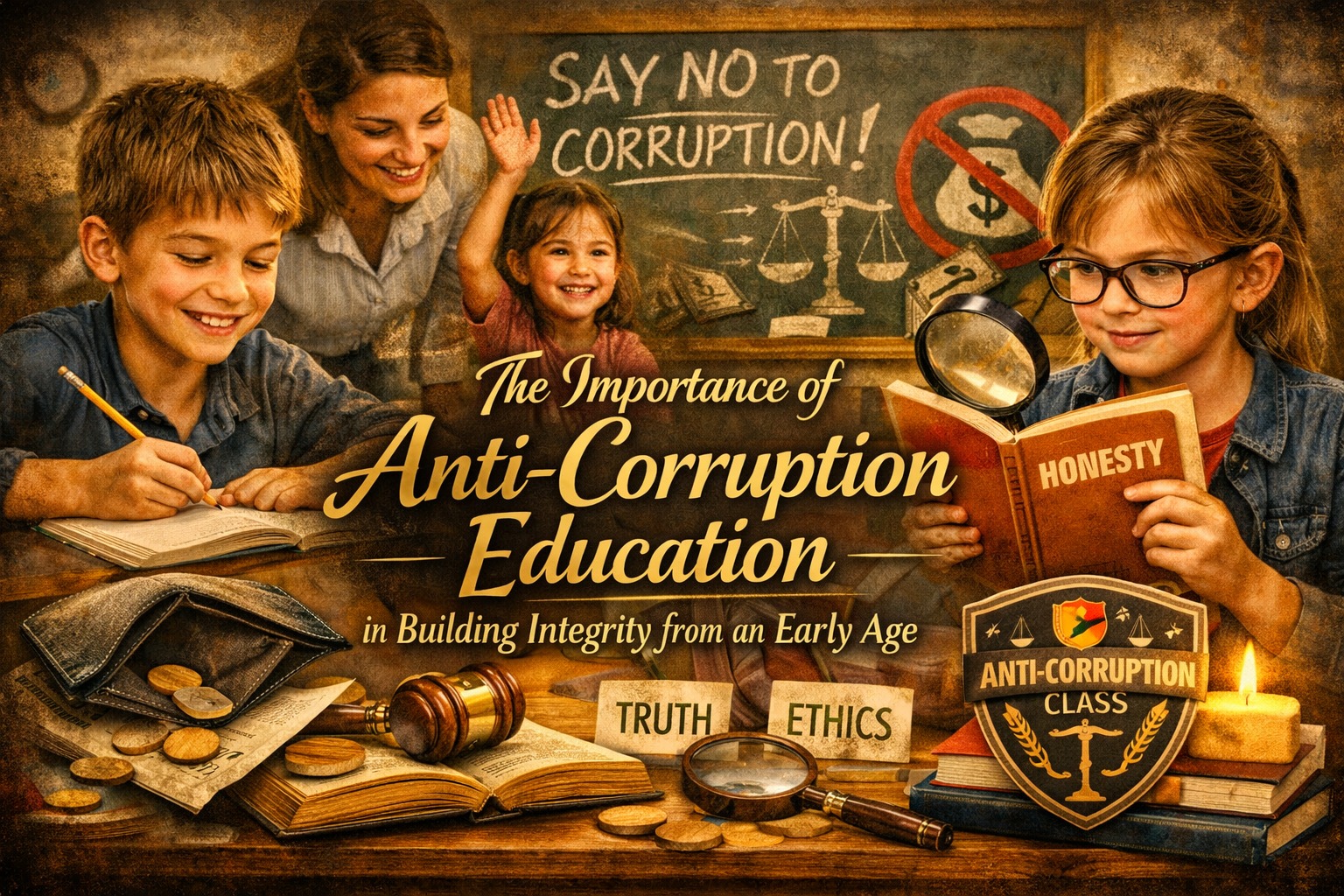
Corruption remains one of the biggest challenges affecting social justice, economic development, and public trust worldwide. It weakens institutions, reduces the quality of public services, and creates unfair opportunities that harm society as a whole. While strict laws and effective enforcement are essential, they cannot eliminate corruption without strong moral values among citizens. This is why anti-corruption education has become an important long-term strategy.
Teaching integrity, honesty, and ethical behavior from an early age helps children understand the difference between right and wrong before they face complex situations in adulthood. Schools, families, and communities all have a responsibility to build these positive values. By encouraging responsible behavior early in life, societies can create future generations that reject corruption and support transparency.
WHY ANTI-CORRUPTION EDUCATION MATTERS
Anti-corruption education introduces young people to the principles of honesty, fairness, accountability, and responsibility. These values help children understand that every dishonest action, even a small one, can negatively affect other people. Learning about corruption is not only about understanding laws but also about recognizing the ethical consequences of dishonest behavior.
Students who receive consistent integrity education are more likely to develop strong moral judgment and become responsible citizens. They learn to value hard work instead of shortcuts and understand that success achieved through honesty brings lasting respect. Over time, these lessons shape attitudes that discourage corruption in schools, workplaces, businesses, and government institutions.
THE ROLE OF FAMILIES IN BUILDING INTEGRITY
Families are the first place where children learn about ethical values and everyday behavior. Parents who consistently demonstrate honesty, keep promises, admit mistakes, and treat others fairly become powerful role models. Children naturally imitate what they observe at home, making family influence extremely important.
Simple daily habits such as telling the truth, respecting rules, returning borrowed items, and accepting responsibility for mistakes strengthen a child's sense of integrity. Parents can also discuss real-life examples of ethical decisions to help children understand why honesty benefits everyone. Continuous guidance creates a strong moral foundation that supports responsible behavior throughout life.
SCHOOLS AS A FOUNDATION FOR ETHICAL LEARNING
Schools play a vital role in strengthening anti-corruption awareness through both academic lessons and everyday activities. Teachers can introduce discussions about ethics, fairness, and social responsibility using age-appropriate examples. Classroom activities that promote teamwork, respect, and accountability help students practice these values directly.
Beyond formal lessons, schools should build an environment where honesty is appreciated and cheating is discouraged. Transparent classroom rules, fair assessments, and equal treatment for all students reinforce positive behavior. When integrity becomes part of the school culture, students are more likely to carry these values into adulthood.
THE IMPACT OF INTEGRITY ON SOCIETY
A society built on integrity experiences stronger public trust, better governance, and healthier economic growth. Citizens who reject corruption contribute to transparent institutions and more efficient public services. Businesses also benefit from ethical practices because fair competition encourages innovation and sustainable investment.
On the other hand, corruption increases inequality, wastes public resources, and weakens confidence in government institutions. Teaching children to value honesty and accountability today helps reduce these long-term problems. Every generation educated with strong ethical values contributes to creating a more just and prosperous society.
PRACTICAL WAYS TO TEACH ANTI-CORRUPTION VALUES
Teaching anti-corruption values does not always require complex lessons. Parents and educators can use storytelling, role-playing, classroom discussions, and community activities to explain why honesty and fairness matter. Encouraging children to solve problems ethically allows them to practice making responsible decisions.
Rewarding honest behavior instead of focusing only on achievements also reinforces positive habits. Community service projects, teamwork, and leadership activities help children understand the importance of responsibility and respect for others. Consistent practice is more effective than occasional lectures because values develop through repeated actions.
CONCLUSION
Anti-corruption education is one of the most effective long-term investments in building a society based on integrity, honesty, and accountability. When children consistently learn ethical values from their families, schools, and communities, they become adults who reject corruption and support fairness. Strong moral character cannot be developed overnight, but continuous education creates lasting positive habits.
By strengthening ethical education from an early age, every generation can contribute to cleaner institutions, transparent governance, and sustainable development. Preventing corruption begins with everyday actions that encourage honesty, responsibility, and respect for others. Building integrity today is the key to creating a better future for everyone.
Tentang Penulis
Gusti Ayu Tita P
Penulis — Universitas STEKOM
Penulis aktif yang berfokus pada isu-isu akademik, teknologi pendidikan, dan pengembangan sumber daya manusia di lingkungan kampus.