The Importance of Character Education for the Younger Generation in the Digital Era
Gusti Ayu Tita P
9 Juli 2026
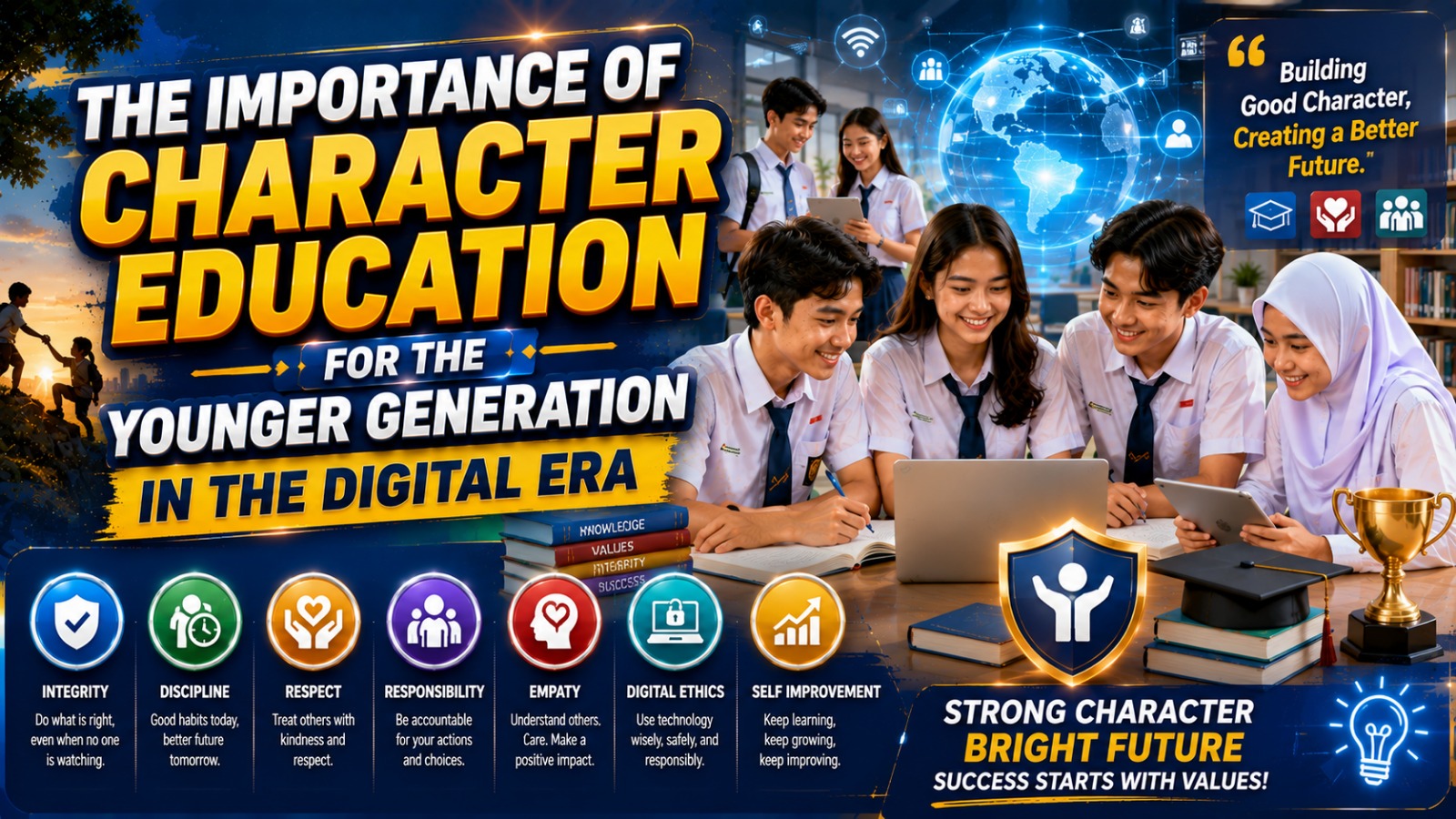
Character education plays a vital role in shaping the younger generation into responsible, disciplined, and morally strong individuals. In today’s digital era, technology has become an inseparable part of daily life. While digital advancements provide many benefits, they also create challenges that can influence the attitudes and behavior of young people. Therefore, character education is essential to help the younger generation face modern challenges wisely and responsibly.
The rapid growth of social media, online communication, and digital entertainment has changed the way young people interact and learn. Without strong moral values, they may easily be influenced by negative content and unhealthy lifestyles. Character education helps build positive habits and ethical behavior that support personal growth and future success.
WHAT IS CHARACTER EDUCATION?
Character education is a process of teaching moral values, ethics, and positive behavior through learning and daily practice. Its purpose is not only to improve academic abilities but also to develop honesty, discipline, responsibility, empathy, and integrity.
Character education can be implemented through family, school, and community environments. With consistent guidance, young people can develop strong personalities and positive attitudes in everyday life.
WHY CHARACTER EDUCATION IS IMPORTANT
Character education provides many benefits for the younger generation, especially in the digital era where social influences are stronger than ever. Young people with good character are more likely to make wise decisions and build healthy relationships.
Some important benefits of character education include:
- Building self-discipline
- Encouraging honesty and responsibility
- Improving social skills
- Increasing self-confidence
- Reducing negative behavior
- Helping young people face challenges wisely
Strong character also helps students become more focused and motivated in achieving their goals.
CHALLENGES FACED BY THE YOUNGER GENERATION IN THE DIGITAL ERA
Technology offers unlimited access to information and communication. However, it also creates several challenges for young people.
1. SOCIAL MEDIA INFLUENCE
Social media can affect the mindset and behavior of teenagers, especially when they are exposed to harmful or misleading content.
2. DIGITAL ADDICTION
Excessive use of gadgets and online games may reduce productivity, social interaction, and study motivation.
3. CYBERBULLYING
Online bullying has become a serious issue that can negatively affect mental and emotional well-being.
4. DECLINING SOCIAL INTERACTION
Many young people spend more time online than interacting directly with family and friends.
Because of these challenges, character education becomes increasingly important in helping the younger generation use technology wisely.
IMPORTANT CHARACTER VALUES FOR YOUNG PEOPLE
Several positive values should be taught to the younger generation to help them become responsible individuals.
HONESTY
Honesty builds trust and helps young people develop integrity in daily life.
DISCIPLINE
Discipline teaches time management, responsibility, and consistency in achieving goals.
EMPATHY
Empathy encourages young people to care about others and respect different perspectives.
RESPONSIBILITY
Responsible individuals understand the consequences of their actions and fulfill their duties properly.
RESPECT
Respect helps create healthy relationships and peaceful social interactions.
THE ROLE OF FAMILY IN CHARACTER EDUCATION
Family is the first environment where children learn moral values and behavior. Parents play an important role in shaping character through daily habits and positive examples.
Parents can support character education by:
- Teaching discipline at home
- Encouraging honest communication
- Supervising technology use
- Giving emotional support
- Becoming role models for children
A supportive family environment helps children grow into confident and responsible individuals.
THE ROLE OF SCHOOLS IN BUILDING CHARACTER
Schools also have a major responsibility in developing students’ character. Teachers are not only educators but also role models who influence students’ attitudes and behavior.
Through classroom learning, teamwork, extracurricular activities, and school discipline, students can learn important values such as cooperation, leadership, and responsibility.
DIGITAL ETHICS IN MODERN EDUCATION
In the digital era, character education must include digital ethics. Young people need to understand how to communicate politely online, respect privacy, and avoid spreading harmful information.
Teaching digital responsibility helps students become smarter and safer internet users.
STRATEGIES TO STRENGTHEN CHARACTER EDUCATION
There are several effective strategies to improve character education among young people, such as:
- Providing positive role models
- Encouraging good habits
- Teaching digital ethics
- Promoting teamwork and social activities
- Building open communication
- Appreciating positive behavior
Consistent practice of these values can create strong character and positive behavior.
BENEFITS OF CHARACTER EDUCATION FOR THE FUTURE
Character education provides long-term benefits for the younger generation. Individuals with strong character are more likely to succeed academically, socially, and professionally.
Positive character also helps young people become trustworthy leaders who contribute positively to society.
CONCLUSION
Character education is extremely important for the younger generation in the digital era. It helps young people develop moral values, positive behavior, and the ability to face modern challenges wisely.
Through support from families, schools, and communities, character education can create a generation that is intelligent, responsible, disciplined, and ready to build a better future.
Tentang Penulis
Gusti Ayu Tita P
Penulis — Universitas STEKOM
Penulis aktif yang berfokus pada isu-isu akademik, teknologi pendidikan, dan pengembangan sumber daya manusia di lingkungan kampus.