The Influence of Industry 4.0 on Modern Business
Gusti Ayu Tita P
10 Juni 2026
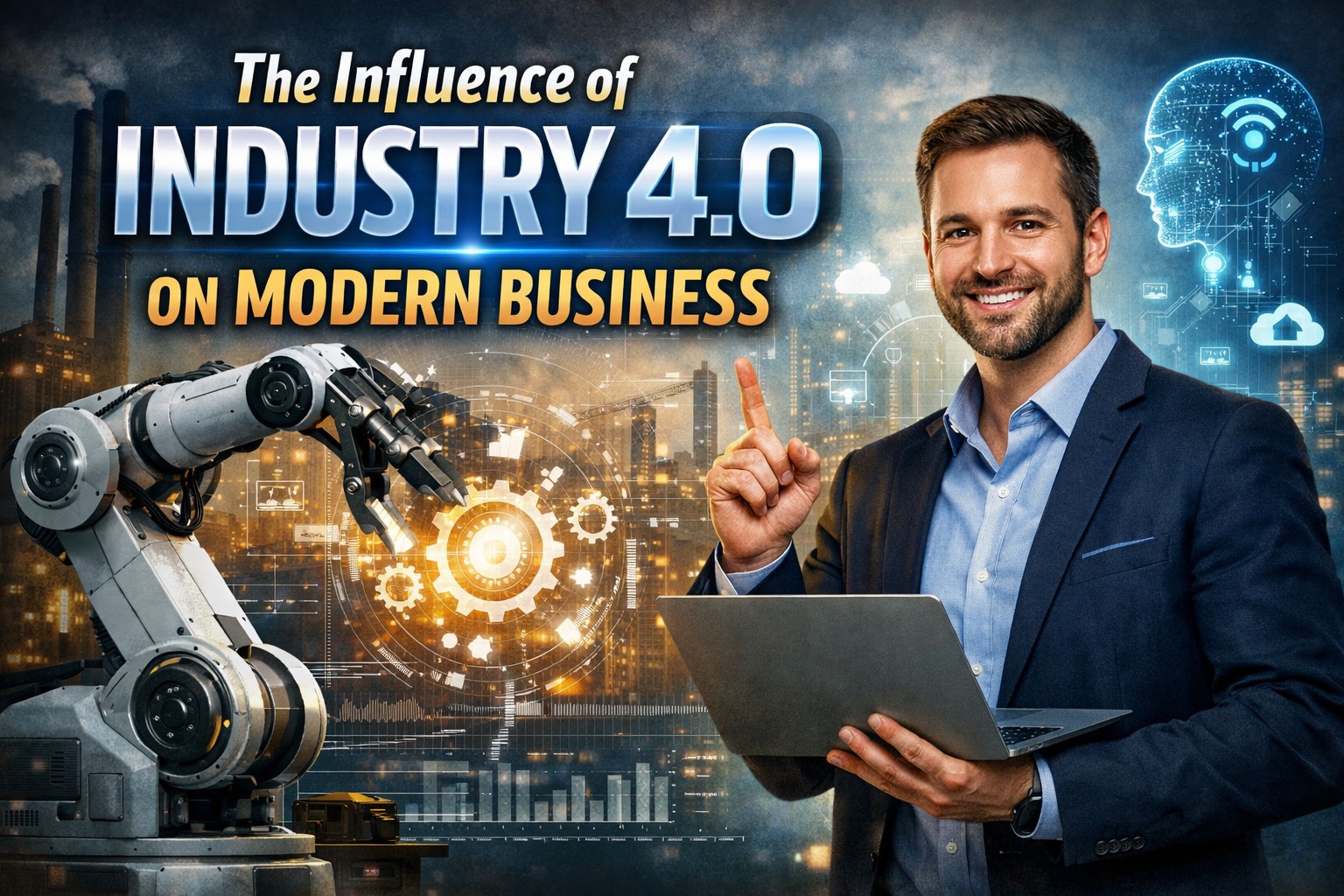
The development of Industry 4.0 has transformed the way companies operate in the modern era. Businesses are now using advanced technologies such as Artificial Intelligence, Internet of Things, cloud computing, and automation systems to improve productivity and efficiency. This industrial revolution not only changes manufacturing processes but also influences marketing, customer service, and business management strategies. Companies that adapt quickly to digital transformation are more likely to survive and grow in competitive markets.
Modern businesses are required to become more flexible, innovative, and technology-driven. Consumers today expect faster services, personalized experiences, and high-quality products. Because of this, companies are investing heavily in smart technologies to meet customer expectations. The influence of Industry 4.0 can be seen across many sectors, including healthcare, education, logistics, finance, and retail industries.
UNDERSTANDING INDUSTRY 4.0
Industry 4.0 refers to the fourth industrial revolution where digital technology becomes deeply integrated into industrial and business activities. Unlike previous industrial revolutions that focused on machinery or electricity, Industry 4.0 emphasizes connectivity, automation, and data exchange. Technologies such as smart machines, robotics, and real-time data analysis allow businesses to make faster and more accurate decisions. This creates a more efficient and intelligent business environment.
One of the main characteristics of Industry 4.0 is the use of interconnected systems. Machines, software, and devices can communicate with each other automatically through the internet. This system reduces human error and increases operational efficiency. Businesses can also monitor production, customer behavior, and market trends more effectively using digital data and analytics tools.
THE IMPACT OF INDUSTRY 4.0 ON BUSINESS OPERATIONS
The influence of Industry 4.0 has significantly improved business operations in many industries. Automation technology allows companies to complete tasks faster while reducing operational costs. Smart machines can work continuously with minimal mistakes, helping businesses increase production quality. As a result, companies can deliver products more efficiently and maintain customer satisfaction.
Another major impact is better decision-making through data analysis. Businesses now collect large amounts of data from customers, machines, and market activities. This data can be analyzed to identify trends, predict customer needs, and improve business strategies. With accurate information, companies can respond quickly to market changes and remain competitive in the digital economy.
THE ROLE OF ARTIFICIAL INTELLIGENCE IN MODERN BUSINESS
Artificial Intelligence plays an important role in Industry 4.0 because it helps businesses automate complex tasks and improve efficiency. AI technology is commonly used in customer service through chatbots, recommendation systems, and virtual assistants. These systems can provide quick responses and personalized experiences for customers. This improves customer satisfaction while reducing the workload of employees.
AI is also used in business analytics and forecasting. Companies can use AI to analyze customer behavior, market trends, and sales performance. This allows businesses to make smarter decisions based on real-time information. In addition, AI helps companies detect risks, improve cybersecurity, and optimize supply chain management.
CHALLENGES OF INDUSTRY 4.0
Although Industry 4.0 offers many advantages, it also creates several challenges for businesses. One major challenge is the high cost of implementing advanced technologies. Small and medium-sized businesses may struggle to invest in automation systems, smart devices, and digital infrastructure. Companies also need skilled workers who understand digital technology and data management.
Cybersecurity is another important issue in the digital era. Since businesses rely heavily on internet-connected systems, they become more vulnerable to cyberattacks and data breaches. Protecting customer information and company data is essential for maintaining trust and business stability. Therefore, companies must invest in strong cybersecurity systems and employee training programs.
THE FUTURE OF MODERN BUSINESS IN THE INDUSTRY 4.0 ERA
The future of modern business will become increasingly connected and technology-based. Companies that continue to innovate and adapt to digital transformation will have greater opportunities for growth. Automation, AI, and smart technologies will continue to improve productivity and business efficiency in the coming years. Businesses that fail to adapt may struggle to compete in rapidly changing markets.
Industry 4.0 also encourages companies to become more customer-focused. Businesses can use digital technology to provide personalized products and services that match customer preferences. This creates stronger customer relationships and improves brand loyalty. In the future, successful companies will be those that combine advanced technology with creativity, innovation, and human-centered strategies.
CONCLUSION
The influence of Industry 4.0 on modern business is undeniable. Advanced technologies such as automation, Artificial Intelligence, and digital connectivity have changed the way companies operate and compete. Businesses now have greater opportunities to improve efficiency, reduce costs, and provide better customer experiences. However, companies must also overcome challenges such as cybersecurity risks and technological investment costs.
As digital transformation continues to grow, businesses need to stay innovative and adaptable. Companies that embrace Industry 4.0 can achieve long-term success and remain competitive in the global market. Understanding and utilizing modern technology is no longer optional but essential for future business development.
Tentang Penulis
Gusti Ayu Tita P
Penulis — Universitas STEKOM
Penulis aktif yang berfokus pada isu-isu akademik, teknologi pendidikan, dan pengembangan sumber daya manusia di lingkungan kampus.