The Influence of Technology on Communication and Information
Gusti Ayu Tita P
26 Juli 2026
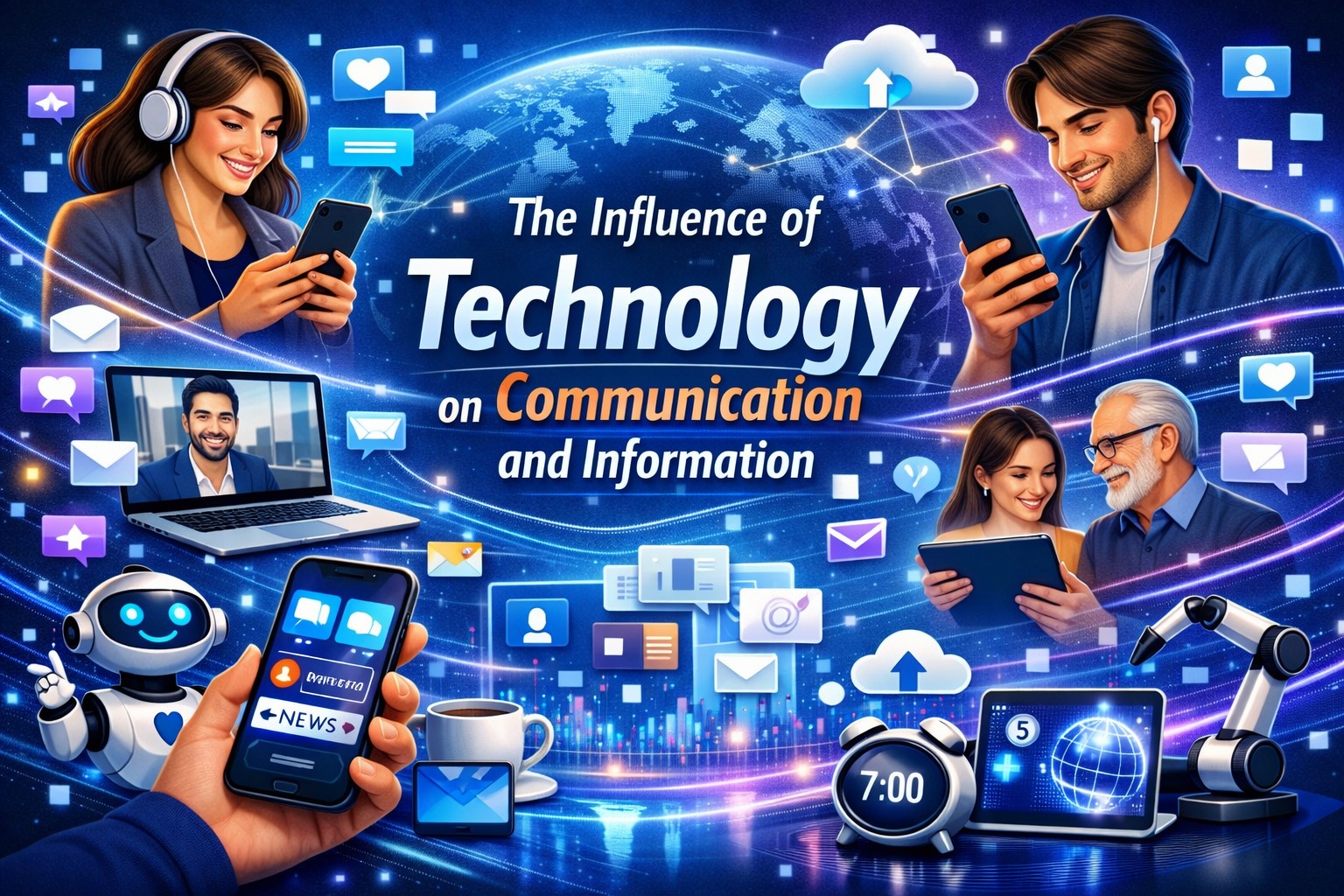
Technology has transformed the way people communicate and access information in everyday life. From instant messaging and video calls to online news platforms and artificial intelligence, digital innovation has made communication faster and more efficient than ever before. Individuals, businesses, educational institutions, and governments now rely heavily on technology to exchange ideas and share knowledge across the globe. As technology continues to evolve, understanding its influence on communication and information becomes increasingly important.
THE EVOLUTION OF COMMUNICATION THROUGH TECHNOLOGY
The development of modern technology has significantly changed how people connect with one another. Smartphones, social media, email, and video conferencing allow users to communicate instantly regardless of geographical distance. Families can stay connected across continents, while businesses can collaborate with international partners in real time. This convenience has improved both personal relationships and professional productivity.
In addition, technology has reduced communication barriers by providing translation tools and accessibility features for people with different languages and abilities. Cloud-based platforms also enable teams to work together efficiently by sharing files and updates instantly. These innovations have made communication more inclusive, flexible, and responsive to changing needs.
THE IMPACT OF TECHNOLOGY ON INFORMATION ACCESS
The internet has revolutionized the way people search for and consume information. Instead of relying solely on printed books or newspapers, users can now access millions of resources within seconds through search engines and digital libraries. This immediate availability supports education, research, and lifelong learning for people of all ages.
Furthermore, online databases, educational websites, and digital archives provide valuable knowledge that was once difficult to obtain. Businesses can analyze market trends quickly, while students and professionals can update their skills through online learning platforms. The widespread availability of information has empowered individuals to make better-informed decisions in many aspects of life.
ADVANTAGES OF DIGITAL COMMUNICATION AND INFORMATION SHARING
One of the greatest benefits of technology is its ability to improve efficiency. Instant messaging, collaborative applications, and automated systems help organizations reduce delays and streamline operations. As a result, projects can be completed faster with improved coordination among team members.
Technology also encourages innovation by enabling rapid information exchange across industries and academic communities. Researchers can publish findings online, entrepreneurs can promote products globally, and creators can share ideas with large audiences. These opportunities contribute to economic growth and encourage continuous knowledge development.
CHALLENGES IN THE DIGITAL ERA
Despite its many benefits, technology also presents several challenges that require careful attention. The spread of misinformation, privacy concerns, and cyber threats can negatively affect individuals and organizations. Users must evaluate online sources critically and protect their personal data through responsible digital practices.
Another concern is excessive dependence on technology, which may reduce face-to-face interaction and create distractions in daily life. Maintaining a healthy balance between online and offline communication is essential for emotional well-being and meaningful relationships. Digital literacy and ethical technology use play a crucial role in addressing these issues.
THE FUTURE OF COMMUNICATION AND INFORMATION TECHNOLOGY
Emerging technologies such as artificial intelligence, virtual reality, and advanced networking systems are expected to reshape communication even further. Businesses may automate customer interactions, educators may create immersive learning experiences, and healthcare providers may improve remote consultations through innovative digital tools. These developments have the potential to increase efficiency and accessibility across many sectors.
Looking ahead, society will benefit most when technology is combined with responsible use and strong ethical standards. Governments, organizations, educators, and individuals all share responsibility for promoting secure and accurate information exchange. By embracing innovation while protecting privacy and trust, technology can continue to strengthen communication and expand access to valuable knowledge worldwide.
CONCLUSION
The influence of technology on communication and information is both profound and far-reaching. It has accelerated the speed of interaction, expanded access to knowledge, and created countless opportunities for collaboration and innovation. At the same time, it requires users to remain aware of digital risks and practice responsible online behavior. By using technology wisely, individuals and communities can maximize its benefits while minimizing potential challenges in the evolving digital landscape.
Tentang Penulis
Gusti Ayu Tita P
Penulis — Universitas STEKOM
Penulis aktif yang berfokus pada isu-isu akademik, teknologi pendidikan, dan pengembangan sumber daya manusia di lingkungan kampus.