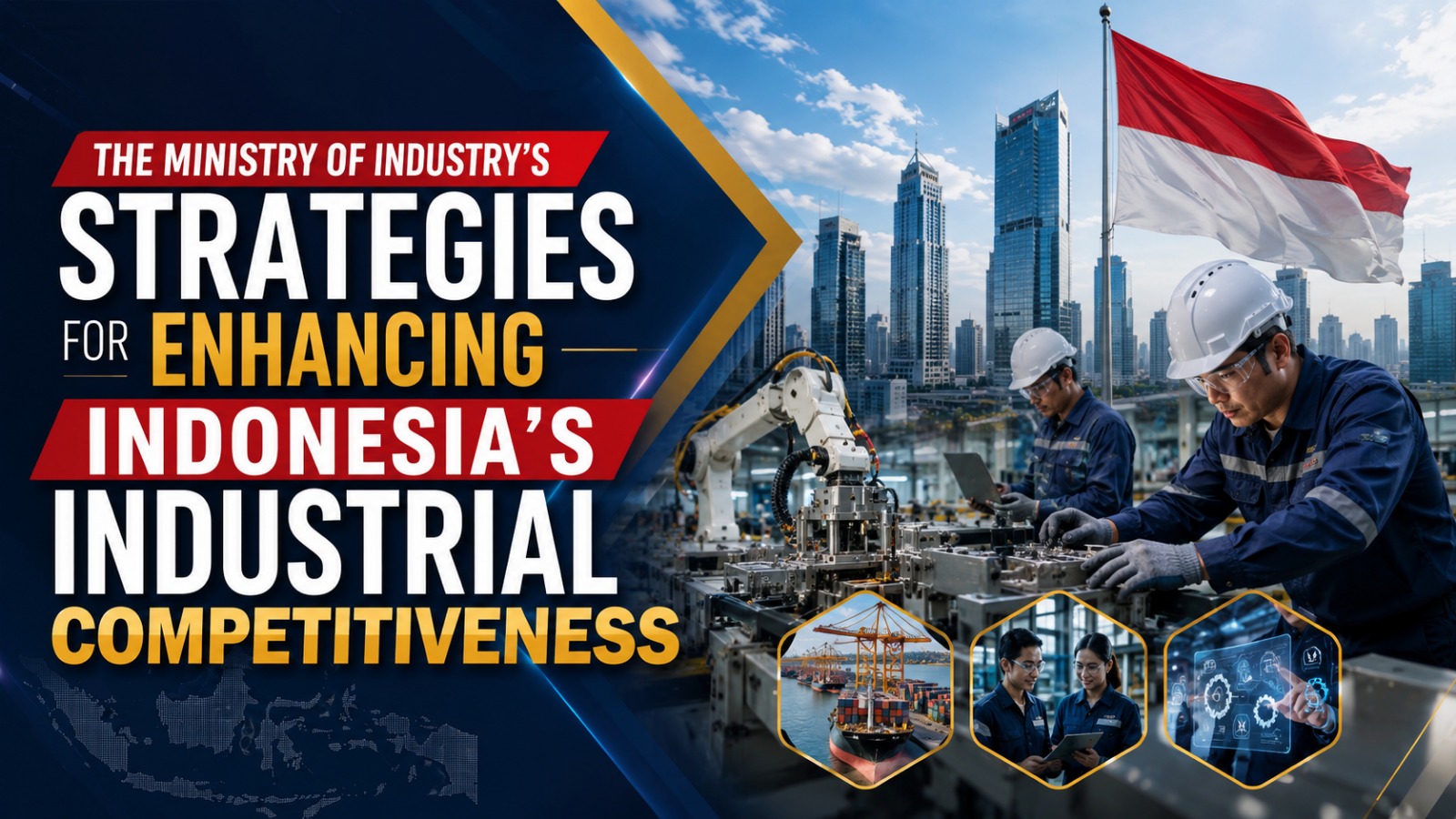
The Ministry of Industry's Strategies for Enhancing Indonesia's Industrial Competitiveness
Gusti Ayu Tita P
30 Juli 2026
The Ministry of Industry plays a crucial role in strengthening Indonesia’s industrial competitiveness amid increasingly challenging global economic conditions. Industrial competition today requires companies to continuously improve quality, productivity, innovation, and the ability to adapt to technological developments.
Through various strategic policies and development programs, the Ministry of Industry encourages Indonesian industries to become more efficient and competitive. These efforts are aimed at creating an industrial ecosystem that can compete not only in the domestic market but also in international markets.
Industrial competitiveness is an important factor in supporting economic growth, creating employment opportunities, and increasing the value of local products. Therefore, strengthening the industrial sector has become one of the main priorities for Indonesia’s economic development.
THE IMPORTANCE OF INDUSTRIAL COMPETITIVENESS FOR INDONESIA
Industrial competitiveness is the ability of companies and industrial sectors to produce high-quality products efficiently while meeting global market standards. A competitive industry can attract investment, expand markets, and contribute significantly to national economic growth.
The Ministry of Industry understands that strong industries require more than just large production capacity. Industries must also have innovation capabilities, skilled workers, modern technology, and effective management systems.
By improving industrial competitiveness, Indonesia can reduce dependence on imported products and increase the use of domestic resources. This approach supports the development of a stronger and more independent national economy.
IMPLEMENTING DIGITAL TRANSFORMATION IN INDUSTRY
One of the main strategies implemented by the Ministry of Industry is encouraging digital transformation in industrial activities. Digital technology has become an essential tool for improving efficiency and productivity in modern industries.
Through the adoption of Industry 4.0 technology, companies are encouraged to utilize automation, artificial intelligence, big data, and smart manufacturing systems. These technologies help industries optimize production processes and make better business decisions.
Digital transformation also provides opportunities for small and medium industries to expand their businesses. By utilizing digital platforms, businesses can reach wider markets and improve their competitiveness in the digital era.
DEVELOPING QUALITY INDUSTRIAL HUMAN RESOURCES
The availability of skilled workers is one of the key factors in improving industrial competitiveness. The Ministry of Industry focuses on developing industrial human resources through vocational education, training programs, and competency improvement.
These programs are designed to prepare workers with skills that match the needs of modern industries. Young generations are encouraged to develop technical abilities, creativity, and problem-solving skills.
Collaboration between educational institutions, training centers, and industrial companies is also strengthened. This cooperation helps create a workforce that is ready to support industrial growth and technological development.
ENCOURAGING INNOVATION AND INDUSTRIAL RESEARCH
Innovation is an important element in creating competitive industries. The Ministry of Industry encourages companies to develop industrial innovation through research, product improvement, and the use of advanced technologies.
Innovative industries can create products with higher quality and greater added value. This allows Indonesian products to compete more effectively in international markets.
The development of innovation also supports the growth of technology-based industries. Through continuous improvement, Indonesian industries can create solutions that meet changing consumer needs and global trends.
SUPPORTING SMALL AND MEDIUM INDUSTRIES
The Ministry of Industry also focuses on strengthening small and medium industries (SMIs) as part of the national industrial ecosystem. Small businesses have an important role in creating employment opportunities and supporting local economic growth.
Various assistance programs are provided to help small industries improve production quality, access technology, and expand their markets. These programs help businesses become more prepared to compete in modern economic conditions.
Through digitalization, training, and business support, small industries can increase their productivity. This development creates a more inclusive industrial sector where businesses of different scales can grow together.
PROMOTING SUSTAINABLE INDUSTRIAL DEVELOPMENT
Modern industrial competitiveness must also consider environmental sustainability. The Ministry of Industry promotes sustainable industry by encouraging companies to implement environmentally friendly production methods.
Green industrial practices include efficient energy use, waste reduction, and the adoption of cleaner technologies. These efforts help companies maintain competitiveness while supporting environmental protection.
Sustainable industrial development provides long-term benefits because industries can continue growing without causing excessive environmental impacts. This strategy supports Indonesia’s vision of creating a responsible and future-oriented industrial sector.
CONCLUSION
The Ministry of Industry’s strategies for enhancing Indonesia’s industrial competitiveness focus on digital transformation, human resource development, innovation, and sustainable industrial practices. These strategies help industries become more productive, efficient, and capable of competing in the global market.
With strong cooperation between the government, businesses, educational institutions, and communities, Indonesia can build a more advanced industrial ecosystem. The continuous improvement of industrial competitiveness will become an important foundation for achieving sustainable economic growth in the future.
Tentang Penulis
Gusti Ayu Tita P
Penulis — Universitas STEKOM
Penulis aktif yang berfokus pada isu-isu akademik, teknologi pendidikan, dan pengembangan sumber daya manusia di lingkungan kampus.