The Potential for Nuclear Power Development in Indonesia
Gusti Ayu Tita P
1 September 2026
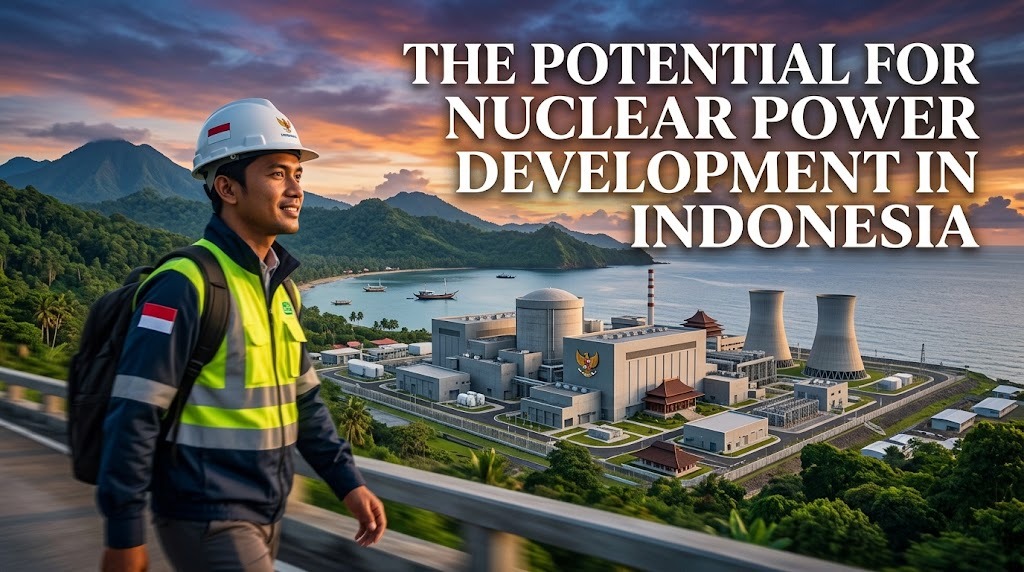
Indonesia has a growing need for reliable electricity as its population, industries, digital infrastructure, and economy continue to develop. At the same time, the country is working to diversify its energy mix and reduce emissions from the power sector. Nuclear power is increasingly being considered as one option within Indonesia’s long term energy strategy. The government has included nuclear energy in several national energy and electricity planning documents.
The potential for nuclear power development in Indonesia is significant, but building a nuclear power plant requires careful preparation. Safety, regulation, financing, site selection, human resources, technology, electricity networks, and public acceptance all need to be addressed. Nuclear power should therefore be viewed as part of a broader national energy system rather than as a single solution to Indonesia’s energy challenges.
GROWING ELECTRICITY DEMAND
Indonesia’s electricity demand is expected to increase as economic activity and industrial development expand. Manufacturing, transportation, digital services, data centers, and households all require a reliable electricity supply. This creates a need for power plants that can provide electricity consistently over long periods. Nuclear power could potentially contribute to this demand because reactors are designed for stable and continuous electricity generation.
The government has already included nuclear power in Indonesia’s electricity planning. The 2025 to 2034 Electricity Supply Business Plan includes 500 megawatts of nuclear capacity, with two planned small reactor units of 250 megawatts each for Sumatra and Kalimantan. The first commercial nuclear power capacity is planned for operation in 2032 under the current planning framework.
SUPPORTING ENERGY DIVERSIFICATION
Indonesia has a wide range of energy resources, including coal, natural gas, hydropower, geothermal energy, solar power, wind energy, and bioenergy. Nuclear power could add another source to this diverse energy mix. Greater diversification can reduce excessive dependence on particular fuels or technologies. It can also give the electricity system more flexibility when energy markets and supply conditions change.
Nuclear power would not necessarily replace renewable energy. Instead, it could operate alongside solar, wind, geothermal, hydropower, energy storage, and other technologies. Indonesia’s current electricity plan emphasizes a large expansion of renewable energy and storage while also introducing nuclear power.
SUPPORTING LOW CARBON ELECTRICITY
Nuclear power generates electricity through nuclear fission rather than burning fossil fuels. As a result, nuclear reactors do not produce direct carbon dioxide emissions from fuel combustion during electricity generation. This characteristic makes nuclear power a low carbon electricity source. It can therefore potentially support Indonesia’s long term efforts to reduce emissions from the electricity sector.
Indonesia has incorporated nuclear energy into its broader energy transition planning. The government has identified nuclear power as one option for supporting the country’s long term decarbonization strategy and Net Zero Emission target. However, nuclear development still needs to follow strict safety, environmental, and regulatory requirements.
POTENTIAL FOR SMALL MODULAR REACTORS
One technology that may be relevant to Indonesia is the Small Modular Reactor or SMR. SMRs generally have smaller unit capacities than many conventional nuclear reactors and are designed around modular construction concepts. Their characteristics may offer potential advantages for electricity systems that do not require a very large single generating unit. This could be particularly relevant when considering Indonesia’s geographically distributed electricity demand.
However, SMR technology still requires detailed technical and regulatory assessment. A smaller reactor does not automatically mean that every project will be cheaper or easier to develop. Indonesia needs to evaluate safety, construction, fuel supply, grid requirements, financing, waste management, and technology readiness before selecting a specific reactor design.
POTENTIAL LOCATIONS FOR NUCLEAR POWER
Indonesia’s geography makes site selection especially important for nuclear development. Potential locations need to be assessed based on geological conditions, seismic risks, cooling requirements, environmental characteristics, infrastructure, and access to electricity networks. Emergency planning and the characteristics of surrounding communities must also be considered. A technically suitable location must meet strict safety and regulatory requirements before construction can begin.
Current electricity planning identifies Sumatra and Kalimantan as locations for the planned initial 500 megawatts of nuclear capacity. Government information states that 250 megawatts is planned for the Sumatra electricity system and another 250 megawatts for Kalimantan. These plans remain subject to the required preparation, evaluation, and regulatory processes.
DEVELOPING HUMAN RESOURCES
Nuclear power requires highly skilled professionals in engineering, science, operations, radiation protection, safety, regulation, maintenance, and emergency response. Indonesia therefore needs to develop qualified human resources alongside its nuclear infrastructure. Universities, research institutions, government agencies, and industry can all contribute to this process. Strong education and training systems are essential for building a safe and sustainable nuclear sector.
Human resource development is already part of Indonesia’s preparation for nuclear energy. The government has emphasized cooperation and capacity building with international partners to strengthen expertise and institutional readiness. This preparation is important because nuclear safety depends not only on reactor technology but also on the people responsible for operating, regulating, maintaining, and supervising nuclear facilities.
STRENGTHENING REGULATION AND SAFETY
Nuclear power requires a strong regulatory framework before a reactor can be constructed and operated. Regulations need to cover site selection, design, construction, operation, radiation protection, emergency preparedness, security, radioactive waste, and decommissioning. Independent oversight is important to ensure that safety requirements are consistently followed. This makes regulatory preparation one of the most important parts of Indonesia’s nuclear development process.
The Indonesian government has been preparing institutional and regulatory foundations for nuclear power development. The Ministry of Energy and Mineral Resources has identified regulation and institutional arrangements as important steps toward implementing nuclear power. Safety and public acceptance have also been recognized as major challenges that need to be addressed.
INVESTMENT AND ECONOMIC OPPORTUNITIES
Nuclear power development could create opportunities for investment, technology transfer, skilled employment, and supporting industries. A nuclear project requires expertise in construction, engineering, manufacturing, maintenance, research, safety, and other specialized fields. Developing these capabilities could strengthen Indonesia’s broader technological capacity. The project could also create long term demand for highly skilled workers.
At the same time, nuclear power projects require substantial capital and long development periods. Financing must account for construction costs, regulatory requirements, safety systems, fuel management, waste management, and eventual decommissioning. Indonesia therefore needs a carefully designed financial and institutional model before major construction begins.
PUBLIC ACCEPTANCE AND TRANSPARENCY
Public acceptance is another important factor in Indonesia’s nuclear development. People need clear and accurate information about how nuclear power works, its potential benefits, its risks, and the measures used to manage those risks. Communities near potential sites should have opportunities to receive information and participate in relevant consultation processes. Transparent communication can help build public understanding and trust.
Public acceptance cannot be created through information campaigns alone. It requires consistent safety performance, credible regulation, open communication, and meaningful engagement with affected communities. The government has identified public acceptance as one of the challenges that must be addressed alongside technical and safety issues.
LONG TERM ROLE IN INDONESIA’S ENERGY MIX
The potential role of nuclear power extends beyond the initial projects planned for the early 2030s. Government projections indicate that nuclear energy could have a much larger role in Indonesia’s long term energy mix. One government projection discussed a potential nuclear capacity of around 35 gigawatts by 2060, although long term implementation will depend on future policies, technology, electricity demand, financing, and safety considerations.
This means the first nuclear power project could serve as an important learning stage. Indonesia can use early experience to strengthen regulation, develop skilled workers, improve infrastructure, and evaluate the performance of the selected technology. Future expansion should be based on evidence and lessons learned rather than simply increasing capacity.
CONCLUSION
Indonesia has considerable potential for nuclear power development as the country seeks reliable electricity, greater energy diversification, and lower carbon emissions. Nuclear power has already entered official electricity planning, with 500 megawatts included in the 2025 to 2034 plan and initial capacity targeted for Sumatra and Kalimantan. The country is also exploring the institutional, regulatory, technological, and human resource foundations needed to support nuclear development.
However, developing nuclear power is a complex long term process. Indonesia must ensure strong safety standards, appropriate technology, suitable locations, reliable financing, skilled personnel, responsible waste management, and meaningful public engagement. If these conditions are addressed carefully, nuclear power could become an important component of Indonesia’s future electricity system alongside renewable energy and other low carbon technologies.
Tentang Penulis
Gusti Ayu Tita P
Penulis — Universitas STEKOM
Penulis aktif yang berfokus pada isu-isu akademik, teknologi pendidikan, dan pengembangan sumber daya manusia di lingkungan kampus.