
The Relationship Between Corruption and Declining Public Trust in Government
Gusti Ayu Tita P
13 Oktober 2026
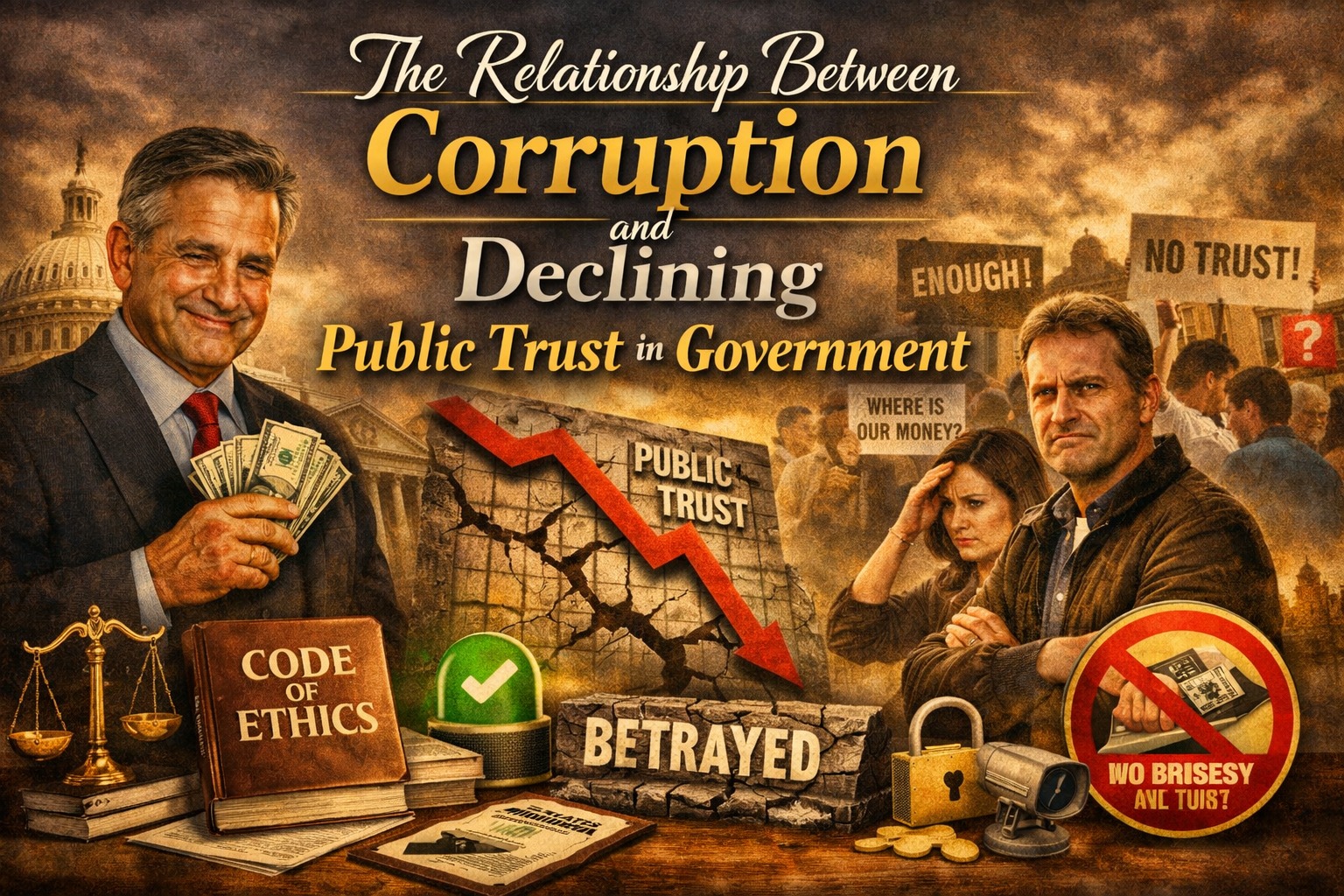
Corruption has long been recognized as one of the most serious obstacles to good governance, sustainable development, and social stability. It occurs when individuals misuse public authority or official positions for personal gain, often at the expense of society. Whether it involves bribery, embezzlement, favoritism, or abuse of power, corruption weakens government institutions and damages public confidence.
One of the most significant consequences of corruption is the decline in public trust in government. Citizens expect governments to manage public resources fairly, enforce laws equally, and provide quality public services. When corruption becomes widespread, people begin to question the integrity of public officials and lose confidence in government institutions. Understanding this relationship is essential for creating more transparent, accountable, and trustworthy governments.
UNDERSTANDING THE CONNECTION BETWEEN CORRUPTION AND PUBLIC TRUST
Corruption directly influences how citizens perceive their government. When government officials are involved in unethical practices, people often believe that decisions are made based on personal interests rather than the public good. This perception creates disappointment and reduces confidence in public institutions.
As corruption cases become more visible through news reports and social media, public awareness also increases. Even a few high-profile scandals can affect the reputation of an entire government. Over time, repeated corruption incidents make citizens feel that honesty and accountability are no longer priorities within public institutions.
HOW CORRUPTION DAMAGES GOVERNMENT CREDIBILITY
A government's credibility depends on its ability to act fairly, honestly, and consistently. Government corruption damages this credibility because it creates the impression that laws are applied unequally and that certain individuals receive unfair advantages. This weakens the principle of equal justice that democratic societies depend on.
Citizens who no longer trust government institutions may become less willing to cooperate with public policies, pay taxes, or participate in civic activities. In severe cases, declining trust can increase political polarization, encourage protests, and reduce voter participation during elections. These outcomes make effective governance much more difficult.
THE IMPACT OF CORRUPTION ON PUBLIC SERVICES
One of the clearest effects of corruption is the decline in the quality of public services. Funds intended for education, healthcare, infrastructure, and social welfare may be diverted for private benefit instead of serving community needs. As a result, essential services become less effective and less accessible.
Poor public services reinforce the belief that government institutions cannot be trusted. Citizens who repeatedly experience delays, unfair treatment, or demands for bribes often lose confidence in public administration. This creates a cycle in which corruption and declining trust continue to strengthen each other.
ECONOMIC AND SOCIAL CONSEQUENCES OF DECLINING PUBLIC TRUST
The relationship between corruption and public trust extends beyond politics and government administration. Investors may hesitate to invest in countries where corruption is widespread because they fear unpredictable regulations and unfair business practices. Lower investment can reduce economic growth, employment opportunities, and overall national competitiveness.
Socially, declining trust weakens cooperation between citizens and government institutions. People may become more skeptical of public policies, emergency responses, and development programs. A society with low trust often experiences greater division, making it more difficult to solve collective challenges effectively.
STRATEGIES TO REDUCE CORRUPTION AND REBUILD PUBLIC TRUST
Building public trust in government requires strong commitments to transparency, accountability, and ethical leadership. Governments should strengthen anti-corruption agencies, improve financial oversight, enforce strict legal penalties, and ensure that public officials are held responsible for misconduct. Open access to government information also allows citizens to monitor how public funds are managed.
Public participation plays an equally important role. Citizens, civil society organizations, journalists, and independent watchdogs help expose corruption and encourage greater accountability. Civic education can also increase public awareness about ethical governance and empower individuals to report corrupt practices without fear.
THE ROLE OF ETHICAL LEADERSHIP IN PREVENTING CORRUPTION
Ethical leadership is essential for creating a culture of integrity within government institutions. Leaders who consistently demonstrate honesty, fairness, and responsibility inspire public confidence and encourage ethical behavior among public employees. Strong leadership also establishes clear standards that discourage misconduct.
When governments combine ethical leadership with effective anti-corruption policies, public trust gradually improves. Citizens are more likely to support government initiatives when they believe leaders are acting in the public interest. Maintaining integrity at every level of government creates stronger institutions, promotes sustainable development, and strengthens democracy over the long term.
CONCLUSION
The relationship between corruption and declining public trust in government is both direct and significant. Corruption undermines government credibility, weakens public services, slows economic progress, and reduces citizens' confidence in public institutions. If left unaddressed, it can threaten democratic values and social stability.
Reducing corruption requires continuous efforts from governments, public officials, businesses, and citizens alike. By promoting transparency, strengthening accountability, encouraging ethical leadership, and supporting active public participation, societies can rebuild trust and create governments that genuinely serve the interests of all people.
Tentang Penulis
Gusti Ayu Tita P
Penulis — Universitas STEKOM
Penulis aktif yang berfokus pada isu-isu akademik, teknologi pendidikan, dan pengembangan sumber daya manusia di lingkungan kampus.



