The Role of Civil Servants in Supporting Indonesia’s Educational Progress
Gusti Ayu Tita P
30 Juli 2026
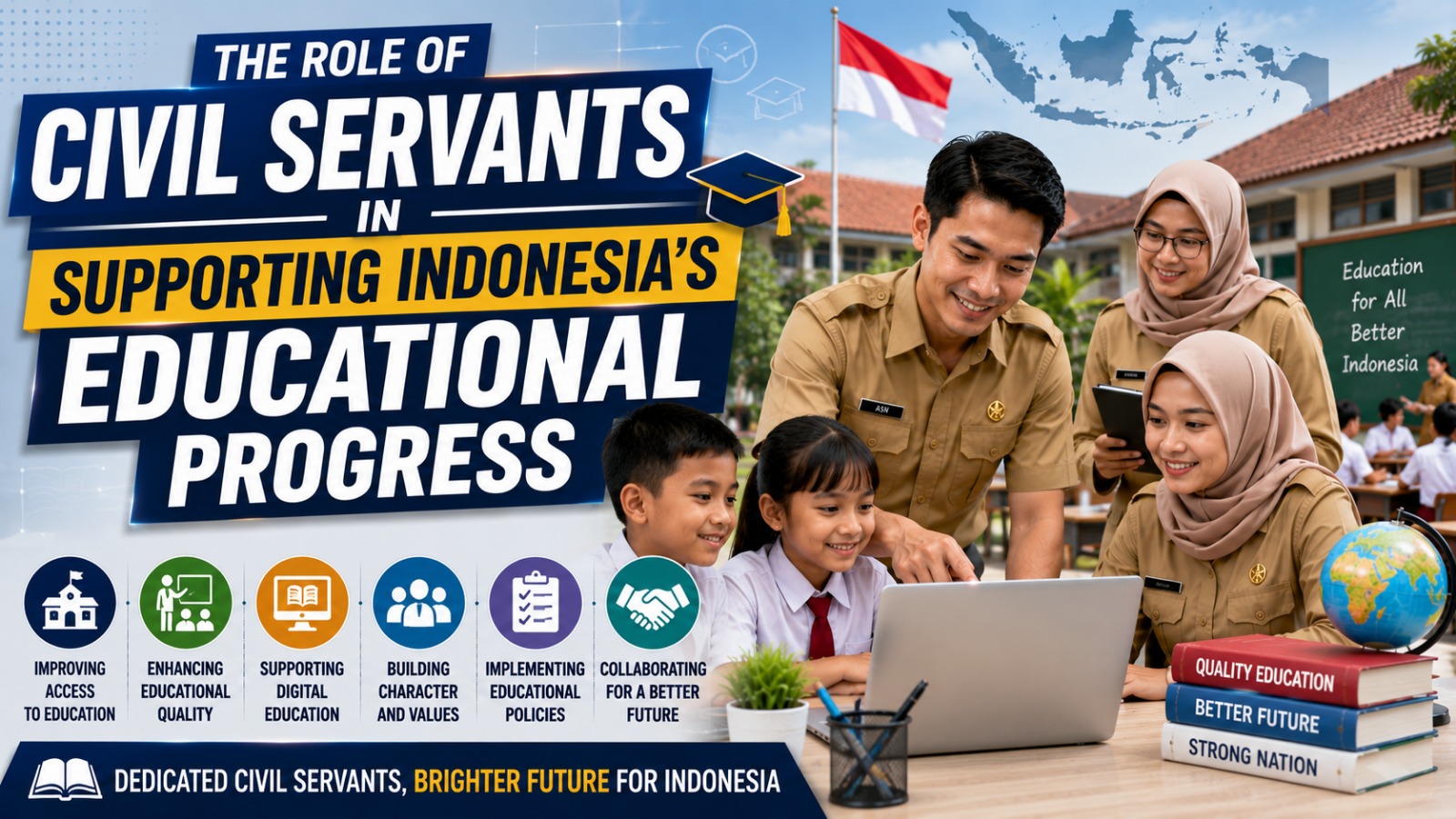
Education is one of the most important foundations for national development. In Indonesia, improving the quality of education has become a major priority to prepare future generations for global competition and technological advancement. Civil servants play a significant role in supporting Indonesia’s educational progress through policy implementation, public service, and educational management.
From teachers and administrative staff to government officials in the education sector, civil servants contribute directly to creating better learning opportunities for students across the country. Their dedication helps improve access, quality, and equality in Indonesia’s education system.
UNDERSTANDING THE ROLE OF CIVIL SERVANTS IN EDUCATION
Civil servants in the education sector are responsible for implementing government programs and ensuring educational services run effectively. Their duties include managing schools, developing educational policies, supporting teachers, and improving learning facilities.
In Indonesia, civil servants contribute to:
- Educational administration
- Curriculum development
- Teacher management
- School supervision
- Public education programs
These responsibilities are essential for maintaining an organized and efficient education system.
IMPROVING ACCESS TO EDUCATION
One of the major goals of the Indonesian government is providing equal educational access for all citizens, including those in rural and remote areas.
Civil servants help achieve this goal by:
- Building educational infrastructure
- Distributing teachers to underserved regions
- Managing scholarship programs
- Supporting free education initiatives
- Improving school facilities
Their efforts help more children receive proper education regardless of geographical or economic challenges.
SUPPORTING EDUCATIONAL QUALITY
Educational progress is not only about access but also about quality. Civil servants play an important role in improving teaching standards and educational performance.
They support educational quality through:
- Teacher training programs
- Curriculum evaluation
- Educational monitoring
- School accreditation
- Learning resource development
Continuous improvement in these areas helps students gain better knowledge and skills for the future.
ENCOURAGING DIGITAL TRANSFORMATION IN EDUCATION
Technology has transformed the education sector significantly. Digital learning systems, online classes, and educational platforms are becoming increasingly important in Indonesia.
Civil servants contribute to digital transformation by:
- Developing online learning systems
- Supporting digital literacy programs
- Providing technological infrastructure
- Managing educational data systems
- Encouraging innovation in teaching methods
Digital education helps students and teachers adapt to modern learning environments more effectively.
PROMOTING CHARACTER EDUCATION
Indonesia’s education system also focuses on character development in addition to academic achievement. Civil servants support programs that encourage discipline, honesty, responsibility, and national values among students.
Character education helps create future generations who are not only intelligent but also ethical and socially responsible.
Programs related to character education often emphasize:
- Nationalism
- Integrity
- Tolerance
- Teamwork
- Social responsibility
These values are important for building strong communities and national unity.
SUPPORTING EDUCATIONAL POLICIES
Government educational policies require effective implementation to achieve national goals. Civil servants help ensure that educational regulations and programs are applied properly in schools and institutions.
Their responsibilities include:
- Monitoring policy implementation
- Coordinating with educational institutions
- Managing educational budgets
- Evaluating program effectiveness
- Reporting educational progress
Strong policy implementation helps improve the efficiency and success of educational programs.
FACING CHALLENGES IN INDONESIA’S EDUCATION SYSTEM
Although Indonesia has made significant educational progress, several challenges still exist. Civil servants must work continuously to address issues such as:
- Unequal educational access
- Limited infrastructure
- Teacher shortages
- Technological gaps
- Educational quality differences
Solving these challenges requires collaboration, innovation, and strong commitment from government institutions.
THE IMPORTANCE OF PROFESSIONALISM AND ETHICS
Civil servants in the education sector must maintain professionalism and ethical standards in their work. Transparency, responsibility, and dedication are important for building public trust in educational institutions.
Professional civil servants can:
- Improve service quality
- Support fair educational opportunities
- Maintain accountability
- Encourage educational innovation
- Strengthen public confidence
Ethical behavior ensures that educational programs benefit society effectively and fairly.
CONCLUSION
Civil servants play a vital role in supporting Indonesia’s educational progress. Through policy implementation, educational management, digital transformation, and public service, they help improve access and quality in the national education system.
As Indonesia continues to develop, civil servants must remain committed to innovation, professionalism, and continuous improvement. Their contributions are essential for creating a stronger, smarter, and more competitive future generation.
Tentang Penulis
Gusti Ayu Tita P
Penulis — Universitas STEKOM
Penulis aktif yang berfokus pada isu-isu akademik, teknologi pendidikan, dan pengembangan sumber daya manusia di lingkungan kampus.