
The Role of Decentralization in Improving Public Service Quality
Gusti Ayu Tita P
4 Oktober 2026
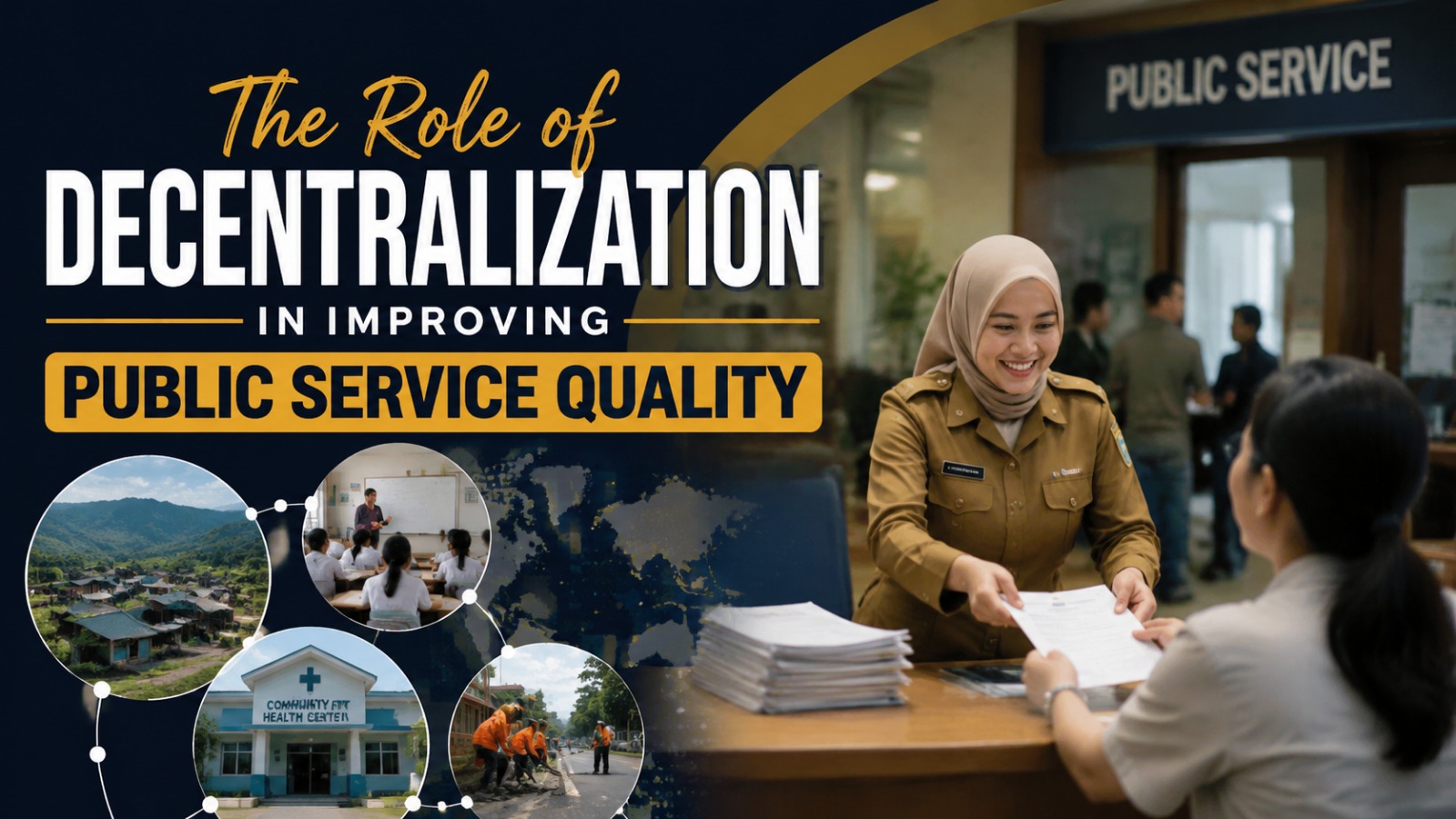
Decentralization is a government system that transfers some authority and responsibility from the central government to local governments. This approach allows regional authorities to manage public affairs based on the needs and characteristics of their communities. In modern governance, decentralization plays an important role in creating more effective and responsive public services.
The implementation of decentralization encourages local governments to make faster decisions and develop programs that are more suitable for citizens. Through this system, public services such as education, healthcare, administration, and infrastructure can be managed closer to the people. As a result, communities can receive services that are more efficient, accessible, and relevant to their needs.
THE IMPORTANCE OF LOCAL GOVERNMENT AUTHORITY
Giving authority to local governments allows them to understand community problems more deeply. Local officials usually have better knowledge about regional conditions compared to central authorities. This advantage helps them design policies that match local priorities and improve the quality of public services.
Local government authority also creates opportunities for innovation in service management. Each region can develop creative solutions based on its resources and challenges. For example, some areas may use digital technology to simplify administrative services, while others may focus on improving healthcare facilities or educational programs.
Furthermore, decentralization encourages greater community participation in government processes. Citizens can provide feedback directly to local leaders, making public services more transparent and accountable. This relationship between government and society helps build trust and improves overall service performance.
HOW DECENTRALIZATION IMPROVES SERVICE EFFICIENCY?
One of the main benefits of decentralization is improving the efficiency of public service delivery. When decisions are made at the local level, governments can respond faster to public needs without waiting for approval from central authorities. This reduces delays and allows problems to be solved more effectively.
Efficient public services can improve citizens' experiences when accessing government facilities. For instance, local governments can create simpler procedures for population registration, business permits, and social assistance programs. These improvements reduce unnecessary bureaucracy and make services easier to access.
In addition, decentralization supports better resource management. Local governments can allocate budgets according to the most urgent needs in their regions. Proper financial planning helps ensure that public resources are used effectively to provide maximum benefits for communities.
THE ROLE OF TECHNOLOGY IN DECENTRALIZED PUBLIC SERVICES
The development of digital technology has strengthened the impact of decentralization in public services. Local governments can now use online platforms to provide faster and more convenient services for citizens. Digital transformation helps reduce administrative barriers and increases accessibility, especially for people living in remote areas.
Technology also supports government transparency by allowing citizens to monitor public programs and access information easily. Online systems for licensing, complaints, and public information services can improve accountability. These innovations encourage governments to provide better services according to community expectations.
However, successful digital public services require proper infrastructure and human resource development. Local governments must ensure that employees have sufficient skills to operate technology effectively. Without proper preparation, digital systems may not provide optimal results.
CHALLENGES IN IMPLEMENTING DECENTRALIZATION
Although decentralization provides many benefits, its implementation also faces several challenges. One major challenge is the difference in capacity between regions. Some local governments have better financial resources and infrastructure, while others may struggle to provide high-quality services.
Another challenge is maintaining good governance at the local level. Decentralization requires strong leadership, transparency, and accountability to prevent misuse of authority. Without effective supervision, greater local power may create problems such as inefficient management or corruption.
To overcome these challenges, governments need continuous improvement through training, evaluation, and cooperation between central and local authorities. Strengthening local capacity is essential to ensure that decentralization truly improves public service quality.
THE FUTURE OF DECENTRALIZED PUBLIC SERVICE QUALITY
The future of decentralization depends on how governments manage authority, resources, and innovation. With proper strategies, decentralization can become an effective approach to creating more responsive and citizen-focused public services. Local governments must continue improving their systems to meet changing community needs.
Quality public services require collaboration between government institutions, communities, and private sectors. By working together, different parties can develop solutions that support sustainable development. This cooperation can help create public services that are more inclusive and effective.
In the future, decentralization supported by technology and strong governance will become increasingly important. Governments that successfully implement decentralization can provide better services, increase public satisfaction, and strengthen the relationship between citizens and authorities.
CONCLUSION
Decentralization has an important role in improving the quality of public services by bringing decision-making closer to communities. Through stronger local authority, governments can provide services that are faster, more efficient, and better suited to public needs.
Although challenges such as unequal regional capacity and governance issues remain, proper management can maximize the benefits of decentralization. With continuous improvement, innovation, and community involvement, decentralization can support the creation of effective public services and better government systems.
Tentang Penulis
Gusti Ayu Tita P
Penulis — Universitas STEKOM
Penulis aktif yang berfokus pada isu-isu akademik, teknologi pendidikan, dan pengembangan sumber daya manusia di lingkungan kampus.



