The Role Of Education In Developing Love For The Homeland
Gusti Ayu Tita P
5 Agustus 2026
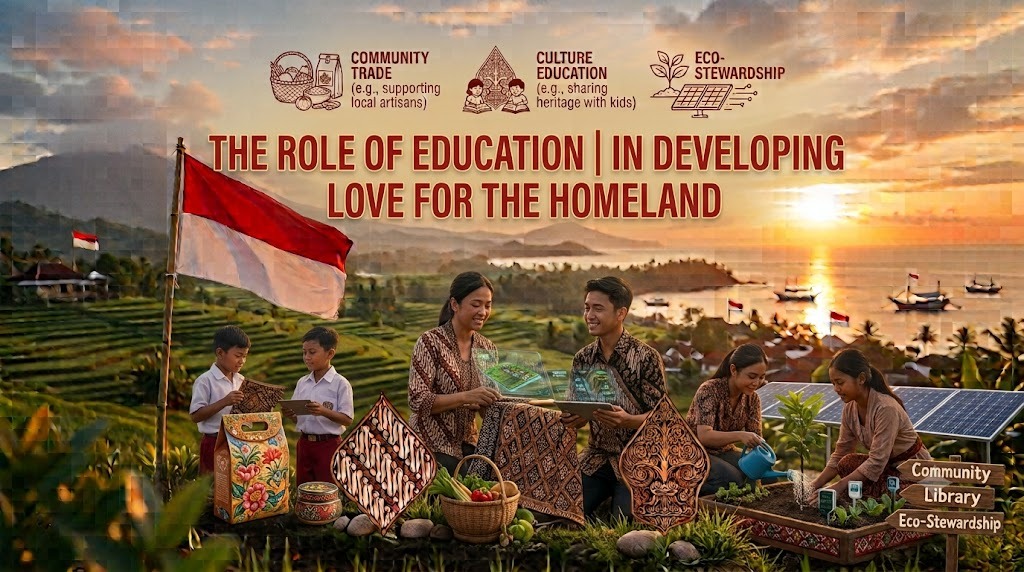
Education plays an important role in developing love for the homeland. Through education, students can learn about their country's history, culture, national values, and social responsibilities. Education does not only provide academic knowledge but also helps develop character and attitudes. When national values are introduced through meaningful learning, students can understand the importance of caring for their country.
Developing love for the homeland through education does not mean teaching students to reject other cultures or ideas. Instead, it encourages them to appreciate Indonesian identity while remaining open to positive knowledge from around the world. Schools, families, and communities can work together to create learning experiences that strengthen national pride. In this way, education can prepare a generation that is knowledgeable, responsible, tolerant, and committed to Indonesia's future.
UNDERSTANDING THE CONNECTION BETWEEN EDUCATION AND NATIONAL PRIDE
Education provides knowledge that helps students understand their relationship with the homeland. Students can learn how Indonesia was formed, how its communities developed, and why national unity is important. Understanding history and culture can create a stronger sense of belonging. This knowledge can become a foundation for developing national pride.
Education also teaches students how to become responsible members of society. Discipline, honesty, cooperation, tolerance, and respect can be developed through classroom activities and daily interactions. These values encourage students to care not only about themselves but also about others. As a result, education can connect personal development with national responsibility.
LEARNING INDONESIAN HISTORY
History is an important part of developing love for the homeland. Through history lessons, students can learn about the struggles, achievements, and experiences of previous generations. They can understand the importance of independence and the efforts made to build national unity. Historical knowledge can also help students appreciate the country's journey.
Schools can introduce history through books, documentaries, museums, historical sites, discussions, and project-based learning. Teachers can connect historical events with current issues to make lessons more meaningful. Students should also be encouraged to examine information critically and use reliable sources. Understanding history can help them value the present while thinking responsibly about the future.
INTRODUCING INDONESIAN CULTURAL DIVERSITY
Indonesia has a rich cultural heritage that includes languages, traditional arts, music, dances, clothing, food, and local customs. Education can introduce students to this diversity and teach them to appreciate differences. Understanding various cultures can reduce prejudice and encourage respect. Cultural education can therefore support both national pride and social harmony.
Schools can organize cultural exhibitions, traditional performances, local studies, art projects, and cultural workshops. Students can also interview community members or research traditions from different regions. These activities allow students to experience culture rather than simply read about it. They can develop a stronger connection with Indonesia's diverse identity.
TEACHING PANCASILA VALUES
Pancasila provides important values for Indonesian citizens, and education has a significant role in helping students understand and practice them. Students can learn about belief in God, humanity, national unity, democracy, and social justice. These principles can guide students in interacting with people from different backgrounds. Learning Pancasila becomes more meaningful when its values are practiced in real situations.
Teachers can encourage students to apply these values through tolerance, mutual cooperation, fair treatment, respectful discussion, and social activities. Group projects can teach cooperation, while classroom discussions can develop democratic habits. Community service can strengthen empathy and social responsibility. Through these experiences, Pancasila becomes part of students' daily behavior.
DEVELOPING TOLERANCE AND RESPECT
Indonesia's diversity requires citizens to have strong tolerance and respect for differences. Education provides opportunities for students to interact with classmates who may have different cultural, religious, or social backgrounds. These interactions can help students understand that differences are a natural part of Indonesian society. Respectful relationships can strengthen national unity.
Students can learn tolerance through group work, discussions, cultural activities, student organizations, and community programs. Teachers can also encourage students to listen to different perspectives without immediately judging others. Disagreements should be handled through respectful communication. These experiences can prepare students to live peacefully in a diverse society.
BUILDING CHARACTER THROUGH SCHOOL ACTIVITIES
Education is not limited to classroom lessons. Extracurricular activities and school programs can also develop national character. Student organizations, sports teams, arts clubs, environmental programs, and community service provide opportunities to practice responsibility. Students learn how to cooperate and manage challenges through real experiences.
School activities can strengthen discipline, leadership, teamwork, creativity, and empathy. These qualities are important for students who will eventually become members of the wider community. When students learn to take responsibility for their roles, they develop stronger character. Strong character can support their ability to contribute positively to Indonesia.
USING TECHNOLOGY FOR NATIONAL EDUCATION
Technology has created new ways to introduce national values and Indonesian culture. Students can access digital libraries, educational videos, online courses, virtual museums, and cultural resources. Digital platforms can make learning more interactive and accessible. Technology can therefore support the development of national knowledge.
However, students must also learn digital literacy and responsible online behavior. They should evaluate information before accepting or sharing it. Misinformation, hate speech, and discriminatory content can create social problems. Education can teach students to use technology as a tool for learning and positive contribution rather than conflict.
ENCOURAGING LOCAL CULTURE AND PRODUCTS
Education can encourage students to appreciate local products and creative industries. Lessons about entrepreneurship and economics can introduce students to the role of local businesses in communities. Students can learn how Indonesian products are created and marketed. This knowledge can increase appreciation for local creativity.
Schools can organize entrepreneurship projects, local product exhibitions, craft workshops, and student business activities. Students can learn how to create products using local resources and promote them through digital platforms. These experiences can develop business skills while supporting local economic activity. Supporting Indonesian creativity can become a practical expression of national pride.
DEVELOPING ENVIRONMENTAL RESPONSIBILITY
Environmental education is also connected to love for the homeland. Indonesia has valuable natural resources that need to be protected. Students can learn about environmental problems and understand how daily behavior affects nature. This knowledge can encourage them to become responsible environmental citizens.
Schools can create activities such as recycling programs, tree planting, waste reduction campaigns, clean-up activities, and energy-saving projects. Students can work together to maintain a healthy school environment. These activities teach that environmental protection is a shared responsibility. Caring for nature means caring about the future of Indonesia.
CONNECTING EDUCATION WITH COMMUNITY SERVICE
Community service provides students with opportunities to apply what they learn. Helping communities can develop empathy, cooperation, and social responsibility. Students can participate in educational programs, environmental activities, social projects, or community events. These experiences help them understand real problems outside the classroom.
Community activities can also strengthen relationships between schools and local communities. Students learn that knowledge can be used to solve problems and provide practical benefits. Working with different groups can develop communication and teamwork skills. Such experiences help students understand that contributing to society is part of loving the homeland.
THE ROLE OF TEACHERS IN DEVELOPING NATIONAL CHARACTER
Teachers are important examples for students. Their behavior, communication, and teaching methods can influence how students understand national values. Teachers can demonstrate fairness, respect, discipline, and responsibility in everyday interactions. Positive examples can make lessons about national character more meaningful.
Teachers can also create classrooms where students feel encouraged to ask questions, express opinions respectfully, cooperate, and appreciate differences. They can connect academic subjects with real social issues. This approach allows students to understand how their knowledge can benefit society. Good teaching can therefore support both academic development and national character.
THE ROLE OF FAMILIES IN SUPPORTING EDUCATION
Schools cannot develop love for the homeland alone. Families provide the first environment where children learn values and behavior. Parents can encourage children to respect others, appreciate Indonesian culture, follow rules, and care for their surroundings. These habits can support values introduced at school.
Families can also encourage children to learn about local traditions, Indonesian history, national celebrations, and community activities. Parents who demonstrate responsibility and tolerance can become positive role models. Cooperation between families and schools can create consistent character development. When students receive similar positive messages in different environments, national values can become stronger.
EDUCATION AS PREPARATION FOR THE FUTURE
Education prepares students to become future professionals, leaders, entrepreneurs, researchers, educators, and community members. Their knowledge and character will influence the development of Indonesia. Therefore, education should provide both academic competence and a strong sense of responsibility. Students need skills that allow them to contribute effectively to society.
A future-ready generation should have critical thinking, creativity, communication skills, digital literacy, discipline, and national awareness. These abilities can help students respond to global changes without losing their connection to Indonesian identity. Education can help them become competitive while remaining responsible citizens. This balance is important for Indonesia's long-term development.
CONCLUSION
Education has a major role in developing love for the homeland because it shapes both knowledge and character. Through history, culture, Pancasila values, community service, environmental activities, and responsible technology use, students can learn how to contribute to Indonesia. Schools provide important learning experiences, while teachers and families reinforce these values through positive examples. Education therefore becomes a powerful foundation for developing national pride.
Ultimately, loving the homeland means caring about its people, culture, environment, and future. Education can help students understand this responsibility and turn it into everyday action. By developing knowledgeable, tolerant, disciplined, and creative young people, Indonesia can strengthen its national unity and prepare for future challenges. A strong education system can therefore help build a generation that is proud of Indonesia and ready to contribute to its progress.
Tentang Penulis
Gusti Ayu Tita P
Penulis — Universitas STEKOM
Penulis aktif yang berfokus pada isu-isu akademik, teknologi pendidikan, dan pengembangan sumber daya manusia di lingkungan kampus.