The Role of Education in Fostering the Spirit of Independence
Gusti Ayu Tita P
4 Agustus 2026
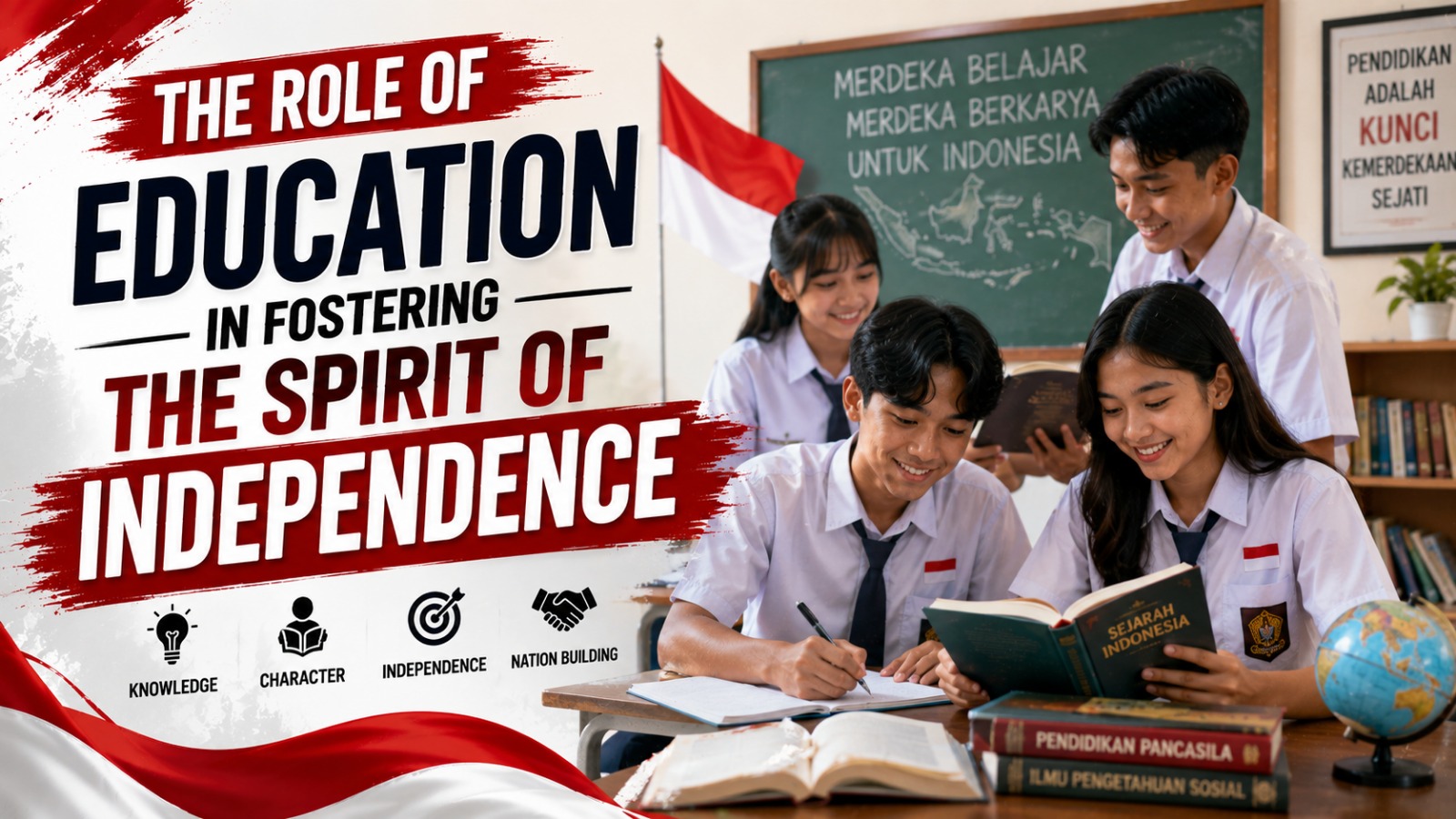
The Role of Education in Fostering the Spirit of Independence is essential in shaping responsible, knowledgeable, and patriotic citizens. Education is more than a process of acquiring knowledge; it is also a powerful tool for developing character, national awareness, and social responsibility. Through quality learning experiences, students gain a deeper understanding of the nation's history, cultural diversity, and the values of independence. These lessons encourage every generation to contribute positively to society while preserving the spirit of freedom and unity.
EDUCATION AS THE FOUNDATION OF NATIONAL CHARACTER
Education plays a fundamental role in building strong national character from an early age. Schools introduce students to the nation's history, cultural heritage, and the struggles of national heroes who fought for independence. Learning about these historical events helps students appreciate the value of freedom and develop a deep sense of patriotism. As a result, education becomes a bridge that connects past sacrifices with future responsibilities.
Beyond academic knowledge, education also nurtures values such as honesty, discipline, and respect. These qualities encourage students to become responsible citizens who contribute positively to their communities. Character education prepares young people to face modern challenges while maintaining strong ethical principles. A nation with educated and principled citizens is better equipped to achieve sustainable development.
PRESERVING THE SPIRIT OF INDEPENDENCE THROUGH LEARNING
The spirit of independence should be passed from one generation to another through meaningful educational experiences. History lessons, cultural activities, and civic education help students understand why independence remains valuable today. These learning opportunities inspire students to appreciate national achievements and recognize the importance of protecting freedom. Education transforms historical knowledge into practical values that guide everyday behavior.
Teachers play a significant role in this process by serving as role models for integrity, responsibility, and cooperation. Their guidance encourages students to practice these values both inside and outside the classroom. Educational institutions also organize flag ceremonies, history competitions, and community projects that strengthen patriotic attitudes. Such activities keep the spirit of independence alive among younger generations.
DEVELOPING RESPONSIBLE AND INNOVATIVE YOUNG GENERATIONS
Modern education prepares young people to become innovative thinkers and responsible leaders. Critical thinking, creativity, communication, and collaboration are essential skills for solving future challenges. These abilities enable students to contribute to national development through science, technology, entrepreneurship, and social innovation. Education empowers young generations to transform ideas into meaningful achievements.
Innovation should always be supported by strong moral values. Students who combine knowledge with integrity are more likely to make ethical decisions that benefit society. Educational environments encourage curiosity, lifelong learning, and resilience when facing difficulties. These qualities reflect the same determination shown by national heroes during the struggle for independence.
THE CONTRIBUTION OF FAMILIES AND COMMUNITIES
Education extends beyond the classroom and requires the active involvement of families and communities. Parents play an important role in teaching respect, responsibility, and love for the nation through daily examples. A supportive home environment reinforces the positive values introduced at school. Together, families and educators create consistent learning experiences that strengthen children's character.
Communities also contribute by organizing cultural events, volunteer activities, and public discussions about national history. These initiatives encourage citizens of all ages to appreciate their shared heritage and work together for the common good. Collaboration among schools, families, and local organizations strengthens the overall educational process. Strong partnerships help preserve patriotic values across generations.
EDUCATION AS A PATHWAY TO A STRONGER NATION
Education remains one of the most effective investments for building a prosperous and united nation. Citizens who receive quality education are better prepared to contribute through innovation, leadership, and civic participation. They understand that independence should be protected through hard work, unity, and social responsibility rather than taken for granted. Every educational achievement becomes a contribution to national progress.
As the world continues to evolve, education must also adapt while preserving its core mission of developing responsible citizens. Integrating modern technology with historical understanding allows students to appreciate the past while preparing for the future. By strengthening educational systems, nations ensure that the spirit of independence continues to inspire future generations. Education therefore remains the cornerstone of national development and lasting unity.
CONCLUSION
The Role of Education in Fostering the Spirit of Independence goes far beyond academic learning. It develops patriotism, character, innovation, and responsibility, enabling citizens to preserve freedom while contributing to national progress. Schools, families, and communities all share the responsibility of passing these values to younger generations. Through quality education and strong moral principles, the spirit of independence will continue to inspire a united, resilient, and prosperous nation.
Tentang Penulis
Gusti Ayu Tita P
Penulis — Universitas STEKOM
Penulis aktif yang berfokus pada isu-isu akademik, teknologi pendidikan, dan pengembangan sumber daya manusia di lingkungan kampus.