
The Role of Self Discipline and Consistency in Shaping Student Competitive Advantage
Gusti Ayu Tita P
1 April 2026
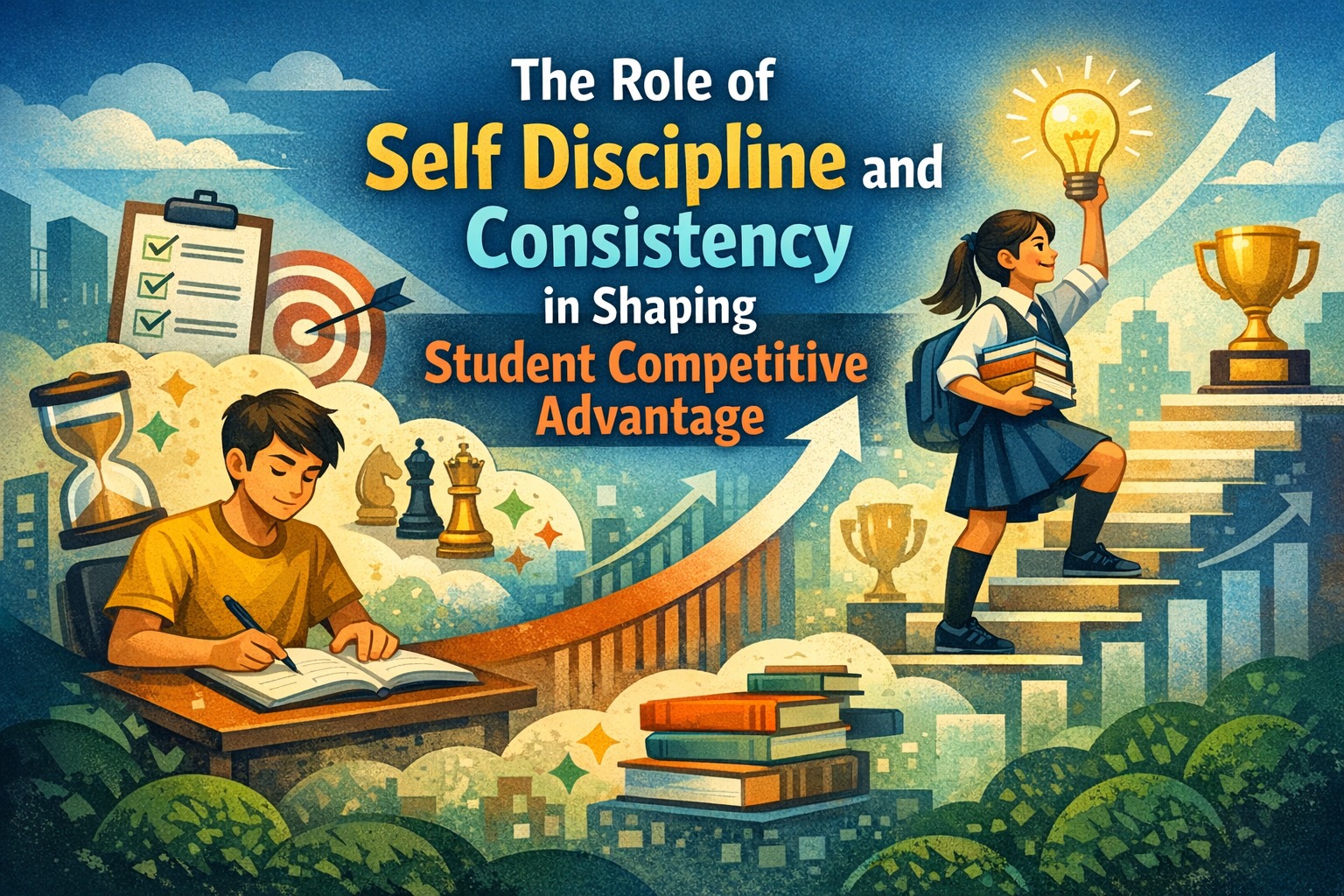
In an increasingly competitive academic environment, students are required to demonstrate more than just intelligence. The ability to maintain self discipline and consistency has emerged as a defining factor in achieving long-term success. These qualities not only influence academic performance but also shape a student’s competitive advantage in both educational and professional contexts. This article examines how self discipline and consistency contribute to sustainable student achievement.
UNDERSTANDING SELF DISCIPLINE IN ACADEMIC CONTEXT
Self discipline refers to the ability to control impulses, stay focused on goals, and maintain commitment despite distractions. In higher education, students face numerous temptations, from social media to social activities. Those who develop strong self discipline can prioritize their responsibilities and remain aligned with their academic objectives. This internal control becomes a key driver of consistent performance.
THE POWER OF CONSISTENCY IN LEARNING
Consistency is the practice of maintaining regular effort over time. Unlike short bursts of intense study, consistent learning leads to deeper understanding and long-term retention. Students who study regularly, review materials frequently, and stay engaged with coursework tend to outperform those who rely on last-minute efforts. Consistency transforms small daily actions into significant academic progress.
BUILDING HABITS THAT SUPPORT SUCCESS
Habits are the foundation of discipline and consistency. Establishing structured routines, such as fixed study schedules and goal-setting practices, helps students maintain momentum. Positive habits reduce decision fatigue and create an environment where productivity becomes automatic. Over time, these habits shape a disciplined mindset that supports continuous improvement.
OVERCOMING DISTRACTIONS AND PROCRASTINATION
One of the biggest challenges students face is procrastination. Digital distractions and lack of motivation often lead to delayed tasks and increased stress. Developing strategies such as minimizing distractions, setting clear deadlines, and breaking tasks into manageable steps can help students stay on track. Self awareness also plays a crucial role in identifying and addressing unproductive behaviors.
THE LONG TERM IMPACT ON COMPETITIVE ADVANTAGE
Self discipline and consistency extend beyond academic success. These qualities prepare students for future professional environments where reliability and persistence are highly valued. Students who consistently perform well build a strong academic record, develop critical skills, and establish a reputation for excellence. This combination creates a significant competitive advantage in the job market.
MAINTAINING MOTIVATION AND FOCUS
Sustaining discipline and consistency requires ongoing motivation. Setting meaningful goals, tracking progress, and celebrating small achievements can help maintain enthusiasm. Additionally, having a clear vision of future aspirations reinforces commitment and encourages students to stay focused even during challenging periods.
CONCLUSION
Self discipline and consistency are essential pillars of student success and competitive advantage. By cultivating these qualities, students can achieve sustained academic performance and prepare for future challenges. Success is not determined by occasional effort but by the ability to remain committed and consistent over time.
Tentang Penulis
Gusti Ayu Tita P
Penulis — Universitas STEKOM
Penulis aktif yang berfokus pada isu-isu akademik, teknologi pendidikan, dan pengembangan sumber daya manusia di lingkungan kampus.















