The Role of Social Media in Modern Political Campaign Success
Gusti Ayu Tita P
5 Oktober 2026
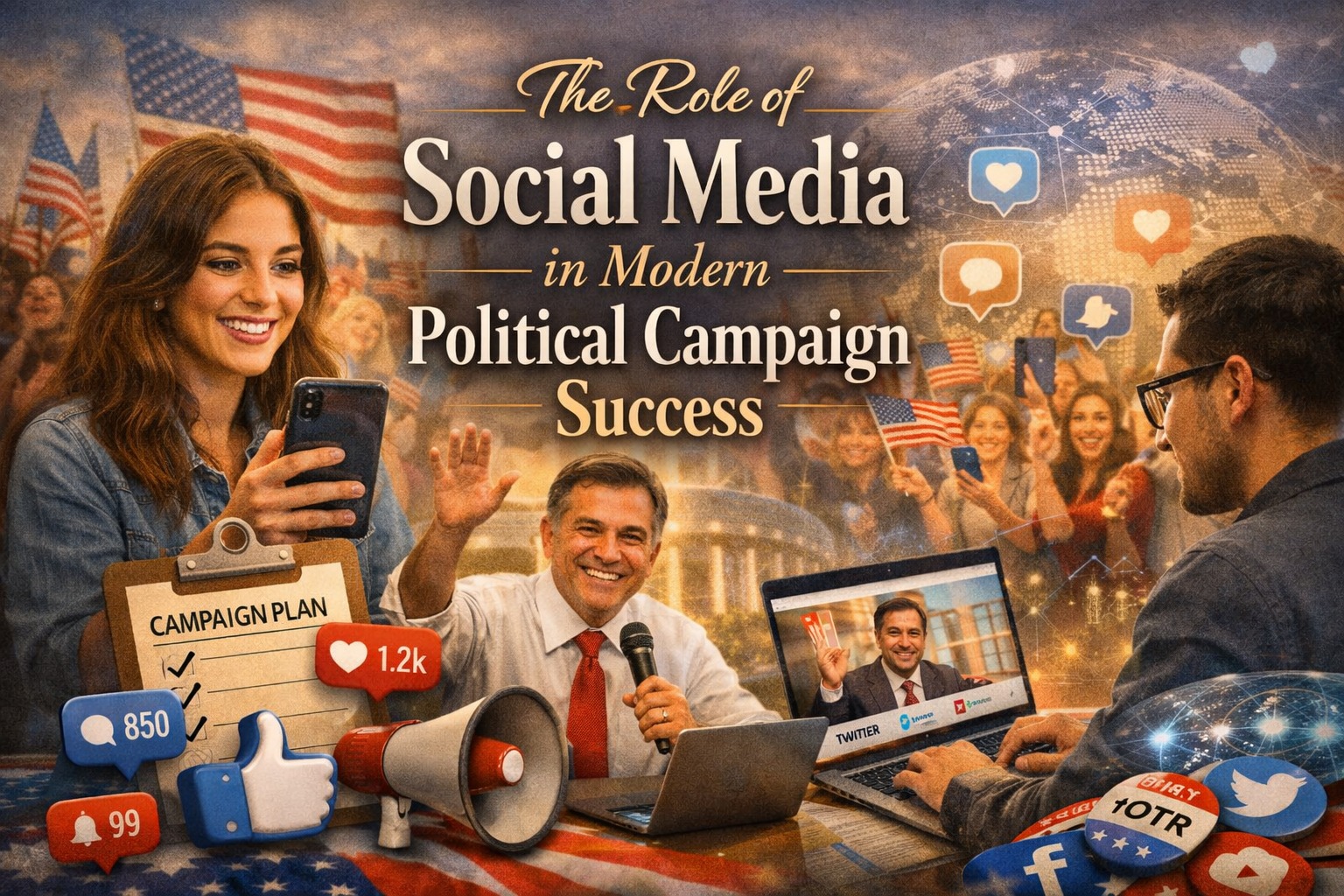
In today's digital era, social media has become one of the most influential tools in modern political campaigns. Political candidates, parties, and campaign teams rely on various social platforms to communicate with voters, share their visions, and build stronger public engagement. Unlike traditional media, social media enables two-way communication, allowing politicians to receive immediate feedback from citizens. This accessibility makes campaigns more interactive, transparent, and responsive to public concerns. As a result, understanding the role of social media has become essential for achieving political campaign success.
WHY SOCIAL MEDIA HAS TRANSFORMED POLITICAL CAMPAIGNS
The rise of social media platforms has significantly changed how political campaigns are planned and executed. Platforms such as Facebook, Instagram, X, TikTok, and YouTube allow candidates to reach millions of people within seconds. Campaign teams can publish speeches, policy updates, campaign schedules, and live events without depending entirely on television or newspapers. This direct communication helps build trust while reducing communication barriers.
Another major advantage is the ability to target specific audiences based on demographics, interests, and locations. Political organizations can create customized messages that resonate with different voter groups. This targeted approach improves campaign efficiency and increases the likelihood of engaging potential supporters. Consequently, digital political marketing has become a key component of successful election strategies.
BUILDING STRONGER VOTER ENGAGEMENT THROUGH SOCIAL MEDIA
One of the greatest strengths of social media marketing in politics is its ability to encourage active voter participation. Instead of simply receiving campaign messages, voters can comment, ask questions, participate in polls, and share opinions directly with candidates. This interaction creates a stronger sense of involvement and encourages meaningful political discussions.
Consistent engagement also helps candidates build a more authentic public image. By responding to comments, sharing behind-the-scenes content, and addressing public concerns, politicians can appear more approachable and transparent. Such openness often strengthens public confidence and increases voter loyalty during election periods.
THE IMPORTANCE OF HIGH-QUALITY CONTENT IN POLITICAL CAMPAIGNS
Successful political campaigns depend heavily on creating high-quality content that informs, educates, and inspires voters. Videos, infographics, short articles, podcasts, and live broadcasts allow campaign messages to reach audiences in engaging formats. Well-designed content can simplify complex policy issues, making them easier for the public to understand.
Storytelling is another effective strategy in political communication. Candidates who share personal experiences, community visits, and real-life success stories often establish stronger emotional connections with voters. Authentic content tends to generate more shares, comments, and discussions, expanding campaign visibility organically across multiple platforms.
DATA ANALYTICS AND TARGETED CAMPAIGN STRATEGIES
Modern political campaigns increasingly rely on data analytics to improve decision-making. Social media platforms provide valuable insights into audience behavior, including engagement rates, content preferences, and demographic information. These data help campaign teams evaluate which strategies are performing well and where improvements are needed.
Using these insights, campaign managers can adjust messaging, optimize posting schedules, and focus advertising budgets more effectively. Personalized communication based on audience interests often produces higher engagement than generic campaign messages. As technology advances, data-driven political campaigns continue to deliver more accurate and measurable results.
CHALLENGES OF SOCIAL MEDIA IN MODERN POLITICS
Although social media offers numerous benefits, it also presents several important challenges. The rapid spread of misinformation, fake news, and manipulated content can influence public opinion and create confusion among voters. Political campaigns must therefore prioritize accurate information and verify facts before publishing any content.
Another concern involves privacy and ethical data usage. Campaign organizations should respect user privacy while complying with applicable data protection regulations. Maintaining ethical standards not only protects citizens but also strengthens the credibility of political candidates and their campaigns.
BEST PRACTICES FOR EFFECTIVE SOCIAL MEDIA POLITICAL CAMPAIGNS
An effective social media campaign begins with a clear communication strategy and consistent messaging. Campaign teams should define their target audience, establish measurable objectives, and create content that aligns with their political vision. Consistency across all social platforms helps reinforce the candidate's identity and message.
It is equally important to monitor campaign performance regularly. Analyzing audience responses, engagement metrics, and trending topics allows campaign teams to make timely improvements. Combining creative content, data analysis, and authentic communication can significantly increase campaign effectiveness while building long-term public trust.
CONCLUSION
Social media has fundamentally reshaped the landscape of modern political campaigns by making communication faster, more interactive, and more accessible. Through digital political marketing, targeted messaging, engaging content, and data-driven strategies, political candidates can connect with voters more effectively than ever before. However, success also depends on maintaining transparency, credibility, and ethical communication while combating misinformation. As technology continues to evolve, social media will remain a powerful force in shaping democratic participation and influencing political campaign outcomes.
Tentang Penulis
Gusti Ayu Tita P
Penulis — Universitas STEKOM
Penulis aktif yang berfokus pada isu-isu akademik, teknologi pendidikan, dan pengembangan sumber daya manusia di lingkungan kampus.