The Role Of Social Media In The Growth Of Entertainment Content
Gusti Ayu Tita P
7 Agustus 2026
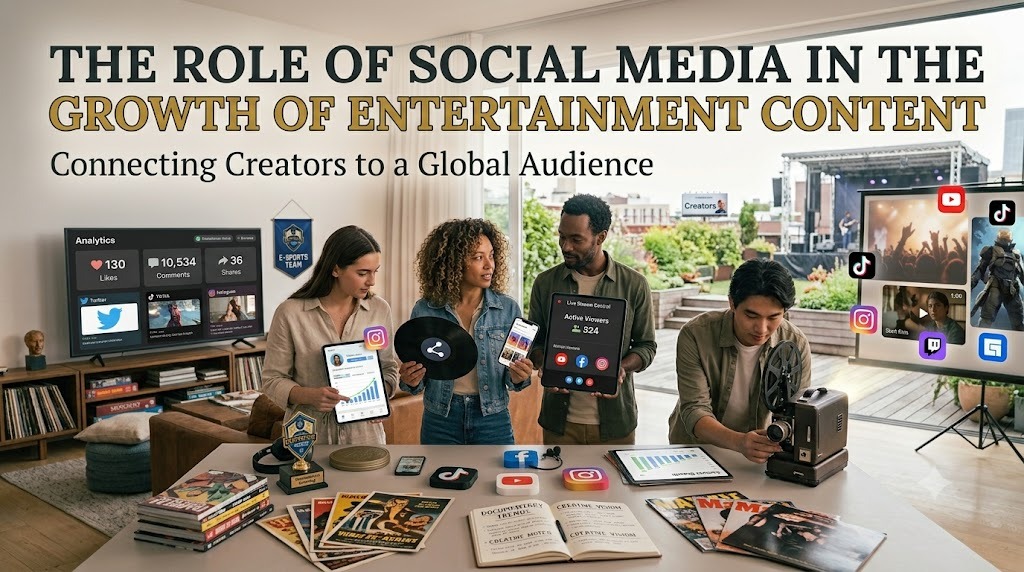
Social media has changed the way people discover, consume, and share entertainment content. Platforms that were initially designed for communication have developed into major spaces for videos, music, comedy, live streams, games, and creative content. Social media gives creators direct access to large audiences without relying entirely on traditional entertainment channels. This development has contributed significantly to the growth and diversification of digital entertainment.
The relationship between social media and entertainment continues to develop as technology and audience habits change. Users are no longer only consumers because they can also create, comment on, remix, and share content. This two-way interaction makes entertainment more dynamic and participatory. As a result, social media has become an important part of the modern entertainment ecosystem.
SOCIAL MEDIA MAKES ENTERTAINMENT EASIER TO ACCESS
One of the biggest contributions of social media is its ability to make entertainment accessible almost anywhere. Users can watch short videos, listen to music, follow live streams, or discover new creators through smartphones and other connected devices. Easy access allows audiences to enjoy entertainment without depending on traditional schedules. People can choose content based on their interests and available time.
Social media also brings different types of entertainment together in one digital environment. Users may find comedy, sports, music, movies, games, and creative videos on the same platform. This variety gives audiences more choices and encourages them to explore new forms of entertainment. Convenience and accessibility have therefore become major factors behind the growth of digital entertainment.
SOCIAL MEDIA HELPS CREATORS REACH AUDIENCES
Traditional entertainment industries often require significant resources and established distribution channels. Social media has reduced some of these barriers by allowing individuals to publish content directly. Independent creators can build audiences without depending entirely on traditional media companies. This has created opportunities for people with different backgrounds and creative skills.
Creators can also communicate directly with their followers. Comments, messages, live chats, and reactions provide immediate feedback about audience interests. Direct audience interaction can help creators understand what their viewers enjoy. This feedback can influence future content and encourage creators to improve their work.
VIRAL CONTENT ACCELERATES ENTERTAINMENT TRENDS
Social media allows entertainment content to spread rapidly through sharing and recommendations. A funny video, song, challenge, or memorable moment can reach thousands or even millions of users in a short period. Viral sharing can significantly increase the visibility of entertainment content. This rapid distribution can help unknown creators gain attention.
The viral nature of social media also influences broader entertainment trends. Songs may become popular because of short videos, while movie scenes can attract renewed attention through memes or online discussions. Social media can turn small pieces of entertainment into widely recognized trends. However, popularity can change quickly, making it difficult for creators to maintain audience attention.
AUDIENCE PARTICIPATION STRENGTHENS ENTERTAINMENT
Social media audiences are active participants in the entertainment process. Users can comment, react, share, remix, create responses, and participate in challenges. Audience participation can transform entertainment from a one-way experience into an interactive activity. This interaction often encourages people to spend more time engaging with content.
Participation can also create communities around specific interests. Fans of music, movies, games, sports, or online creators can communicate and exchange opinions. Shared interests can strengthen a sense of community among audiences. These communities can contribute to the continued popularity of entertainment content.
ALGORITHMS INFLUENCE CONTENT DISCOVERY
Social media platforms commonly use recommendation systems to determine which content appears in users' feeds. These systems may consider factors such as previous interactions, viewing behavior, and content preferences. Personalized recommendations can help users discover entertainment that matches their interests. This can increase exposure for creators whose content receives strong engagement.
However, recommendation systems can also influence what audiences repeatedly see. Users may encounter similar types of content because their previous behavior affects future recommendations. Audiences should actively explore different sources instead of relying entirely on automated recommendations. A broader range of content can provide more diverse entertainment experiences.
SOCIAL MEDIA SUPPORTS CREATIVE INNOVATION
Social media encourages creators to experiment with new entertainment formats. Short videos, interactive posts, live broadcasts, filters, trends, and collaborative content have become common forms of digital creativity. The fast pace of social media encourages creators to develop fresh ideas. Successful formats can quickly inspire new variations from other users.
Technology also makes content production more accessible. Smartphones and editing applications allow individuals to record and edit content without expensive professional equipment. Lower production barriers can increase the number and diversity of creators. This contributes to a more competitive and creative entertainment environment.
SOCIAL MEDIA CONNECTS ENTERTAINMENT WITH MARKETING
Entertainment content and marketing are increasingly connected through social media. Brands can collaborate with creators, sponsor content, promote products, or use entertaining campaigns to attract audiences. Entertainment can make promotional messages more engaging and easier to share. Creator partnerships can also introduce products to specific communities.
For creators, social media can provide opportunities to monetize their audiences. Advertising, brand partnerships, memberships, and other digital income models can support content production. A strong audience can become an important asset for creators and entertainment businesses. However, transparency and responsible advertising are important for maintaining audience trust.
SOCIAL MEDIA CHANGES AUDIENCE EXPECTATIONS
Social media has influenced what audiences expect from entertainment content. Many users prefer content that is easy to access, visually engaging, concise, and interactive. Fast consumption patterns can encourage creators to capture attention quickly. Audiences may also expect regular updates from their favorite creators.
These expectations can create pressure for creators to produce content frequently. Maintaining quality while meeting audience demand can be challenging. Consistency should not come at the expense of creativity and content quality. Creators who understand their audience while maintaining a clear identity may have better opportunities for long-term growth.
CHALLENGES IN THE GROWTH OF ENTERTAINMENT CONTENT
The rapid growth of entertainment content also creates challenges. Large amounts of content can make it difficult for audiences to distinguish valuable material from misleading, low-quality, or inappropriate content. Digital literacy is important for navigating the growing entertainment environment. Users should think critically before believing or sharing content.
Creators also face issues involving copyright, privacy, misinformation, and online harassment. Content may be copied or redistributed without permission, while creators can experience negative interactions from audiences. Responsible content creation and consumption are essential for a healthier digital environment. Platforms, creators, and users all have roles in addressing these challenges.
CONCLUSION
Social media plays a major role in the growth of entertainment content by improving accessibility, supporting creators, accelerating trends, and encouraging audience participation. Its recommendation systems and interactive features have created new ways for people to discover and engage with entertainment. At the same time, social media has opened opportunities for independent creators and entertainment businesses.
The future of digital entertainment will continue to evolve alongside social media technology. Creativity, responsible digital behavior, audience awareness, and adaptability will remain important for creators and users. When used wisely, social media can support a diverse entertainment ecosystem that benefits both creators and audiences.
Tentang Penulis
Gusti Ayu Tita P
Penulis — Universitas STEKOM
Penulis aktif yang berfokus pada isu-isu akademik, teknologi pendidikan, dan pengembangan sumber daya manusia di lingkungan kampus.